AI technology solutions are rapidly transforming the way we innovate in 2026, unlocking potential we once only imagined. As competition intensifies, businesses face a clear choice: embrace AI or risk falling behind. This guide is here to help you navigate the world of ai technology solutions, showing you how to use them for competitive advantage. We will explore the current AI landscape, must-have technologies, practical steps for adoption, inspiring industry examples, and what’s next for the future. Discover how AI can drive efficiency, spark new revenue, and keep your business ahead—let’s get started.
The 2026 AI Technology Landscape: Trends and Opportunities
Artificial intelligence is transforming the way we work, live, and innovate. By 2026, the pace of change is only accelerating. Businesses that invest in ai technology solutions are quickly outpacing those that hesitate. Let's explore the current landscape, drivers, and opportunities shaping AI's future.
1. Overview of global AI adoption rates and growth projections for 2026.
AI adoption is surging worldwide, with spending set to reach USD 2 trillion by 2026. According to industry analysts, nearly 70% of enterprises will integrate ai technology solutions into their core operations. This rapid growth is fuelled by increased confidence in AI's business value and the urgent need to stay competitive. For a detailed breakdown of where investment is heading, see the global AI spending projections for 2026.
However, a recent Fujitsu survey highlights a knowledge gap. Many organisations still lag behind due to limited understanding and a shortage of skilled professionals. Bridging this gap is now a top priority for leaders worldwide.
2. Key drivers: data explosion, cloud computing advancements, and edge AI proliferation.
Three main forces are accelerating the adoption of ai technology solutions. First, the explosion of data from IoT devices, sensors, and digital platforms is creating new opportunities for insight. Second, cloud computing advancements make AI more accessible, scalable, and cost-effective. Third, edge AI is bringing real-time intelligence to devices at the network's edge, reducing latency and enabling faster reactions.
A quick comparison of technology drivers and categories:
| Driver | Category | Example Use Case |
|---|---|---|
| Data explosion | Machine Learning | Predictive analytics |
| Cloud advancements | Natural Language Processing | Chatbots, virtual agents |
| Edge AI proliferation | Computer Vision, Robotics | Quality control, automation |
These advances are making it easier for businesses to deploy ai technology solutions across industries.
3. Major AI technology categories and the rise of human-centric AI.
AI is no longer just about automation. The main categories include machine learning for pattern recognition, natural language processing for understanding text and speech, computer vision for image analysis, and robotics for physical tasks. Human-centric AI is gaining traction, focusing on fairness, transparency, and collaboration between people and machines.
This new wave of ai technology solutions offers unbiased, faster, and more accurate results. It paves the way for smarter decision-making and greater trust in AI-powered systems.
4. Challenges, opportunities, and real-world examples.
Despite the promise, challenges remain. Organisations struggle with integrating siloed data, recruiting skilled talent, and proving return on investment. Yet, the opportunities are too great to ignore. AI opens doors to new revenue streams, automates repetitive work, and speeds up business decisions.
A standout example is predictive maintenance in aviation. By using ai technology solutions, airlines have achieved up to 93% precision in identifying faults, cutting downtime and costs dramatically. In manufacturing, AI-powered quality assurance covers 100% of parts, reducing errors and improving safety.
Step by step, companies that embrace these solutions are seeing real results. As the landscape evolves, focusing on human-centric, responsible AI will ensure innovation benefits everyone.
Essential AI Technology Solutions for Innovation
Modern businesses are turning to ai technology solutions to fuel innovation, efficiency, and growth. The right mix of hardware, software, and architecture is essential to unlock AI’s full potential. Let’s explore the most impactful technologies and how they work together to drive real business results.

1. High-Performance Hardware and Real-Time Engines
To harness ai technology solutions, you need robust hardware. High-performance workstations, like the CELSIUS R970, provide the computing power needed for deep learning and AI training. Enterprise servers, such as PRIMERGY RX2540, ensure scalability for large datasets, while storage systems like NETAPP AFF A800 deliver rapid access to data.
Real-time AI inference engines are now critical for latency-sensitive applications. These engines process data instantly, powering use cases such as fraud detection and autonomous systems. Synap’s AI accelerators are designed for Australian businesses, delivering secure, low-latency performance tailored for compliance and privacy.
2. Architectures, Cloud, and Open-Source Flexibility
Modern ai technology solutions rely on flexible architectures. Multi-cloud and hybrid deployments allow organisations to scale resources on demand and avoid vendor lock-in. Containerisation supports rapid deployment and easy integration with existing workflows.
Open-source and vendor-neutral platforms help businesses innovate faster and reduce costs. For example, Synap’s automation tools are built with open standards, ensuring compatibility and fast return on investment. IoT appliances with converged AI capabilities bring intelligence directly to operational environments, optimising processes from the edge to the core.
3. Data-Driven Reference Architectures and Real-World Examples
Successful ai technology solutions are always data-driven. Reference architectures, tailored for each industry, streamline deployment and ensure best practice. Businesses are increasingly adopting these frameworks to accelerate time-to-value.
A standout real-world example is Fujitsu’s AI solver for engineering design. This solution combines deep learning with physics-based simulations, enabling engineers to optimise designs rapidly and reduce errors. Synap’s consulting team helps local businesses adapt similar strategies, ensuring that solutions remain relevant and effective.
4. Case Study: Automated Quality Assurance in Manufacturing
Manufacturers are achieving new heights in quality control using ai technology solutions. In wind turbine blade production, automated systems now use 2D image analysis to inspect every blade for defects, ensuring 100 percent coverage and reducing manual workload.
Step-by-step, the process involves:
- Capturing high-resolution images of each blade.
- Analysing images with AI to detect even the smallest anomalies.
- Flagging defects in real time for immediate correction.
- Integrating results with inventory and maintenance systems.
This approach leads to higher precision, less downtime, and improved safety. According to industry data, AI-powered QA can boost precision to 93 percent, transforming output quality.
For a full overview of available AI solutions and services, explore Synap’s AI solutions and services overview. If you’re ready to take the next step, book a free consult with our AI technologist for tailored advice.
Step-by-Step Guide to Implementing AI Solutions in Your Business
Adopting ai technology solutions can feel overwhelming, but a clear, structured approach makes all the difference. Let’s break down the process so your business can unlock real value and innovation with confidence.

1. Assess AI Readiness and Develop a Strategic Roadmap
Start by evaluating your current processes and data infrastructure. Are your systems integrated? Do you have reliable, accessible data? Pinpoint where ai technology solutions could create the most impact, such as automating repetitive tasks or enhancing decision-making.
Next, set clear goals for your AI journey. Define what success looks like—whether it’s reducing costs, speeding up operations, or increasing customer satisfaction. Prioritise projects that offer quick wins and measurable ROI. According to Synap’s experience, businesses that map a phased implementation achieve faster, more sustainable results.
2. Build the Right Data Foundation and Select Technologies
Strong data is the backbone of every successful AI project. Integrate data sources, focus on data quality, and establish clear governance. This helps avoid costly errors and ensures your ai technology solutions deliver accurate insights.
Once your data is in shape, choose technologies that fit your business needs. Consider cloud-based, multi-cloud, or hybrid AI platforms for flexibility and scalability. For instance, Synap’s consulting team often recommends open-source and vendor-neutral tools to avoid lock-in and accelerate ROI. Need more detail? See this How to implement AI in business resource for additional guidance.
3. Upskill Teams, Pilot, and Scale
Invest in your people. Upskilling teams is essential to bridging the AI skills gap. Encourage cross-functional collaboration and consider partnering with AI consultants like Synap for expert guidance.
Start small with a proof-of-concept project. Measure results, gather feedback, and refine your approach. If the pilot succeeds, scale it across other departments. This stepwise method reduces risk and builds confidence in your ai technology solutions.
4. Monitor, Optimise, and Learn: Real-World Example
Keep a close eye on your AI projects. Track performance, collect feedback, and continuously fine-tune your models. Use analytics platforms to measure ROI and make data-driven improvements.
For example, a leading retailer worked with Synap to deploy predictive analytics for inventory management. By gradually rolling out the solution, they improved stock accuracy by 22 percent and cut overstock costs. This illustrates the power of ai technology solutions when combined with a thoughtful, incremental rollout.
Ready to take the next step? Book a free online consult with a Synap AI technologist for tailored advice and accelerate your AI journey.
Industry Use Cases: AI-Powered Innovation in Action
AI technology solutions are transforming industries across Australia, driving innovation and measurable results. Let’s explore how different sectors use these tools to solve real-world challenges and boost efficiency.
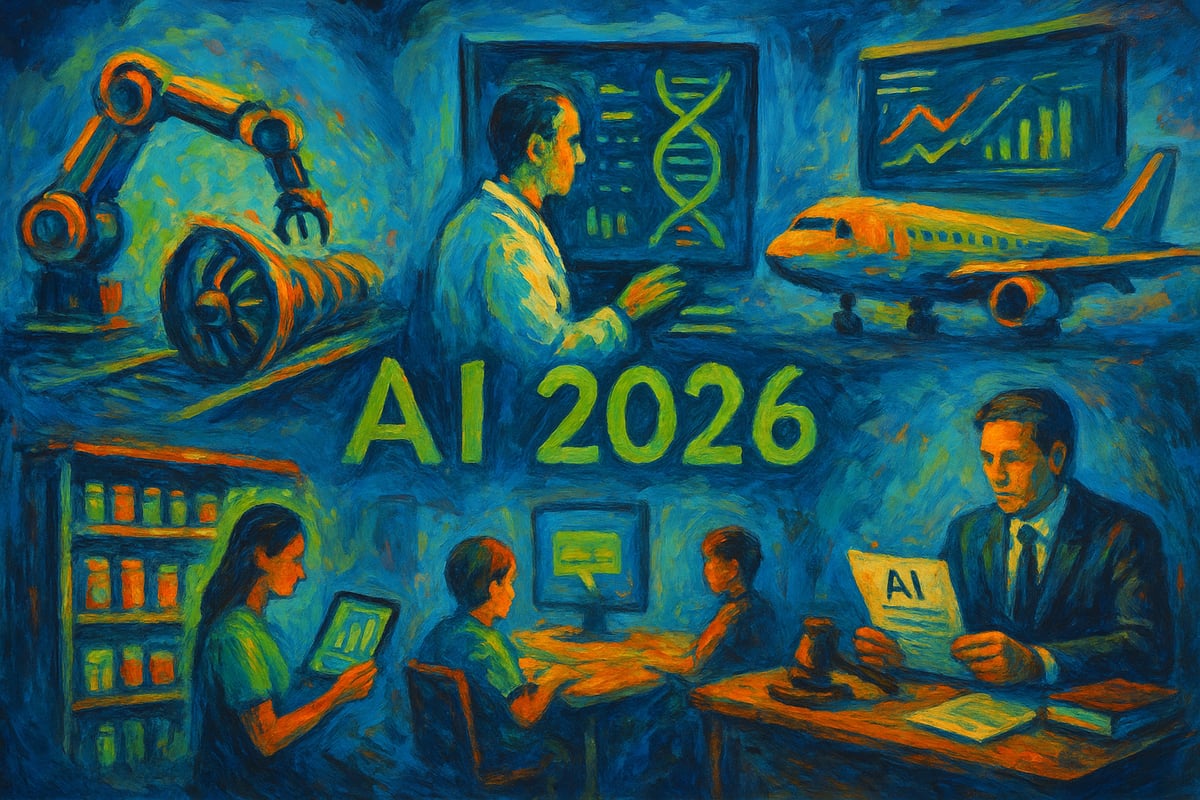
Manufacturing: Non-destructive testing powered by AI technology solutions has revolutionised quality assurance. Factories now use 3D volumetric analysis to inspect products in real time. For example, wind turbine blade manufacturers achieve 100 percent defect coverage, reducing inspection times and minimising manual errors. This step-by-step process ensures products meet strict standards, and AI catches even the smallest flaws before shipment.
Healthcare: AI technology solutions are making breakthroughs in diagnostics. Genomic cancer diagnosis, once taking up to two weeks, now delivers results in just one day. Algorithms analyse complex genetic data, helping doctors create targeted treatment plans. Hospitals report improved patient outcomes and faster decision-making, giving medical teams more time for care.
Aviation: Airlines use AI technology solutions for predictive maintenance. By analysing engine sensor data, these systems predict failures with up to 93 percent precision. This reduces unplanned downtime and boosts safety. Maintenance teams follow a step-by-step guide: collect data, run AI-driven analysis, schedule repairs, and monitor ongoing performance.
Retail: Inventory forecasting has become smarter thanks to AI technology solutions. Retailers use automated analytics to track stock levels and predict customer demand. This leads to fewer stockouts, reduced waste, and higher sales. Store managers can follow clear steps: integrate sales data, apply AI forecasting, adjust orders, and review results regularly.
Education: AI agents summarise lecture notes and provide research support for students and teachers. Universities deploy custom Synap automations to help summarise academic articles, answer questions, and recommend resources. This saves time and enhances learning, making education more accessible and efficient.
Legal: AI technology solutions speed up legal research and contract drafting. Law firms use AI to summarise case law and highlight key clauses in agreements. This reduces manual workload and improves accuracy. Lawyers follow a simple process: upload documents, let AI extract insights, review summaries, and finalise drafts.
Real-world data: Fujitsu’s studies show that businesses adopting AI technology solutions experience higher ROI and improved accuracy. Synap’s industry-specific automations, featured in their AI products for businesses, demonstrate how tailored solutions reduce manual effort and drive innovation in sectors from healthcare to professional services.
Insights: Across all sectors, AI technology solutions deliver tangible benefits: faster processes, fewer errors, and more time for strategic work. If you’re ready to unlock innovation in your business, book a free online consult with a Synap AI technologist for tailored advice.
Overcoming Common Barriers to AI Adoption
Adopting ai technology solutions in 2026 brings huge rewards, but the journey is not without its bumps. Many businesses, especially in Australia, find themselves held back by common hurdles—lack of understanding, data silos, skills shortages, and uncertainty about ROI. Let’s break down these barriers together so you can move forward with confidence.
Education is the first step. Many organisations hesitate with ai technology solutions because they simply don’t know where to start. Fujitsu’s recent survey revealed that 42% of businesses cite lack of understanding and skills as their top barrier. The good news? Transparent use cases, real-world stories, and expert guidance make a big difference. Resources like Synap's latest AI technology insights help demystify what’s possible and showcase proven paths to success.
Data challenges loom large. Many teams struggle to integrate siloed systems and ensure high data quality. Effective ai technology solutions depend on robust data foundations, so start by mapping out your current data flows and identifying gaps. Compliance with local regulations, such as Australia’s data sovereignty requirements, is essential. Synap’s secure, locally hosted platforms ensure your sensitive information never leaves the country, ticking the compliance box from day one.
Bridging the skills gap requires a mix of training and partnership. Upskill your team through workshops and hands-on projects, and don’t be afraid to bring in outside experts for initial deployments. This collaborative approach accelerates learning and builds confidence in ai technology solutions across your organisation.
Managing change is easier with a phased approach. Start small with pilot projects, measure results, and expand gradually. This step-by-step method reduces resistance and helps your team see tangible benefits early on. For example, one Australian retailer used predictive analytics first for inventory management, then scaled up to automate order fulfilment—all using ai technology solutions.
Measuring ROI can feel daunting, but it’s crucial. Set clear goals and metrics upfront: reduced downtime, increased accuracy, or faster decision-making. Use analytics dashboards to track performance and adjust your strategy as you go. According to the Global AI adoption rates in 2025, companies that consistently monitor and optimise their AI initiatives see up to 30% faster adoption and improved outcomes.
Security and privacy remain non-negotiable. Choose ai technology solutions that prioritise data sovereignty and strong encryption. Synap’s Australian-owned AI offerings process all data locally, ensuring zero leakage and peace of mind for industries with strict compliance needs.
Multi-cloud analytics platforms, like those offered by Synap, make big data management and compliance easier. These platforms integrate diverse sources, simplify reporting, and help you stay audit-ready without extra overhead.
If you’re ready to overcome these barriers and unlock the full potential of ai technology solutions, why not book a free online consult with a Synap AI technologist? Together, we can chart the best course for your business.
The Future of AI Technology Solutions: What to Expect Beyond 2026
The future of ai technology solutions is bright and full of promise. We are witnessing a major shift from simple automation to highly cognitive and autonomous systems. Imagine AI that not only completes tasks but also learns, reasons, and adapts like a human team member.
This evolution is happening rapidly. By 2026, global spending on ai technology solutions is expected to exceed $500 billion. Businesses across every sector are already seeing the impact. For example, Synap’s local automation tools have reduced manual document processing time by up to 80 percent for professional services. If you want to stay ahead, now is the time to explore what’s next.
The Evolution of AI Technology Solutions
- AI is moving beyond automation. We now see the rise of cognitive agents that can make decisions, predict outcomes, and optimise business processes in real time.
- For instance, predictive maintenance powered by ai technology solutions in aviation has reached 93 percent precision, reducing downtime and saving millions.
- Industry margins are changing fast, as highlighted by AI's impact on industry margins, showing just how transformative this technology can be for innovation and profitability.
We are entering an era where ai technology solutions are not just tools, but strategic assets. Businesses leveraging these advancements are poised to lead their industries.
New Frontiers: Ethics, Quantum, and AI-as-a-Service
- The next wave of ai technology solutions will prioritise transparency and fairness. Explainable AI frameworks are making decisions easier to understand, reducing bias and improving trust.
- Quantum computing and next-generation hardware are set to break current barriers, enabling faster and more complex processing. However, new challenges are emerging, such as infrastructure bottlenecks, as examined in this forecast model for AI-driven infrastructure bottlenecks.
- AI-as-a-service and low-code platforms are democratising access, letting more teams build and deploy AI with minimal technical hurdles.
Synap is already helping Australian firms deploy private, ethical AI tailored to strict local compliance needs. This ensures your data stays secure and your business remains compliant.
The Path Forward: Privacy, Real-World Scenarios, and Actionable Steps
- Data privacy and local compliance will become even more critical. Australian businesses need ai technology solutions that keep data within borders and meet industry standards.
- The future is about predictive, self-optimising processes. Imagine retail stores using AI to automatically adjust inventory or manufacturers with machines that schedule their own maintenance.
- To prepare, start by investing in continuous AI learning and strategic partnerships. Build a strong data foundation, experiment with small pilots, and scale what works.
If you want tailored advice, book a free online consult with a Synap AI technologist. Together, we can unlock the next era of innovation for your business.
We’ve explored how AI technology is transforming business in 2026, from smart automation to data-driven decision making—all while keeping your data secure and local here in Australia. If you’re curious about how these solutions could work for your own business, you don’t have to figure it out alone. Let’s chat about your unique goals and challenges, so we can find the best way forward together. Book a free online consult and get tailored advice from a friendly Synap AI expert who understands the Aussie landscape. We’re here to help you unlock innovation—safely, privately, and confidently.
Book a Consultant Now