By 2026, global data volumes are set to grow by over 25% each year, making it harder than ever for businesses to keep up. The need for rapid, intelligent insights has never been more urgent. Splunk and AI are now at the forefront, transforming how organisations uncover value from their data. This guide will show you how splunk and ai work together to deliver actionable, intelligent insights. You will discover Splunk’s AI evolution, practical integration steps, real-world use cases, the latest trends, and expert tips. Ready to future-proof your operations? Let’s dive in.
The Evolution of Splunk and AI: Setting the Stage for 2026
Splunk’s transformation from a basic log analysis tool to a powerful, intelligent data platform has been remarkable. In 2026, splunk and ai are at the core of this evolution, enabling organisations to keep pace with the ever-increasing volume and complexity of data.
The rise of AI and machine learning within the Splunk ecosystem has accelerated dramatically. Between 2024 and 2026, several innovations have emerged:
- Automated anomaly detection empowers teams to find issues before they escalate.
- Predictive analytics delivers future-focused insights for smarter planning.
- Generative AI supports new forms of data exploration and reporting.
With splunk and ai working together, businesses can process information at speeds never seen before. The AWS and Splunk partnership has made scalable AI and ML solutions accessible to more organisations. According to Gartner, by 2025, 65% of enterprises will rely on AI-driven analytics to guide decision-making.
A real-world example highlights this progress. A health-tech company used Splunk and AWS SageMaker to predict hospital admissions, improving patient care and operational efficiency. For more on how this approach delivers results, see the StrongRoom AI case study.
This rapid evolution sets the stage for new opportunities and smarter, faster business decisions in 2026.
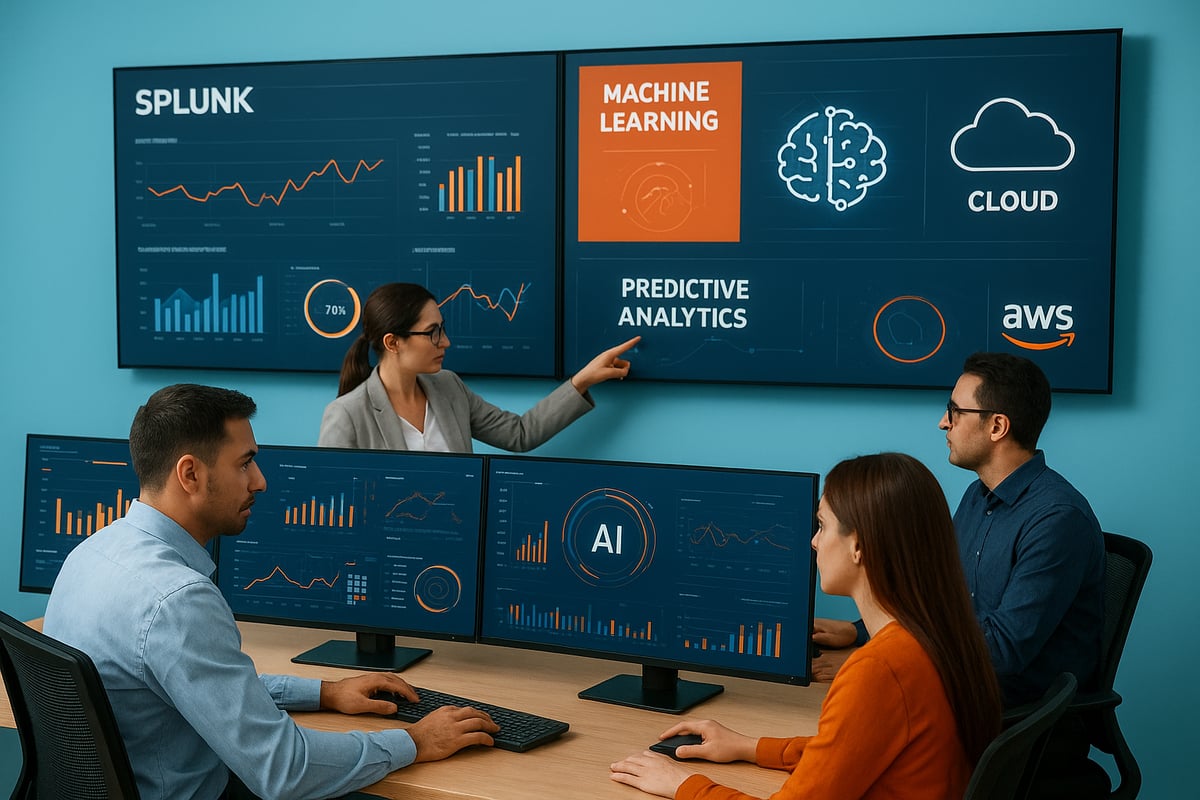
Step-by-Step Guide: Integrating AI with Splunk for Intelligent Insights
Unlocking intelligent insights with splunk and ai requires a systematic approach. Follow these steps to integrate AI into your data workflows and drive actionable outcomes.
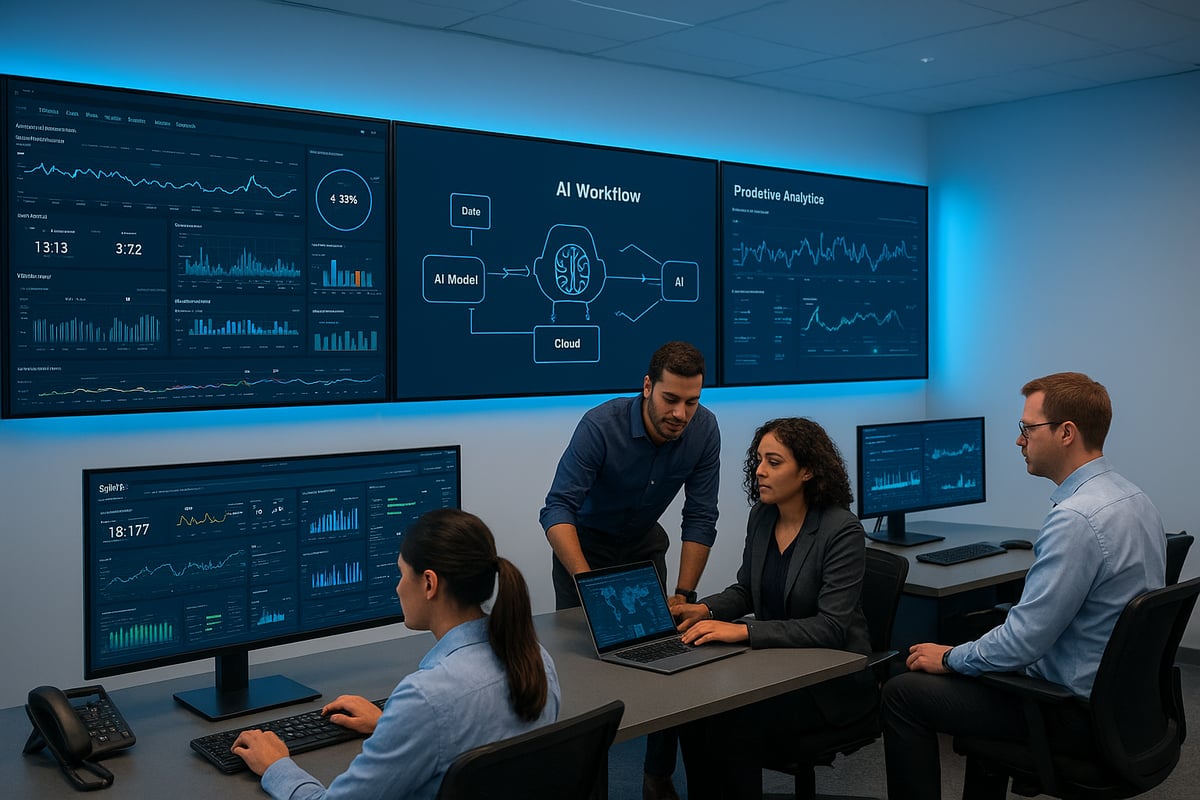
Step 1: Assessing Data Sources and Readiness
The journey with splunk and ai begins by evaluating your data landscape.
- Identify every data source, including logs, metrics, wearables, and cloud services.
- Assess data quality, ensuring your information is structured and reliable.
- Confirm all data privacy and compliance requirements, such as Australian data sovereignty.
- Review your current Splunk deployment to understand its capabilities.
- For example, healthcare organisations often combine Splunk indexes with AWS S3 patient data, ensuring robust readiness.
A clear assessment sets the stage for smooth integration.
Step 2: Building the Data Engineering Pipeline
A strong data pipeline is essential for splunk and ai synergy.
- Automate data movement from Splunk to S3 using AWS Step Functions.
- Deploy AWS Lambda functions to extract and transform incoming data.
- Secure all connections through AWS Secrets Manager.
- Store outputs in Parquet format for optimal performance.
- Catalogue everything with AWS Glue for seamless access.
To streamline integration, consider Data Integration Services for expert automation and deployment support.
A well-architected pipeline accelerates AI adoption across business units.
Step 3: Enabling AI/ML Workflows in Splunk
Splunk and ai unlock advanced analytics when machine learning workflows are enabled.
- Activate the Splunk Machine Learning Toolkit for built-in models.
- Connect Splunk data to AWS SageMaker for custom model development.
- Use Athena to query across datasets efficiently.
- Provide no-code ML tools like SageMaker Canvas, empowering non-technical users.
- According to AWS, integrated workflows deliver model development 40 percent faster.
This step empowers teams to build, test, and refine models within existing platforms.
Step 4: Operationalising AI Insights
Put splunk and ai insights into action by operationalising AI outputs.
- Deploy trained models to provide real-time predictions on Splunk dashboards.
- Set up automated alerts and anomaly detection for critical events.
- Integrate AI-driven insights into your business workflows for immediate impact.
- Continuously monitor and retrain models as new data becomes available.
- For instance, healthcare providers use automated patient risk alerts, enhancing care and response times.
Operationalising insights ensures your organisation makes data-driven decisions at speed.
Real-World Use Cases: Splunk and AI in Action
Businesses are already transforming operations with splunk and ai, using real-time data for smarter decisions. Explore these use cases to see how organisations turn insights into action.

Predictive Maintenance in Healthcare and IoT
- Organisations start by connecting wearables and IoT devices to Splunk for continuous monitoring.
- Data is analysed with AI models to predict device failures.
- Automated alerts are sent before issues impact patient care.
A remote patient monitoring company achieved 30% less downtime by integrating splunk and ai for proactive device maintenance. This step-by-step approach ensures devices stay reliable, directly improving patient outcomes and operational efficiency.
Security Operations and Threat Detection
- Security teams feed logs and metrics into Splunk for centralised visibility.
- AI algorithms scan for unusual patterns and potential threats.
- Automated incident responses reduce manual intervention.
With splunk and ai, a security operations centre cut mean time to detect breaches by 50%. Real-time breach alerts now allow teams to act fast, stopping threats before they escalate. Continuous monitoring and smart automation strengthen overall security posture.
Business Process Optimisation
- Businesses analyse workflow data using Splunk dashboards.
- AI identifies bottlenecks and suggests process improvements.
- Automation streamlines ticket triage and repetitive tasks.
A customer service team doubled productivity by using AI Solutions for Business and splunk and ai to automate ticket routing. These intelligent workflows let staff focus on complex queries, while AI-driven insights keep operations running smoothly. Book an online consult with our AI technologist to see how your business can unlock similar results.
Future Trends: What’s Next for Splunk and AI in 2026?
As we look ahead to 2026, splunk and ai are set to transform business intelligence in new ways. The rise of generative AI is making advanced data exploration simpler for all users. More companies are adopting no-code and low-code AI tools, opening up machine learning to broader teams without deep technical backgrounds.
Explainable AI is gaining traction, as organisations demand transparency and compliance in their automated decisions. Cloud-native services like AWS and Azure are becoming even more tightly integrated with Splunk, enabling scalable, secure deployments. In fact, according to AI and big data adoption projections, the demand for big data and AI skills is expected to soar across industries.
Industry-specific AI models are emerging for healthcare, legal, and finance, offering tailored insights that drive real value. Data governance and security remain top priorities, as regulatory requirements continue to evolve.
A real-world example is a financial services provider using Splunk, Synap AI automations, and AWS SageMaker to build compliant, explainable fraud detection models. With 75 percent of Splunk customers planning to expand AI use by 2026, now is the time to invest in future-ready solutions.
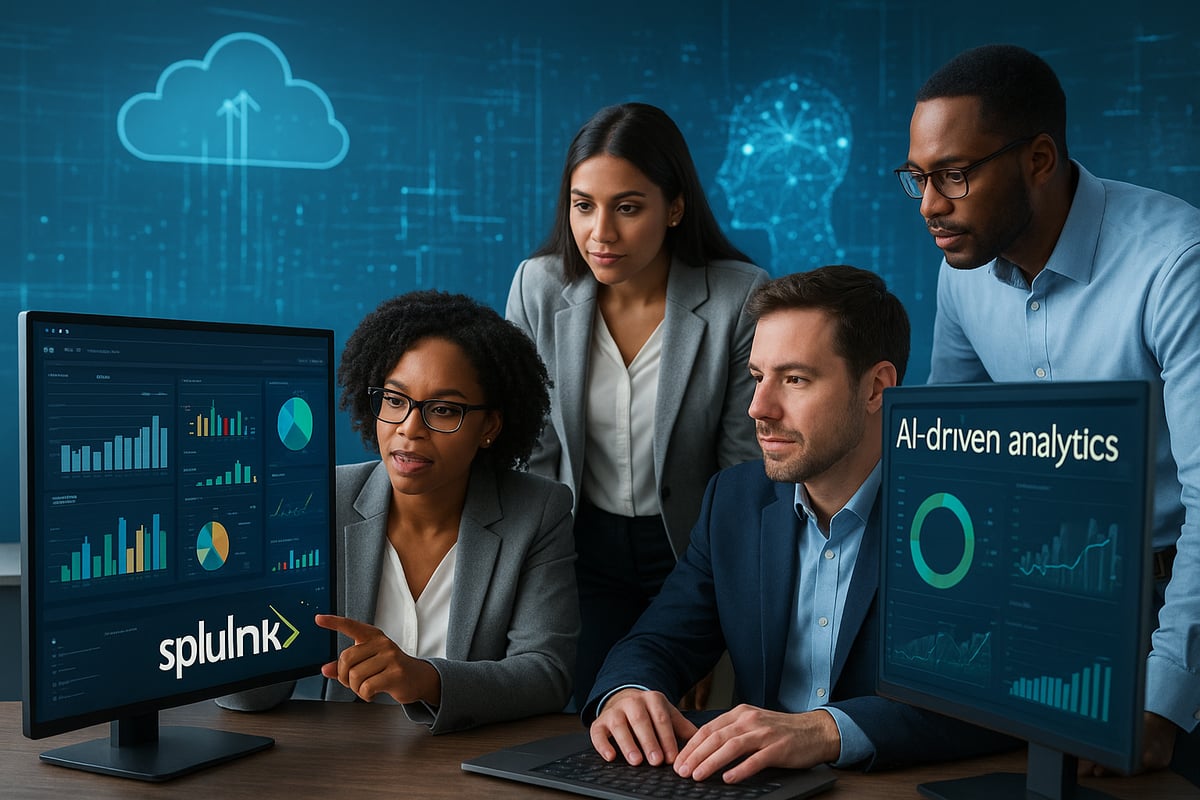
Expert Tips for Maximising Value from Splunk and AI
Unlocking the full potential of splunk and ai requires a strategic approach. Here is a step-by-step guide to ensure your organisation gains intelligent insights and measurable results.
Define clear business objectives before starting any splunk and ai project. Align AI initiatives with measurable goals such as cost reduction, risk mitigation, or improved patient care.
Invest in robust data quality processes. Use automated pipelines, such as Synap’s integrations, to ensure data is complete, accurate, and compliant with industry standards.
Upskill your teams in both AI/ML and Splunk. Provide ongoing training to keep staff current with the latest features and best practices.
Continuously monitor model performance. Schedule regular retraining sessions to keep splunk and ai models relevant as your data changes.
Encourage collaboration between IT, data science, and business units. Cross-functional teamwork accelerates innovation and ensures AI solutions address real business challenges.
Leverage vendor and partner resources to stay ahead. Access How-To Guides for AI Integration for practical tips and implementation strategies from industry experts.
Learn from real-world results. Organisations using automated splunk and ai workflows, such as in Synap’s AWS case studies, report decision-making twice as fast as traditional methods.
Want tailored guidance? Book a free consult with a Synap AI technologist and turn your AI vision into reality.
Book a Consultation with an AI Technologist
Unlock the full power of splunk and ai for your business by speaking with a Synap AI technologist. With data volumes soaring, expert guidance ensures you get the most from your analytics investment.
- First, your consultant will assess your current data environment, including Splunk deployment and AI readiness.
- Next, they will review your industry requirements, paying close attention to compliance and data privacy.
- You will receive tailored recommendations on automation, workflow integration, and maximising value from your data.
- Finally, learn how Synap automations can streamline your operations, from predictive analytics to real-time alerts.
Recently, a healthcare provider increased predictive accuracy and reduced manual workload after a Synap consultation. Their team now uses automated Splunk dashboards and AI-driven alerts for patient monitoring.
Ready to transform your operations? Book a free 30-minute online consult with a Synap AI technologist at this link, or explore further expert insights on our Synap AI Blog and Insights.
As we’ve explored, integrating Splunk and AI can truly transform how you approach data in 2026—from automating repetitive tasks to gaining actionable insights that drive smarter decisions. If you’re ready to take the next step and see how these innovations could work for your business, you don’t have to do it alone. Join a community of professionals who are already leveraging Synap’s AI solutions to enhance productivity, ensure data security, and stay ahead in this fast changing landscape. Let’s unlock intelligent insights together—Join Now.