
By 2026, the pace of change in artificial intelligence is nothing short of explosive. Every ai company is racing to deliver smarter, faster, and more secure solutions, transforming how Australian businesses operate.
The pressure to adapt is intense. Companies that fail to embrace AI risk falling behind, while those that lead with innovation are seizing new opportunities and outpacing competitors.
This article uncovers seven groundbreaking ai company innovations that are shaping the future. You will discover the latest platforms, automation breakthroughs, secure technologies, and the real business benefits they deliver.
Ready to see what’s next? Explore each innovation and unlock your business potential.
The Rise of Private and Secure AI Platforms
Australian businesses face a new reality in 2026. Data privacy, local compliance, and regulatory scrutiny have become non-negotiable. High-profile data breaches, stricter government standards, and customer expectations have pushed every ai company to rethink how they handle sensitive information.
Australian enterprises now prioritise platforms that protect their data within national borders. In fact, 78% of local organisations cite data privacy as the primary driver for ai company adoption, according to Gartner's 2025 research. The risks of offshoring data, exposure to global threats, and non-compliance penalties are simply too great.
The shift from public to private, secure AI platforms is now mainstream. Instead of relying on global, open-access models with uncertain data policies, businesses demand solutions built for Australian law. Data sovereignty ensures that information stays onshore, meeting APRA, OAIC, and industry-specific standards. This empowers an ai company to offer peace of mind, knowing client records and intellectual property are never at risk of offshore leaks.
The benefits are clear. Legal firms are implementing private AI to manage confidential case files. Hospitals use secure AI to automate patient triage, keeping health records compliant with the Privacy Act. Financial institutions deploy local AI models for fraud detection, ensuring transactional data never leaves the country. Each ai company embracing private AI reports better control, local audit trails, and greater customer trust.
Ready to make the transition? Here is a step-by-step guide:
- Assess your current data flows and compliance obligations.
- Identify which processes need strict privacy controls.
- Evaluate the ai company platforms offering private, onshore hosting and robust encryption.
- Consult with local experts to audit your readiness and design a secure deployment plan.
- Pilot a private AI solution in a low-risk area before scaling up.
- Continuously monitor compliance and update security protocols as regulations evolve.
The role of local consulting firms has never been more crucial. Australian providers like Synap specialise in designing, deploying, and supporting private AI solutions tailored to each sector's unique needs. The demand for custom, onshore development is surging, as businesses look to localise automations and maintain full control over their data. For organisations seeking expert strategy and secure implementation, engaging AI consulting services can accelerate adoption and ensure lasting compliance.
Every ai company serious about futureproofing its operations in 2026 must prioritise private, secure AI platforms. Want to assess your readiness? Book an online consult with an AI technologist for tailored advice.
7 Game-Changing AI Company Innovations in 2026
Australian businesses face a pivotal moment as the ai company landscape transforms at breakneck speed. By 2026, new platforms are redefining productivity, compliance, and security. Below, we explore seven innovations every decision-maker should know, each offering unique pathways to business growth, risk reduction, and operational excellence.
1. OpenAI GPT-5 Enterprise Suite
OpenAI's GPT-5 Enterprise Suite is the latest leap for any ai company seeking advanced language intelligence. Launched in 2026, this platform delivers sophisticated reasoning, multimodal input, and seamless workflow automation. Pricing begins at $20,000 per year, targeting large enterprises and research institutions.

Key features include:
- Advanced AI-driven document analysis and content generation.
- Secure API integration for business-critical applications.
- Multilingual support, enabling global teams to collaborate efficiently.
Benefits for your ai company are clear. Productivity soars as complex workflows become automated. The suite's robust developer tools and global support ensure scalability. However, data is stored offshore, and pricing may deter smaller firms.
Consider a Victorian legal ai company leveraging GPT-5 for contract analysis. They reduced review time by 60 percent, freeing staff for higher-value tasks. Yet, strict regulatory requirements mean some businesses may require onshore solutions for sensitive data.
For those seeking cutting-edge capability and global reach, GPT-5 sets the standard. Still, local compliance and customisation remain critical considerations for every ai company.
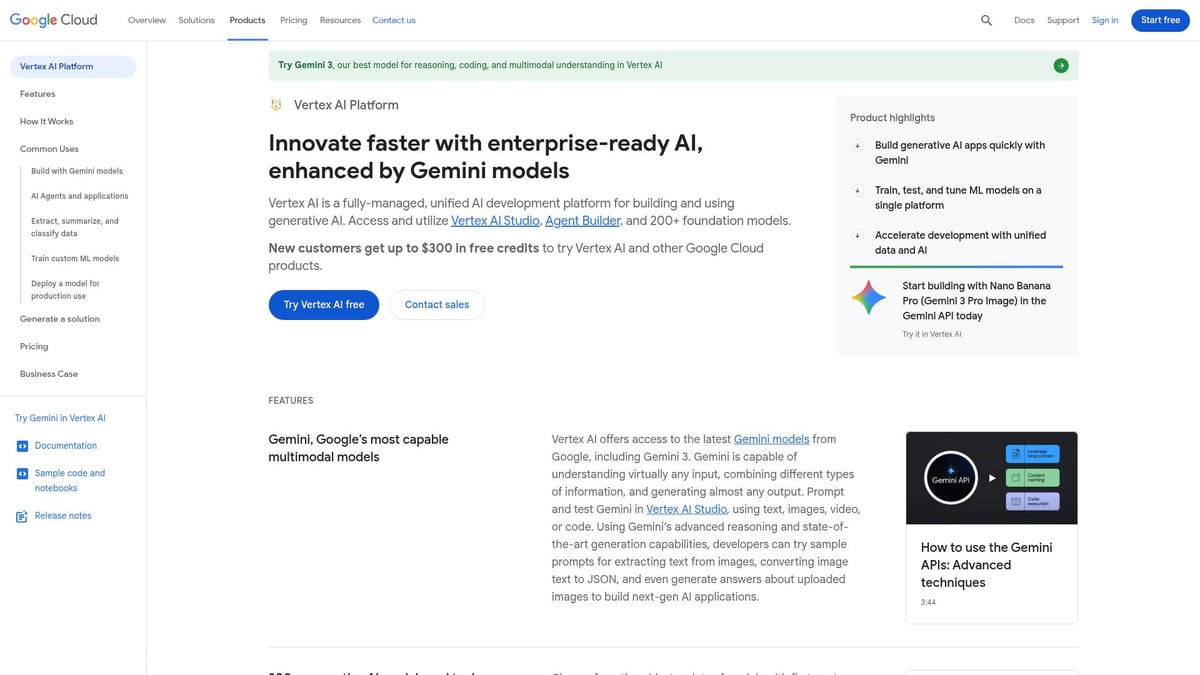
2. Google Vertex AI HyperAutomate
Google Vertex AI HyperAutomate is transforming how an ai company approaches workflow automation. With usage-based pricing starting at $0.15 per 1,000 predictions, it offers scalable automation for enterprises needing real-time analytics and seamless integration with Google Workspace.
Key features:
- AutoML for rapid model development.
- Workflow orchestration connecting disparate systems.
- Integration with cloud and on-premise data sources.
For an Australian ai company, the platform delivers rapid deployment and actionable insights. Supply chain ai company teams, for example, can automate inventory management, leading to a 30 percent reduction in stockouts.
However, data residency outside Australia may concern regulated sectors. Complex pricing and the need for Google Cloud expertise also present barriers.
A real-world example is a retail ai company using Vertex AI HyperAutomate for marketing analytics. Campaigns are now optimised in real time, increasing ROI by 25 percent. For those balancing speed and scalability, this solution is a powerhouse—though local compliance should be assessed.
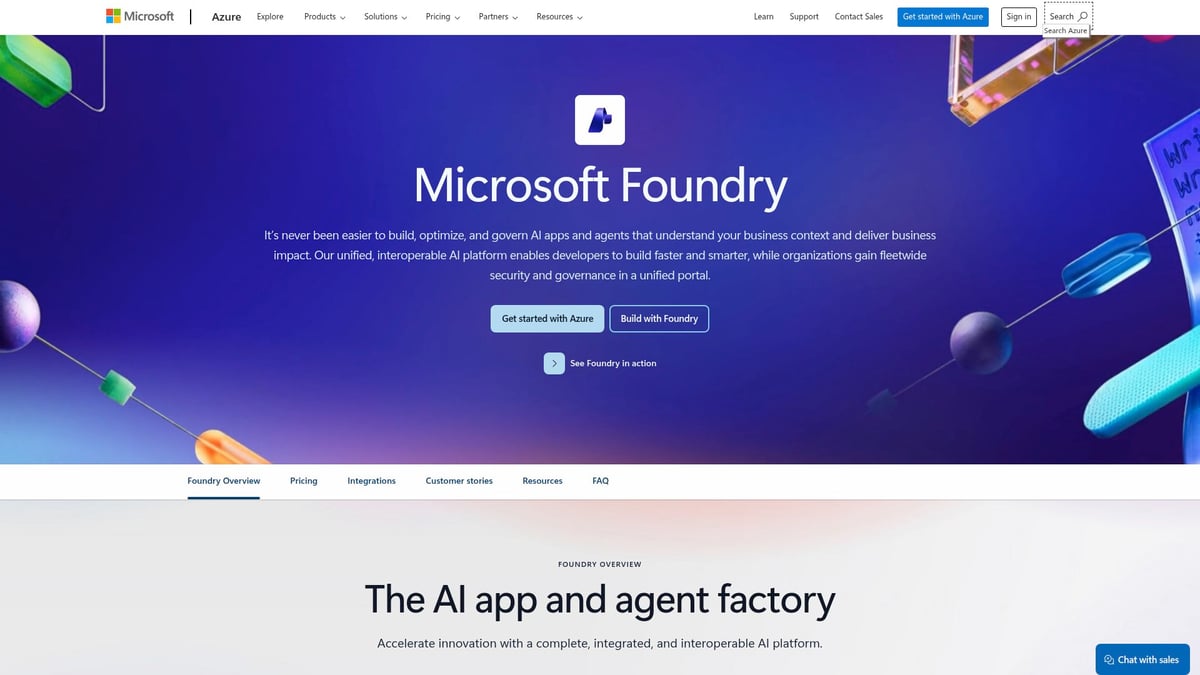
3. Microsoft Azure AI Studio
Microsoft Azure AI Studio gives any ai company a unified platform for building, training, and deploying custom models. With pay-as-you-go pricing and enterprise options, it suits mid-to-large businesses and IT departments.
Key features:
- Drag-and-drop model builder for rapid prototyping.
- Responsible AI tools that support compliance.
- Hybrid cloud deployment, integrating with Microsoft 365.
For an ai company focused on compliance, Azure's strong security and integration stand out. HR teams can automate onboarding, cutting administrative workload by 40 percent. Document processing and predictive analytics are also streamlined.
There is a learning curve, and costs can rise with advanced features. However, the robust compliance tools ensure that an ai company in legal or finance is well-supported.
A step-by-step for implementation:
- Assess internal skillsets and data requirements.
- Start with pilot projects using the model builder.
- Expand to full-scale deployment once workflows are validated.
Azure AI Studio is a solid choice for an ai company seeking compliance, scalability, and integration with existing Microsoft products.
4. Anthropic Claude Business Platform
Anthropic's Claude Business Platform is designed for the ai company that prioritises safety, ethics, and transparency. With subscription pricing from $30 per user per month, it appeals to compliance-driven organisations.
Core features:
- Conversational AI with explainable outputs.
- Customisable safety controls.
- Transparent audit trails.
The main benefit for an ai company is risk reduction. Transparent decision-making helps meet regulatory standards, while easy integration supports rapid deployment. However, customisation is limited, and some cutting-edge features may arrive later than competitors.
A healthcare ai company using Claude has reduced patient triage errors by 20 percent, thanks to its explainable AI. For regulated industries, the platform's ethical focus is invaluable.
Step-by-step adoption:
- Identify compliance needs.
- Configure safety controls.
- Train staff on ethical AI practices.
Claude is the go-to for an ai company needing transparency, compliance, and peace of mind.
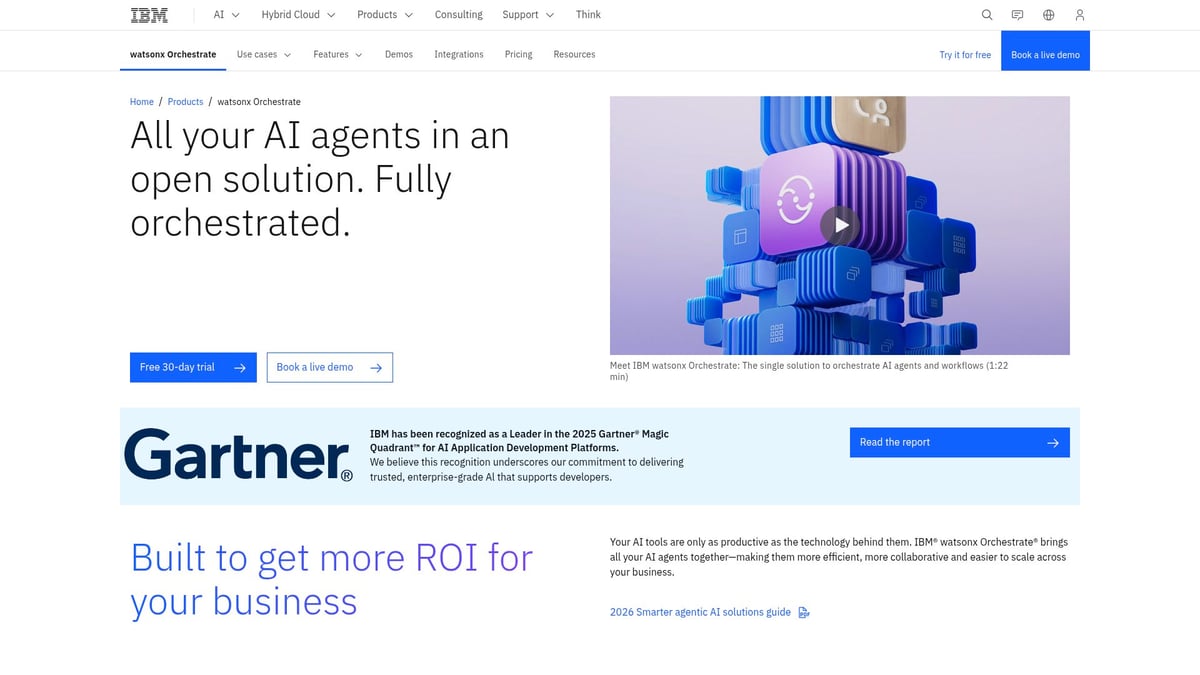
5. IBM watsonx Orchestrate
IBM watsonx Orchestrate empowers any ai company to automate complex business operations. Subscriptions start at $1,500 per month, making it a fit for enterprises with legacy systems and high-volume processes.
Key features:
- Task automation for repetitive work.
- Workflow orchestration across departments.
- Integration with legacy systems.
An ai company can reduce manual work and increase accuracy with watsonx. HR onboarding, finance approvals, and IT ticketing are all streamlined. Security and custom workflows are strengths, but the higher price and IBM ecosystem requirements may limit accessibility.
A finance ai company implemented watsonx Orchestrate, automating approvals and saving 35 percent on administrative costs. For businesses with complex processes, this platform offers a clear path to efficiency.
Step-by-step implementation:
- Audit current workflows.
- Identify automation opportunities.
- Integrate with existing systems for seamless operation.
IBM watsonx Orchestrate is best for an ai company ready to modernise and scale.
6. Cohere Command Enterprise
Cohere Command Enterprise is built for the ai company that demands privacy and customisation. Pricing is custom, often above $10,000 per month for large-scale deployments.
Key features:
- Private model hosting to protect sensitive data.
- API access for integration with business systems.
- Custom fine-tuning for industry-specific needs.
For a legal or financial ai company, Cohere’s privacy-first approach is a major draw. Deployments are fast, and models can be tailored for unique business cases. However, the premium pricing and technical resource requirements are hurdles.
A real-world example: a legal ai company used Cohere to develop a secure chatbot for confidential client queries, reducing response time by 50 percent.
Step-by-step adoption:
- Define data privacy requirements.
- Collaborate with Cohere for tailored deployment.
- Train staff on custom AI workflows.
Cohere is ideal for the ai company seeking privacy, speed, and customisation.
7. DataRobot AI Platform
DataRobot AI Platform brings automated machine learning to the forefront for any ai company. With subscriptions starting at $2,000 per month, it caters to business analysts, SMEs, and enterprises without large data science teams.
Key features:
- No-code model building.
- Automated feature engineering.
- Real-time deployment monitoring.
The platform empowers non-technical teams, speeding up deployment and delivering fast results. Sales forecasting and customer churn prediction are common use cases. However, deep customisation may require additional fees.
A retail ai company leveraged DataRobot to predict seasonal demand, boosting sales by 18 percent. The intuitive interface means even small teams can harness AI without technical barriers.
Step-by-step guide:
- Define business objectives.
- Use the no-code builder to create models.
- Monitor and adjust models in real time.
For those seeking accessible AI, DataRobot is a compelling option.
For more on tailored solutions, see AI solutions for business.
Ready to take the next step? Book a consult with our AI technologist here.
How to Choose the Right AI Innovation for Your Business
Selecting the right ai company is a pivotal decision for Australian businesses aiming to stay ahead in 2026. With AI transforming every sector, a structured approach is critical to ensure your investment drives real value. Here is a clear, step-by-step guide to making the best choice for your organisation.
Assess Your Business Needs
Begin by mapping out your organisation's current pain points. Is data privacy your top concern, or do you need faster automation? Identify where inefficiencies lie, such as manual document processing or slow customer support. For a detailed, actionable approach, consider following the How to implement AI guide, which breaks down the adoption process into manageable steps.Evaluate AI Readiness
Determine your company’s current tech stack and team capabilities. Is your data stored securely and is it ready for integration with an ai company’s platform? Do you have staff with the technical skills to manage new AI tools, or will you need external support? Preparation at this stage can streamline implementation and reduce future roadblocks.Identify Critical Pain Points
Focus on the business areas that will benefit most from AI. Data privacy, automation, compliance, and scalability are common drivers. According to recent AI adoption in Australian businesses for 2025 Q1 statistics, over 60 percent of Australian SMEs cite automation and data security as their primary motivations for choosing an ai company. Use this insight to prioritise your requirements.Compare Features, Pricing, and Support
Build a shortlist of vendors and compare them across key criteria. Here is a quick table to help summarise:
| AI Company | Data Sovereignty | Key Features | Pricing | Local Support |
|---|---|---|---|---|
| Synap AI | Australia | Private agents, custom | $29-$2,500/mo | Yes |
| OpenAI GPT-5 | Offshore | Multimodal, API | From $20,000/yr | No |
| Google Vertex AI | Offshore | AutoML, analytics | Usage-based | No |
Look for transparent pricing, responsive local support, and strong privacy credentials.
Weigh Local vs Global Providers
Australian businesses must consider data residency. A local ai company like Synap AI guarantees Australian data sovereignty and compliance with local laws, which is crucial for legal, healthcare, and finance sectors. Global providers may offer advanced features but often store data offshore, posing privacy risks.Integration with Existing Systems
Choose an ai company that can integrate seamlessly with your current software, whether it is Microsoft 365, Google Workspace, or legacy systems. Evaluate whether the platform supports APIs, custom automations, and existing workflows. This reduces friction during deployment and enhances ROI.Real-World Example: Victorian Legal Firm
A leading Victorian legal firm partnered with Synap AI to automate their document review process. By switching to a private, onshore solution, they cut review time by 40 percent and ensured full compliance with Australian privacy regulations. This case demonstrates how the right ai company can unlock both efficiency and regulatory peace of mind.Checklist and Next Steps
Before making a final decision, run through this checklist:Security and compliance standards
Scalability for future growth
Quality of ongoing support
Return on investment projections
For tailored advice, book an online consult with our AI technologist to clarify your needs and match you with the best ai company for your business goals.
Future Trends: What’s Next for AI Companies in Australia?
Australian businesses are entering a pivotal era, with every ai company facing rapid transformation. By 2026, regulatory changes and heightened data privacy concerns are driving a surge in private, onshore AI solutions. This shift is not just about compliance, it is about building trust and unlocking innovation.
The Shift to Private, Onshore AI Solutions
Regulatory shifts are pushing every ai company to prioritise data sovereignty. In 2026, Australian organisations are increasingly choosing private, onshore AI platforms to meet strict compliance and privacy mandates. According to Gartner Forecasts IT Spending in Australia to Exceed $172 Billion in 2026, a large share of this spend is allocated to secure AI infrastructure.
Local players like Synap are leading the way, offering fully Australian-owned private AI agents and consulting tailored for legal, finance, and healthcare sectors. These solutions ensure sensitive data never leaves the country and compliance standards are always met.
Industry-Specific Agents and Automations
The next frontier for any ai company is industry-focused AI agents and automations. Custom solutions are emerging fast, designed to meet the nuanced needs of sectors like education, law, and medicine. This trend is driven by demand for tailored workflows and the need to address unique compliance requirements.
Consulting firms with deep local knowledge are vital. They help businesses map out automation priorities, build secure integrations, and deploy AI agents that genuinely add value. Platforms such as Synap are delivering industry-specific automations, making complex tasks seamless and secure.
Preparing Your Business for Rapid AI Evolution
To stay ahead, every ai company should take a structured approach:
- Assess current data practices and compliance requirements.
- Identify key business challenges where AI can deliver value.
- Compare private onshore and global AI solutions for best fit.
- Engage with local experts for tailored strategy and deployment.
- Invest in ongoing staff training and AI literacy.
Australian healthcare providers are already deploying custom AI for patient triage, streamlining operations while protecting patient privacy. The lesson is clear: preparation and strategic adoption are essential.
Ongoing Education and Expert Support
The future belongs to those who adapt quickly. Continuous learning and expert advice are critical for any ai company aiming to thrive in this evolving environment. Keep up with AI industry blog insights to stay informed about the latest innovations and regulatory changes.
For businesses seeking tailored guidance, booking an online consult with an AI technologist is the smartest next step. This ensures your organisation is ready for the next wave of AI-driven transformation.
If you’re feeling inspired by these seven AI innovations and wondering how they could accelerate your business here in Australia, you’re not alone. The pace of change in AI is rapid, and the right guidance can make all the difference—especially when data privacy, compliance, and local expertise matter. Whether you’re considering private AI platforms, custom automations, or industry-specific solutions, having a tailored strategy is key. If you’d like to explore the best next steps for your organisation, I recommend taking the first step and Book a Consultant Now.