
In 2026, ai customer support is reshaping how Australian businesses connect with customers, driving faster, more personalised service. Adapting to AI-driven support is now essential for staying ahead in a competitive market. This guide delivers practical, step-by-step strategies for leveraging AI customer support, from technology evolution and implementation to compliance and future trends. Discover how leading companies save costs, boost satisfaction, and set new standards in service. Ready to transform your support? Let’s dive in and unlock the future of customer experience.
The Evolution of AI Customer Support: 2020–2026
In 2020, ai customer support was defined by basic chatbots and scripted responses. Most businesses relied on simple decision trees, offering customers limited self-service options. These early systems could answer only the most common questions, often leaving users frustrated by their lack of flexibility and human touch.
Advancements quickly followed. By 2023, natural language processing (NLP) and voice AI had dramatically improved the quality of ai customer support. AI agents began to understand context, intent, and even local Australian accents. This new generation of support was more conversational and able to resolve a wider range of customer issues with greater accuracy.
The industry soon shifted to omnichannel ai customer support. No longer limited to web chat, AI agents managed phone calls, SMS, and emails from a single platform. Customers could start a conversation on one channel and continue on another, with AI maintaining context throughout. This seamless experience became the new standard.
Australian innovators like AiDial led the way by deploying 24/7 AI call agents. For example, AiDial delivered continuous customer service for healthcare and legal sectors, ensuring no call went unanswered. These AI systems handled high call volumes outside business hours, demonstrating the real-world power of ai customer support.
The results were dramatic. By 2026, AiDial reported a 70% reduction in support costs for clients. Over 90% of routine queries were managed end-to-end by AI, freeing human agents to focus on complex cases. Industry sources forecast that AI will handle 60% of Australian customer queries by 2027, highlighting the rapid adoption of ai customer support.
Customer expectations have evolved alongside technology. Today, people demand instant, personalised, and always-on service. AI enables businesses to deliver this level of support, providing tailored responses that reflect the customer’s history and preferences.
As ai customer support matured, so did collaboration between AI and human agents. Modern solutions ensure a seamless handover for complex issues. When AI reaches its limits, it escalates the query to a human agent, passing on the full conversation history. This approach guarantees customers receive the best possible outcome.
The impact on support teams is significant. AI now handles repetitive, low-value tasks, while human staff focus on high-impact interactions and relationship building. This shift not only improves job satisfaction but also increases the overall value delivered to customers and the business.

Core AI Technologies Powering Customer Support in 2026
Artificial intelligence is reshaping the way Australian businesses deliver customer service. In 2026, the heart of ai customer support lies in advanced, localised, and highly responsive technologies. Let us explore the four essential innovations powering modern support.
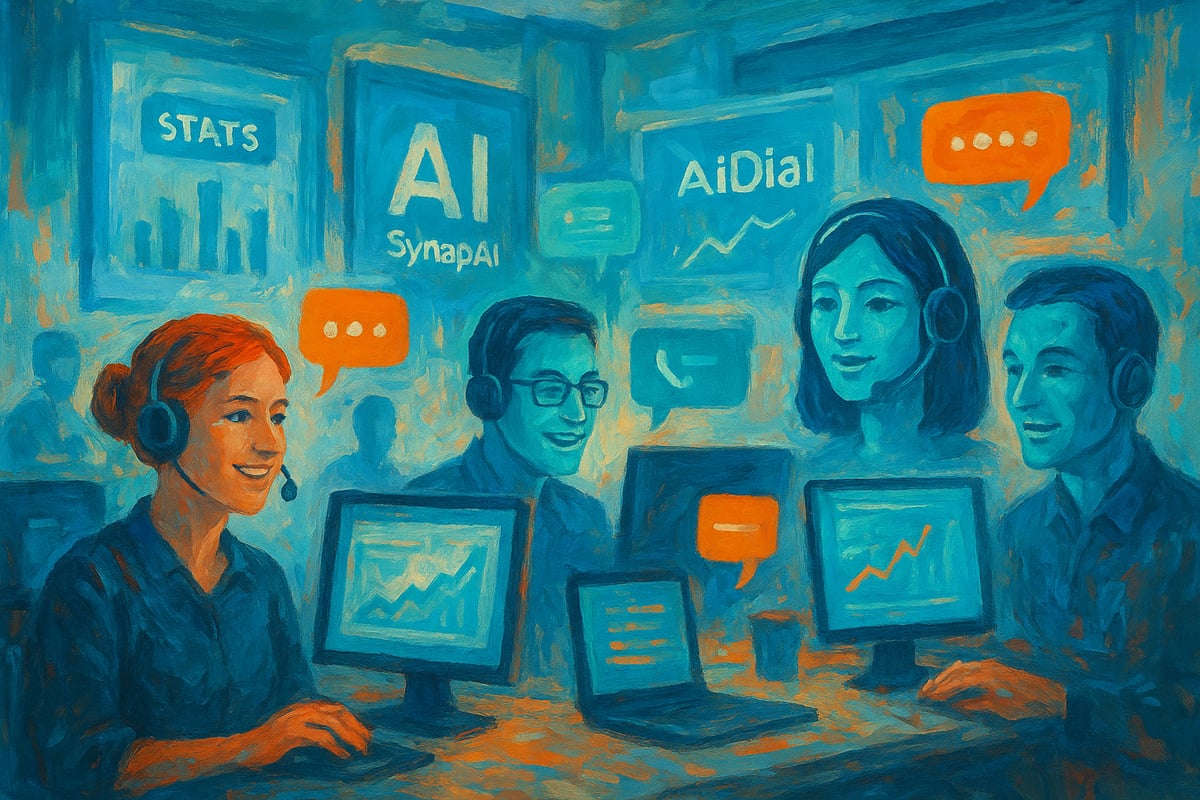
AI Voice Assistants and Conversational AI
AI voice assistants have evolved rapidly, now offering lifelike, local-accented support tailored specifically for Australian customers. In 2026, ai customer support platforms such as AiDial deploy advanced voice technology that understands and responds in natural Australian English.
- These systems use sophisticated speech recognition to capture every nuance of a caller's request.
- Sentiment analysis detects mood and urgency, adjusting tone and escalation as needed.
- Real-time, zero-delay conversations are now standard, creating a seamless experience for customers.
For example, AiDial’s AI voice agents can handle thousands of calls simultaneously, providing friendly, accurate responses. Businesses in sectors like healthcare and legal report faster response times and improved customer satisfaction, all powered by ai customer support. The result is a consistent, always-available voice presence, reducing wait times and operational costs.
NLP, Knowledge Bases, and Custom Training
Natural Language Processing (NLP) sits at the core of ai customer support, enabling systems to understand complex, context-rich queries. Unlike early chatbots, today’s AI leverages deep learning to interpret intent and provide relevant, personalised answers.
- Integration with robust knowledge bases means responses are always accurate and up-to-date.
- Custom training allows AI to learn from a business’s own documents and FAQs, ensuring responses reflect company policies and brand voice.
- Continuous learning from every customer interaction means the system gets smarter over time.
Synap AI offers custom GPT wrappers, allowing Australian businesses to safely train their ai customer support agents on private data. This protects sensitive information and delivers highly relevant answers. For a detailed overview of these technologies and practical applications, see the Overview of AI platform services. This ensures your AI is not only intelligent but also secure and locally compliant.
Multi-Channel and Omnichannel Support
In 2026, customers expect to interact on their terms—whether by phone, chat, SMS, or email. Omnichannel ai customer support solutions unify these touchpoints, delivering a seamless experience no matter where the conversation starts.
- AI manages all channels from a single dashboard, ensuring consistency in tone and information.
- Context and history are preserved across platforms, so customers never have to repeat themselves.
- For example, AiDial’s multi-channel system is trusted by healthcare and legal firms to provide reliable, round-the-clock support.
Australian businesses benefit from this integration by reducing missed messages and improving overall satisfaction. Omnichannel ai customer support not only meets modern expectations but also streamlines internal workflows, making it easier for teams to collaborate and resolve issues efficiently.
Smart Ticket Routing and Workflow Automation
AI-driven automation is transforming how support tickets are handled. Instead of manual triage, smart routing instantly directs each enquiry to the right agent or department. This is a cornerstone of efficient ai customer support in 2026.
- The AI analyses query content, urgency, and customer history to determine the best path.
- Integration with leading CRM and support tools like Salesforce or Zendesk enables automatic ticket creation and status updates.
- Australian businesses using Synap AI report significant reductions in resolution times and support costs.
With ai customer support, teams spend less time on repetitive sorting and more time on meaningful interactions. This shift not only boosts productivity but also enhances the customer journey from start to finish.
Step-by-Step Guide: Implementing AI Customer Support in Your Business
Adopting ai customer support is no longer just an option for Australian businesses. It is a strategic necessity. To ensure you unlock the full benefits, follow this proven, step-by-step framework tailored for 2026. Each stage builds towards seamless integration, maximum efficiency, and outstanding customer experiences.

Step 1: Assess Your Support Needs and AI Readiness
Begin with a thorough analysis of your current support environment. This sets the foundation for ai customer support success.
- Identify which support channels (phone, chat, email, SMS) receive the highest volume of repetitive queries. For example, many Australian businesses report that over 60% of calls are simple, routine questions.
- Map out existing workflows. Where do bottlenecks occur? Are there pain points, such as long wait times or frequent missed calls?
- Use AI readiness assessment tools to evaluate your organisation’s digital maturity. Synap AI offers a free assessment to pinpoint opportunities for automation and highlight compliance gaps.
- Gather feedback from your support team and customers. What are their biggest frustrations? Which processes could be improved with ai customer support?
- For a detailed, hands-on approach, refer to this How to use AI for business support guide, which provides practical checklists and real-world examples.
Investing time here ensures you implement ai customer support where it delivers the greatest impact.
Step 2: Choose the Right AI Platform and Technology
Selecting your ai customer support platform is a pivotal decision. The right choice balances features, compliance, and local support.
- Compare leading platforms for voice, chat, and omnichannel capabilities. Consider if the AI can manage Australian accents and deliver lifelike conversations.
- Assess compliance requirements. For businesses in healthcare, finance, or legal sectors, ensure the platform guarantees Australian data sovereignty. Both AiDial and Synap AI provide onshore hosting and privacy compliance.
- Evaluate integration options. Does the platform connect easily with your CRM, ticketing, and knowledge base systems?
- Review vendor support. Local expertise is crucial for troubleshooting and ongoing optimisation.
- Review pricing models for flexibility. Synap AI offers scalable plans without lock-in contracts, which suits growing businesses.
Here is a quick comparison of factors to consider:
| Platform Feature | Local Hosting | Voice Quality | Integration | Compliance | Support |
|---|---|---|---|---|---|
| AiDial | Yes | Australian | Salesforce, Teams | High | Local team |
| Synap AI | Yes | Customisable | Zendesk, Custom | High | Australian team |
Choosing carefully ensures your ai customer support delivers long-term value and security.
Step 3: Integrate with Existing Systems
Integration is where ai customer support becomes part of your daily operations. Focus on seamless data flow and customer journey continuity.
- Connect the AI platform to your CRM, ticketing, and knowledge base systems. For example, AiDial integrates with Salesforce and Microsoft Teams, allowing customer data to flow securely and efficiently.
- Map data fields carefully. Ensure customer history, preferences, and previous interactions are available to both AI and human agents.
- Test the integration in a controlled environment. Check for data accuracy, speed, and any security vulnerabilities.
- Involve your IT and support teams early. Their feedback is critical for identifying issues and streamlining the process.
- Document every step of the integration for compliance and future updates.
With robust integration, ai customer support can deliver a unified, consistent experience across all channels.
Step 4: Train Your AI on Business-Specific Knowledge
Custom training is the secret to effective ai customer support. It ensures every interaction reflects your brand and expertise.
- Gather all FAQs, product guides, service manuals, and internal documentation. The more comprehensive your knowledge base, the smarter your AI will become.
- Use custom AI training tools. Synap AI’s private GPT wrappers allow you to securely train models on sensitive information, keeping data within Australia.
- Continuously update training data. As new products launch or customer needs evolve, refresh your AI’s knowledge base for ongoing relevance.
- Test responses regularly. Simulate real customer queries to ensure accuracy, tone, and compliance.
- Monitor feedback from support agents and customers. Use this insight to refine and improve ai customer support performance.
A well-trained AI agent handles over 90% of routine queries, freeing your team for more complex, high-value tasks.
Step 5: Configure Escalation and Human Handover
Even the best ai customer support needs a human touch for complex issues. Setting up escalation pathways ensures smooth transitions.
- Define clear rules for escalation. For example, transfer queries involving complaints, sensitive information, or unresolved issues to a human agent.
- Enable seamless handover. Share the full conversation history and customer context so human agents can pick up without repeating questions.
- Monitor escalation rates and outcomes. High escalation rates may indicate gaps in AI training or unclear protocols.
- Use role-based permissions to protect sensitive data during handover. Synap AI supports granular access controls to ensure privacy.
- Gather customer satisfaction data after handovers. This feedback highlights areas where ai customer support and human agents can collaborate more effectively.
Proper handover protocols maintain customer trust and satisfaction at every stage.
Step 6: Launch, Monitor, and Optimise
Launching your ai customer support is just the beginning. Ongoing monitoring and optimisation drive long-term success.
- Roll out in phases. Start with chat support, then add voice, SMS, and other channels as confidence grows.
- Track performance metrics. Monitor resolution rates, CSAT scores, and cost savings. AiDial and Synap AI offer analytics dashboards to visualise progress.
- Use insights to refine AI responses, update knowledge bases, and adjust workflows.
- Schedule regular reviews with your support and IT teams. Identify new opportunities for automation or areas needing improvement.
- Encourage ongoing feedback from customers and staff. Their insights are vital for continuous improvement.
- Stay updated with the latest features and compliance updates from your AI provider.
For a tailored implementation roadmap, book an online consult with a Synap AI technologist here. Getting expert support ensures your ai customer support delivers measurable results and a competitive edge.
Compliance, Privacy, and Data Sovereignty in Australian AI Customer Support
Australian businesses face strict privacy laws that directly impact how ai customer support is deployed. The Privacy Act and Australian Privacy Principles (APPs) require organisations to protect personal information, ensure data sovereignty, and maintain transparency about data handling. These rules are especially important as ai customer support becomes a core part of daily operations. Failing to comply can lead to heavy penalties, reputational damage, and loss of customer trust.

Onshore AI Platforms for Regulated Industries
Onshore AI platforms are now critical for sectors like healthcare, finance, and legal services. These industries handle sensitive data, so ai customer support solutions must keep all information within Australia’s borders. Using local cloud hosting ensures compliance with data residency rules. For example, AiDial offers exclusive Australian cloud hosting, robust audit trails, and encrypted storage to meet these demands.
According to a recent report, 57% of Aussie businesses already use AI in customer service, but maintaining consumer trust and regulatory compliance remains the biggest challenge. Businesses that select onshore ai customer support providers can more easily meet strict privacy requirements and reduce legal risks.
Compliance Features and Regular Updates
Modern ai customer support platforms must provide advanced security and compliance features. These typically include role-based access, encrypted storage, and detailed audit trails for all interactions. Real-world example: AiDial’s Compliance plan offers seven-year data retention, privacy rights management, and regular updates to stay ahead of regulatory changes.
Here’s a quick comparison of key compliance features:
| Feature | AiDial Compliance Plan | Offshore Providers |
|---|---|---|
| Data Sovereignty | 100% onshore | Varies |
| Encrypted Storage | Yes | Sometimes |
| Audit Trails | Full, exportable | Limited |
| Privacy Rights Management | Yes | Often missing |
| Retention Policy | 7 years | Unclear |
Regular compliance checks and industry certifications are essential. Synap AI and AiDial both update their platforms in line with changing laws, giving businesses peace of mind as ai customer support evolves.
Risks of Offshore Providers and Best Practice
Choosing offshore AI providers can expose Australian businesses to data residency issues and increased legal exposure. Data stored overseas may fall outside Australian jurisdiction, making it harder to enforce privacy rights or respond to breaches. This risk is amplified in regulated industries, where non-compliance can result in significant fines.
Best practice is to select ai customer support vendors with transparent compliance policies and strong local support. Always verify that your chosen platform delivers onshore hosting, regular updates, and detailed security controls. If you need tailored guidance, book an online consult with a Synap AI technologist for expert advice on compliance and privacy.
Best Practices for Maximising ROI and Customer Experience with AI Support
Delivering exceptional customer service in 2026 means making the most of ai customer support. Australian businesses are seeing measurable gains, but only when best practices are applied from day one. The following step-by-step guide will help you maximise ROI and delight your customers.
Step 1: Map and Automate Key Customer Journeys
Start by mapping every touchpoint in your support process. Where do customers get stuck? Which queries repeat most often?
- Identify high-volume and repetitive interactions using analytics.
- Prioritise automation for these areas with ai customer support solutions.
- Use tools like Synap AI to analyse customer journeys and spot automation opportunities.
- Document current workflows and look for gaps where AI can reduce manual effort.
- Consider a consult with AI consulting and integration services to help design a tailored automation strategy for your business.
Mapping journeys ensures your investment targets the most impactful areas, boosting both ROI and customer satisfaction.
Step 2: Combine AI and Human Expertise for Better Support
The best ai customer support blends automation with human empathy. AI handles routine queries, freeing staff for complex problems.
- Set clear rules for AI-human handover, ensuring customers never feel abandoned.
- Use Synap AI’s smart routing to escalate nuanced issues to trained agents.
- Empower your team with context-rich data from AI interactions.
- Regularly train agents on new AI workflows and review handover cases for quality.
- Monitor customer feedback to refine escalation triggers and maintain a seamless experience.
This collaboration drives efficiency and ensures customers always receive the right level of support.
Step 3: Optimise, Measure, and Personalise Your AI
Continuous optimisation is essential for effective ai customer support. Personalisation also builds trust and loyalty.
- Update AI training data with new FAQs, product changes, and customer feedback.
- Use analytics dashboards (like those from Synap AI) to track call volumes, resolution rates, and CSAT scores.
- Implement overflow call management so every enquiry is captured, not missed.
- Customise AI voices and scripts for Australian accents using AiDial’s voice library.
- Schedule regular reviews of AI performance to spot trends and refine responses.
Personalised, data-driven AI ensures your support stays relevant and responsive.
Step 4: Real-World Success and Continuous Improvement
Australian businesses are already reaping the rewards of ai customer support. For example, a Sydney legal firm used AiDial’s 24/7 AI answering to reduce missed calls by 60 percent and boost lead conversion by 35 percent.
- Set clear KPIs for your AI rollout, such as cost reduction and satisfaction targets.
- Collect ongoing feedback from both customers and staff for improvement ideas.
- Benchmark your results against industry standards and peer case studies.
- Stay informed with AI customer support blog articles for the latest trends and best practices.
- For expert guidance, book an online consult with a Synap AI technologist and discover how bespoke automation can work for your business.
By following these steps, you can unlock the full value of ai customer support and drive real business results.
Future Trends in AI Customer Support: What’s Next for 2026 and Beyond?
The next chapter for ai customer support is already unfolding. As we look beyond 2026, Australian businesses are set to experience a wave of advanced capabilities that will redefine customer interactions, operational efficiency, and competitive positioning.
Hyper-personalisation is taking ai customer support to a new level. AI agents will adjust tone, language, and even preferred communication channels in real time. For example, Synap AI’s advanced personalisation modules learn from every interaction, ensuring each customer feels understood and valued. This leads to higher satisfaction and loyalty as support feels uniquely tailored.
Predictive support is set to become mainstream. AI systems will analyse customer behaviour, previous issues, and data trends to anticipate needs before a customer even reaches out. Imagine a Synap-powered system flagging a potential billing error and proactively offering a solution. This shift from reactive to proactive support is transforming expectations around ai customer support.
Integration with IoT and smart devices is accelerating. By 2026, ai customer support will extend to connected products and services. A healthcare device could automatically report anomalies to support, triggering an AI-driven response. Synap AI’s automation tools are already enabling businesses to link support with devices, reducing downtime and improving outcomes.
Expansion into new industries is rapidly increasing. Sectors like government, education, and the public sector are embracing ai customer support to streamline services and improve accessibility. According to AI adoption in Australian businesses for 2025 Q1, adoption rates are climbing across all major industries, highlighting the broad impact and versatility of AI-driven solutions.
The rise of fully private, isolated AI environments is meeting the demand for ultimate security. Platforms such as Synap AI Enterprise and AiDial Enterprise offer on-premises or private cloud deployments, ensuring sensitive data is never exposed to external risks. This approach is critical for organisations in highly regulated sectors, where data sovereignty and privacy are non-negotiable.
Ongoing advancements in natural language understanding and emotional intelligence are making ai customer support more human. AI agents now interpret tone, intent, and sentiment, responding with empathy and clarity. Synap AI’s conversational engines are continuously updated to better understand Australian slang, accents, and cultural context, bridging the gap between automation and genuine connection.
Regulatory scrutiny and compliance requirements are intensifying. As AI becomes integral to customer support, businesses must stay ahead of evolving legal standards. Regular audits, transparent data practices, and local hosting are now expected features. Synap AI’s compliance modules help clients navigate these changes confidently, reducing risk and ensuring peace of mind.
The growing role of Australian AI providers on the world stage is unmistakable. With Gartner forecasts IT spending in Australia to exceed $172 billion in 2026, investment in ai customer support is surging. Local innovators like Synap AI are shaping best practices, exporting expertise, and setting benchmarks for privacy, performance, and customer experience.
Ready to future-proof your ai customer support? Book a personalised session with a Synap AI technologist to explore what’s possible for your business.
Now that you've seen how AI is shaping customer support in 2026 and what it could mean for your business, it’s clear that getting ahead with the right technology and local expertise is essential. If you’re ready to explore how AI can streamline your support, improve customer satisfaction, and keep your data secure right here in Australia, let’s take the next step together. You don’t have to navigate this alone—our Mornington based team is here to help you make confident, informed decisions tailored to your needs.
Book a Consultant Now