2026 is shaping up to be the year knowledge agents redefine how we access expertise. Across industries, business leaders are facing an information tsunami. Data is growing more complex, while decisions need to be made faster than ever.
The demand for actionable, context-aware AI has never been greater. That is why this guide explores the essentials of knowledge agents, showing how these intelligent tools bridge the gap between knowledge and action.
You will discover how knowledge agents evolved, their technical foundations, and their real-world impact. We will walk through practical steps for integrating them into your organisation, covering governance, risk, and strategy.
Ready to unlock streamlined workflows and stay ahead in the AI revolution? Dive in to learn how knowledge agents can transform your business in 2026.
What Are Knowledge Agents and Why Do They Matter in 2026?
Knowledge agents are advanced AI systems designed to bridge the gap between information and action. Unlike traditional chatbots or search tools, knowledge agents understand context, make autonomous decisions, and execute multi-step tasks. Their core purpose is to transform how organisations access, use, and apply expertise in real time.
The evolution of knowledge agents has moved from simple information retrieval to active, intelligent decision-making. Industry leaders like Rise Ooi and Joseph Miller report that knowledge agents have reduced knowledge-related process time by up to 60 percent. This shift means less time spent searching for answers and more time focused on strategic thinking.
Consider this real-world scenario:
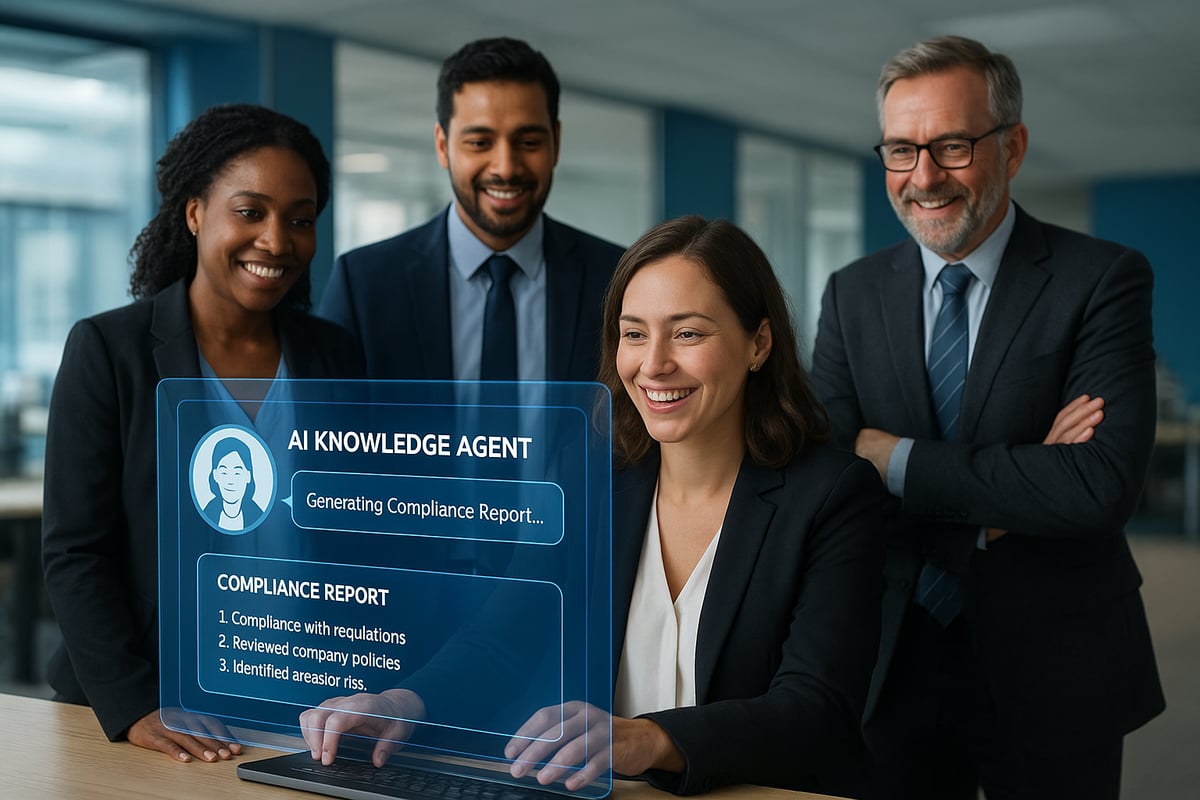
- An employee submits a request for a compliance report.
- The knowledge agent retrieves data from internal systems, analyses requirements, and generates the report.
- The agent autonomously completes the workflow and notifies the employee.
This approach increases productivity and sparks creativity by automating routine tasks. Australian enterprises and global organisations are rapidly adopting knowledge agents to stay ahead. Platforms like AI solutions for knowledge automation offer secure, local deployment and industry-specific automations. Embracing knowledge agents is now essential for businesses to remain competitive in 2026.
The Technical Foundations: RAG, Vectors, LLMs and Knowledge Graphs
Unlocking the true power of knowledge agents in 2026 means understanding the technology that drives them. These foundations—Retrieval-Augmented Generation (RAG), vector embeddings, large language models (LLMs), and knowledge graphs—are the engines behind smarter, more context-aware automation.

Understanding Retrieval-Augmented Generation (RAG) and Vectors
- RAG is the backbone of modern knowledge agents, enabling AI to pull up-to-date answers from enterprise data instead of relying on static information.
- Vectors turn documents, emails, and databases into mathematical representations, making it possible for agents to search by meaning rather than just keywords.
- When you ask a question, content is instantly converted into vectors so knowledge agents can deliver context-aware, accurate responses.
- Saurabh Mishra highlights the benefits of using private, domain-specific data, ensuring answers are tailored to your business.
- For example, a financial planning firm can use RAG to quickly surface policy changes from thousands of documents, saving teams hours each week.
The Power of Large Language Models (LLMs)
- LLMs allow knowledge agents to generate responses grounded in your business’s unique context, not just internet data.
- Unlike generic chatbots, these agents can reference your policies, guidelines, and records for every answer.
- This results in improved accuracy and traceability—teams see up to 90 percent faster knowledge retrieval compared to traditional search tools.
- LLMs ensure that every response is both relevant and actionable, helping high-performing teams make decisions quickly.
Building World Models and Knowledge Graphs
- World models and knowledge graphs let knowledge agents map complex relationships within your business, connecting data points across systems.
- Agents use these models to identify gaps and suggest process improvements.
- In manufacturing, for example, a knowledge agent can combine sensor data, maintenance manuals, and incident reports to predict equipment failures before they happen.
- Structured memory means agents can reason, explain their decisions, and spot missing knowledge.
- According to research like ConceptFormer: Efficient Knowledge-Graph Embeddings in LLMs, integrating knowledge graphs boosts factual accuracy and recall for knowledge agents, making them smarter every day.
- Businesses using these models report a 60 percent reduction in time spent searching for answers, allowing more energy for strategic work.
Autonomous Workflows: How Knowledge Agents Drive Real Business Outcomes
Autonomous workflows are redefining how businesses operate in 2026. Knowledge agents now take on complex tasks, delivering measurable results with speed and precision. Let’s explore exactly how these systems turn expertise into action and drive real-world outcomes.
Step-by-Step: How Knowledge Agents Execute Complex Tasks
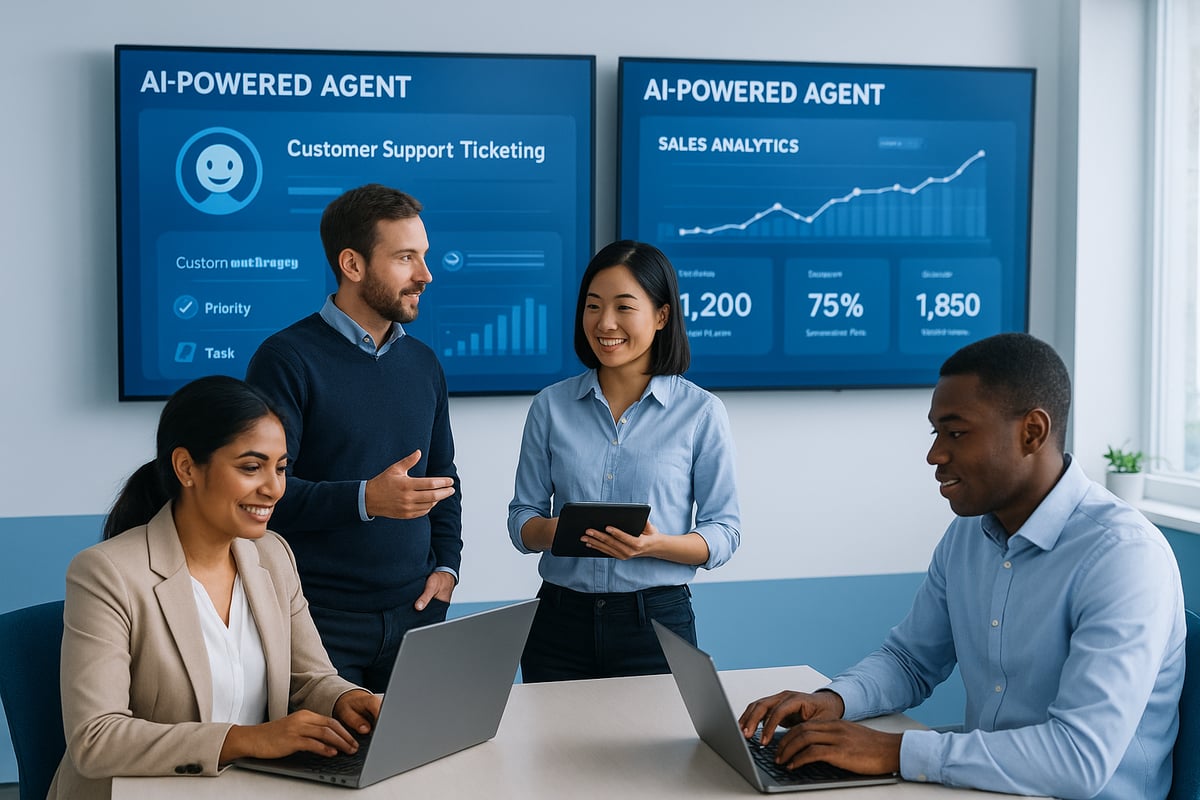
- First, knowledge agents receive a task, such as resolving a customer support ticket.
- They break the task into clear, manageable steps, identifying what information is needed at each stage.
- Next, they retrieve relevant data from company records, knowledge bases, and emails, ensuring every action is context aware.
- The agents then plan strategically, setting objectives and sequencing actions for maximum efficiency.
- Memory systems allow them to refine these processes over time, learning from past outcomes.
- For example, Synap’s workflow automations enable agents to resolve tickets by gathering customer history, suggesting solutions, and updating records, all without human intervention. Learn more about these AI services for businesses.
- Knowledge agents also communicate with APIs and third-party tools, such as CRM systems or scheduling platforms, for seamless execution.
- Roman Rylko notes that intelligent assistants now manage tasks end to end, triggering follow up workflows automatically.
As a result, businesses report a 60 percent reduction in process time when using knowledge agents, freeing employees for more strategic work.
Continuous Learning and Adaptation
Knowledge agents do not just automate—they learn and adapt. After each workflow, agents analyse outcomes to identify what worked best and what can be improved.
- Successful approaches are retained, aligning with team priorities and evolving business goals.
- For instance, sales playbook agents track which tactics convert leads most effectively, then adjust future recommendations.
- Agents adapt quickly to new data sources, policy changes, or customer needs, ensuring ongoing relevance.
- Unlike basic automation, knowledge agents make dynamic, intelligent decisions, not just repetitive actions.
- Teams leveraging knowledge agents see up to 90 percent faster task completion compared to traditional methods.
- This ongoing improvement gives organisations a clear competitive advantage.
Ready to explore how knowledge agents could transform your workflows? Book a free online consult with our AI technologist to discuss tailored solutions for your business.
Governance, Trust and Risk Management in Knowledge Agent Deployment
Effective governance is essential to deploying knowledge agents responsibly in 2026. Australian businesses must prioritise robust frameworks to ensure compliance, security, and transparency. Start by identifying data privacy obligations under local laws like the Privacy Act, then implement security protocols and access controls.
- Define clear governance structures for knowledge agents, including assigning responsible team members for oversight.
- Set up audit trails to track agent decisions and interactions, supporting transparency and accountability.
- Use human-in-the-loop review, especially for high-impact workflows, to minimise risks and maintain trust.
Real-world challenges include avoiding bias, ensuring explainability, and validating content accuracy. For example, Synap’s platform offers built-in agent verification and audit logging, helping organisations meet compliance and reduce operational risks. Adopting best practices, such as those outlined in the FRAG: Modular Framework for RAG with Knowledge Graphs, can further strengthen governance and support scalable, secure deployments.
Regularly monitor and update agent knowledge bases to maintain accuracy and relevance. Statistics show that organisations with strong governance see up to 40 percent higher user adoption of knowledge agents. Leadership must set ethical standards, encourage ongoing training, and foster a culture of trust. To explore secure deployment strategies tailored to your business, book a free consult with our AI technologist.
Integrating Knowledge Agents into Your Organisation: A Step-by-Step Guide
Bringing knowledge agents into your business can transform the way teams access and act on information. The following guide outlines five essential steps for a successful rollout, drawing on proven strategies from Synap’s work with Australian organisations.
Step 1: Identify Business Needs and Use Cases
Start by mapping out where knowledge agents can deliver the most value. Common areas include customer support, HR onboarding, and sales enablement. Consult stakeholders to align on priorities and ensure every use case addresses a real pain point.
Step 2: Select the Right Knowledge Agent Platform
Research platforms for integration, security, and compliance. Ensure your choice supports local data hosting to meet Australian regulations. For practical steps on evaluating solutions, see How to implement AI agents.
Step 3: Connect Data Sources and Set Up Knowledge Graphs
Integrate both structured and unstructured data, such as emails, PDFs, and databases. Build or import domain-specific knowledge graphs to give agents a complete view. Validate data quality to maintain accuracy and relevance in every interaction.
Step 4: Configure Workflows and Automations
Define the processes agents will execute, from responding to customer queries to automating internal approvals. Customise actions, triggers, and escalation paths. Test workflows with real-world scenarios, like Synap’s legal document review automation, to ensure smooth operation.
Step 5: Train, Monitor, and Refine Agents
Provide initial training data and set up feedback loops. Monitor performance and user satisfaction regularly. Knowledge agents improve with continuous updates, helping teams complete tasks up to 90 percent faster. For tailored integration advice, book an online consult with an AI technologist.
Australian AI Solutions for Secure Knowledge Automation
Australian businesses are rapidly adopting knowledge agents to keep pace with global innovation. Synap stands at the forefront, providing secure, compliant AI agent solutions tailored to the needs of local enterprises.
Synap’s unique pay-per-agent model allows organisations to scale knowledge agents efficiently while controlling costs. Integration with existing workflows is seamless, making adoption straightforward for teams of all sizes.
Industry-specific solutions are available for education, legal, healthcare, and customer service. These knowledge agents streamline document review, automate customer triage, and summarise complex research with precision.
Data privacy is central to Synap’s offering. All information is hosted and processed within Australia, ensuring compliance with strict local regulations and building trust with stakeholders.
Real-world results are compelling. For example, legal teams use Synap to automate contract analysis, reducing manual review time by 50 percent. Healthcare providers leverage agents for fast research summarisation, improving patient outcomes.
Each response from Synap’s knowledge agents is grounded in cited sources, reducing misinformation and supporting informed decisions. For more insights on AI advancements and practical applications, visit the Synap AI blog and insights.
Ready to see how knowledge agents can transform your business? Book a free online consult with an AI technologist to explore tailored strategies.
As we look to 2026, knowledge agents are set to redefine how we unlock and apply expertise within our organisations. By embracing secure, context-aware AI tools, you can streamline workflows, drive productivity, and stay ahead in a rapidly changing business landscape. Whether you're exploring automation for the first time or ready to integrate intelligent agents into your daily operations, this is your moment to act and future proof your team. Ready to take the next step towards smarter, more efficient processes? Join Now and start your journey with AI powered knowledge solutions tailored for Australian businesses.