
AI is set to dominate business strategy by 2026, transforming how organisations operate across every industry. The race is on for Australian companies to adopt a robust ai data platform, now essential for staying competitive and delivering real results.
This guide is designed to help you navigate the rapidly changing landscape, showing you how to build, scale, and optimise your ai data platform for long-term success. We’ll cover platform fundamentals, step-by-step implementation, strategies for overcoming challenges, tips to ensure compliance, and how to leverage trusted Australian solutions.
If you want to future-proof your operations and unlock new growth, you’re in the right place. Let’s dive in and discover practical steps you can take today for a smarter tomorrow.
Understanding AI Data Platforms in 2026
AI data platforms are changing the way Australian businesses operate. By 2026, these platforms will be the backbone of digital transformation, giving organisations the tools to adapt, grow, and compete. As data volumes soar and AI evolves, understanding the heart of a modern ai data platform is essential for staying ahead.

Defining the Modern AI Data Platform
An ai data platform in 2026 is a unified ecosystem that connects, manages, and analyses data for intelligent decision-making. It brings together several core components:
- Data ingestion from sources like IoT devices, apps, and databases.
- Secure storage that handles massive, diverse datasets.
- Real-time processing for immediate insights.
- Seamless machine learning and AI model integration.
- Advanced analytics for actionable business intelligence.
Since 2024, platforms like NVIDIA and OpenText have driven rapid evolution. Today’s systems offer unified data access, enabling teams to work with structured and unstructured data in real time. According to Gartner, 80% of enterprises will use ai data platform solutions by 2026. The rise of agentic and generative AI means platforms must support context-aware data management, adapting to changing business needs.
Core Capabilities and Features
A future-ready ai data platform must deliver several essential capabilities:
- Scalability to meet growing data and user demands.
- Security features like encryption and access controls.
- Multi-cloud and sovereign cloud support for flexibility.
- End-to-end automation, from data pipelines to AI model deployment.
- Built-in compliance and governance for regulations such as OAIC.
- Integration with business systems like ERP, CRM, and industry apps.
- AI-ready preparation of both structured and unstructured data.
For example, an Australian manufacturer can automate supply chain analytics by connecting sensors, applying OpenText’s contextual AI, and running models on NVIDIA’s accelerated infrastructure. This transforms raw data into real-time insights, driving smarter decisions and boosting efficiency across the business.
Key Trends Shaping 2026 Platforms
Several trends are shaping the next generation of ai data platform solutions:
- Organisations are increasingly adopting sovereign and private cloud deployments to keep data local.
- Agentic AI and business-specific AI agents are becoming mainstream, automating complex tasks.
- Automated data pipelines and MLOps are streamlining workflows.
- OpenText’s secure, contextual AI and NVIDIA’s modular infrastructure set new standards for reliability.
- Industry-specific AI is on the rise, tailored to legal, healthcare, and logistics needs.
- IDC forecasts that 60% of platforms will offer no-code AI by 2026, making AI accessible to all.
- The demand for data sovereignty is stronger than ever in Australia.
For deeper insights into these trends and best practices, you can explore the Synap Blog: AI Platform Trends, which covers the latest innovations shaping the industry.
Step-by-Step Guide to Building an AI Data Platform for Success
Building a future-ready ai data platform can feel daunting, but it becomes achievable with a clear roadmap. Let’s break down the process into four actionable steps, each designed to help Australian organisations unlock value, drive innovation, and stay compliant.

Step 1: Assess Business Needs and Data Landscape
Every successful ai data platform starts with a deep understanding of your data and goals. Start by bringing together stakeholders from IT, compliance, and operations.
- Identify all data sources, such as databases, IoT devices, and customer systems.
- Map out the types and volumes of data you collect.
- Define your key business objectives for adopting AI, like improving efficiency or customer experience.
- Evaluate your current data infrastructure and pinpoint gaps.
- Consult partners, like Synap, for an initial assessment tailored to your industry.
For example, an Australian logistics company mapped both IoT sensor data and customer feedback to align their ai data platform with business growth targets. Aligning your strategy at this stage avoids costly rework later.
Step 2: Select the Right Platform and Architecture
Choosing the right ai data platform architecture is crucial for scalability and compliance. Consider your current systems and future needs.
- Compare private, public, hybrid, and sovereign cloud options.
- Ensure compatibility with core business systems, such as ERP and CRM.
- Prioritise platforms with robust security and Australian data residency.
- Look for solutions offering flexibility, like NVIDIA’s DGX or Synap’s modular deployments.
- Use a checklist to evaluate features: scalability, compliance, integration, and automation.
A growing SME can begin with a hybrid setup, then scale up as their ai data platform evolves. For a feature comparison and more details, check out How to Use Synap AI Platforms.
Step 3: Integrate, Cleanse, and Prepare Data
Integration and preparation are the backbone of any effective ai data platform. This step ensures your data is ready for AI-driven insights.
- Connect all data sources, including documents, APIs, and legacy databases.
- Automate data ingestion and cleansing with AI-powered tools.
- Apply metadata tagging for context and enable lineage tracking.
- Set up automated data pipelines for ongoing updates.
- Address both structured and unstructured data, using Synap’s document connectors.
For instance, automating invoice data extraction speeds up finance processes and reduces errors. Clean, well-labelled data is the foundation for reliable AI outcomes.
Step 4: Deploy, Train, and Monitor AI Models
The final step is to put your ai data platform into action with real-world AI models. This phase brings your data to life.
- Integrate machine learning frameworks like NVIDIA NeMo or OpenText Analytics.
- Train models using your local business data for better relevance.
- Automate deployment and version management of your models.
- Set up real-time monitoring to track performance and detect issues.
- Establish feedback loops for continuous retraining and improvement.
A manufacturing company, for example, used predictive maintenance models to reduce downtime. Emphasise explainable AI and transparency to build trust with users and regulators.
Overcoming Common AI Data Platform Challenges
Building a powerful ai data platform is exciting, but the path is not without hurdles. Security, scalability, integration, and user adoption are the top concerns for Australian organisations. Let’s break down these challenges and see how to overcome them, step by step.

Security, Privacy, and Data Sovereignty
Security and privacy are at the heart of every successful ai data platform in Australia. With strict data privacy laws like the OAIC and GDPR, protecting sensitive information is essential.
- Start by hosting data locally within Australia to ensure compliance.
- Apply end-to-end encryption, strict access controls, and detailed audit trails.
- Use role-based access to limit who can view or change data.
- Regularly audit your systems for vulnerabilities.
A healthcare provider, for example, can use Synap’s local hosting to secure patient records and meet compliance needs. The risks of non-compliance are real, as shown in the Clearview AI's breach of Australian privacy laws case, where penalties included public scrutiny and hefty fines. Make security a core part of your ai data platform from day one.
Scalability and Performance Bottlenecks
Scaling an ai data platform is crucial as data volumes and user numbers grow. Performance bottlenecks can happen anywhere in the system, from storage to compute to network.
- Identify current and future resource needs.
- Invest in modular, GPU-accelerated infrastructure like NVIDIA HGX or OVX.
- Set up AI-driven workload management to automate scaling.
- Continuously monitor and adjust resources in real time.
An e-commerce company using Synap automations scaled seamlessly to handle peak sales events, avoiding slowdowns and lost revenue. In fact, by 2026, 70% of enterprises will use AI for infrastructure scaling. Proactive performance analytics are key to keeping your ai data platform running smoothly.
Integration and Interoperability Issues
Integrating an ai data platform with legacy systems and siloed data is a common challenge. Open APIs and robust connectors are essential.
- Map out all integration touchpoints, including ERP and CRM systems.
- Use standardised data formats to simplify connections.
- Leverage Synap’s connectors for quick integration.
- Build unified dashboards for a single view of operations.
For example, a logistics provider integrated their ai data platform with both their ERP and CRM, unlocking real-time insights and improving decision-making. Modular platforms ensure your investment stands the test of time.
Change Management and User Adoption
Rolling out an ai data platform can meet resistance if teams are not prepared. Success relies on people, not just technology.
- Communicate the benefits clearly and involve teams early.
- Provide hands-on training and easy-to-follow onboarding processes.
- Encourage feedback and support ongoing learning.
A retail chain, for instance, trained frontline staff on new AI-powered tools, leading to faster adoption and improved customer service. Continuous support and open communication turn scepticism into success for your ai data platform journey.
Ensuring Compliance, Security, and Responsible AI
Regulatory compliance, security, and responsibility are the cornerstones of any future-ready ai data platform. With strict Australian regulations, from OAIC to APRA CPS 234, businesses must be proactive.
Meeting Regulatory and Industry Standards
Australian organisations face an evolving landscape of data laws. Key regulations include the OAIC’s Privacy Act, APRA CPS 234 for financial services, and GDPR for international operations.
To ensure your ai data platform aligns, follow this step-by-step process:
- Identify applicable regulations for your sector.
- Conduct regular compliance audits using automated tools.
- Leverage platforms like OpenText and Synap, which offer built-in compliance and Australian data residency.
- Implement automated compliance reporting for ongoing assurance.
- Monitor changes in industry standards.
For example, a financial services firm in Sydney used Synap’s audit capabilities to meet APRA standards, saving time and reducing risk. Regular monitoring and reporting are critical to stay ahead.
Building Trust with Explainable and Ethical AI
Trust is essential when deploying an ai data platform. Explainable AI means you can show how decisions are made, making it easier to build user confidence.
Here’s how to achieve this:
- Integrate model transparency tools, like those offered by NVIDIA.
- Document decision paths and make them accessible to stakeholders.
- Detect and mitigate bias in AI outputs.
- Conduct regular audits for fairness and accuracy.
- Communicate findings clearly to users.
Consider a legal firm using AI for document review. By using explainable AI, they ensure decisions are transparent and challengeable. This approach not only builds trust, it keeps your ai data platform aligned with ethical standards.
Securing Data Across the AI Lifecycle
Security risks touch every part of the ai data platform lifecycle, from ingestion to inference. Each stage requires robust protection.
Follow these steps for strong security:
- Apply encryption to all data in transit and at rest.
- Set up strict access management and role-based controls.
- Use solutions like OpenText’s cybersecurity suite and Synap’s secure agents.
- Schedule regular penetration testing and incident response drills.
- Adopt a zero trust approach for data governance, as described in Zero trust data governance strategies for AI.
For example, an Australian government agency used Synap to securely process classified information, reducing breach risk. Gartner reports 65 percent of breaches in 2025 will be linked to unsecured AI pipelines, making proactive security vital.
Australian Private AI Solutions: Synap
Synap stands out as a fully Australian-owned ai data platform. It prioritises privacy, local hosting, and seamless compliance with Australian standards.
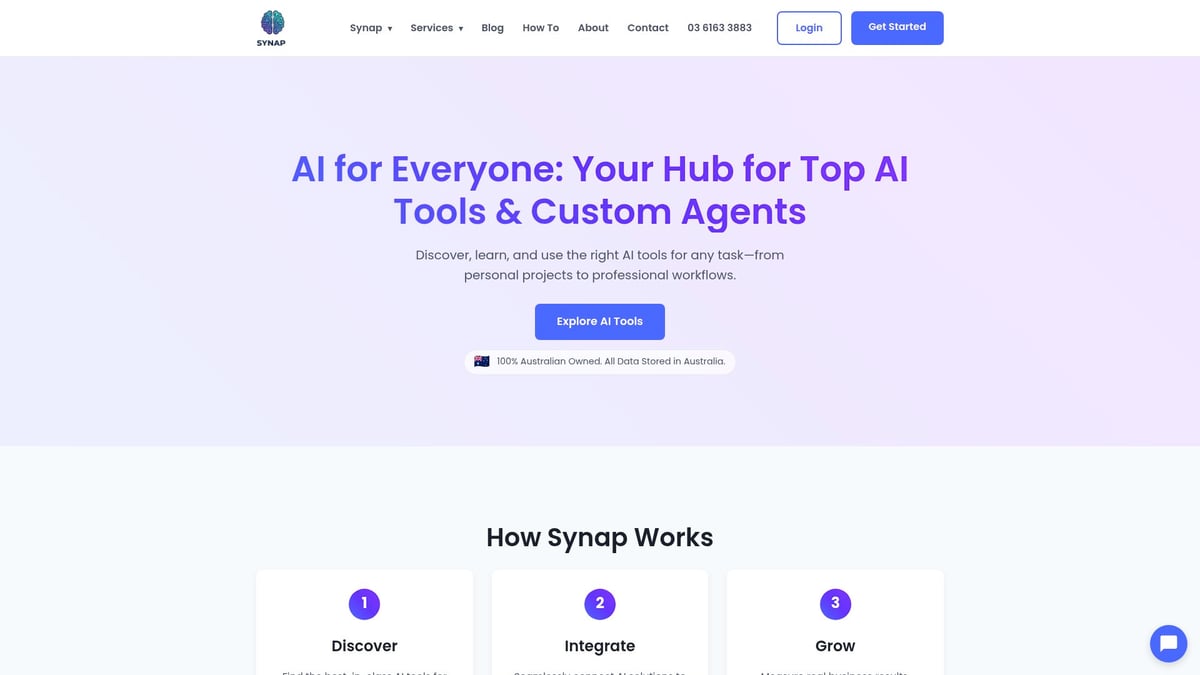
Using Synap, businesses can automate customer service with private AI chat wrappers, keeping all customer data onshore. If you want to explore how Synap’s AI Solutions and Services Overview can help your organisation, consider booking a consult with our AI technologist for tailored advice. Future-proof your ai data platform with local expertise and trusted solutions.
Maximising Value: Best Practices and Future-Proofing Your AI Data Platform
Unlocking the full potential of your ai data platform means moving beyond simple deployment. It is about embedding automation, industry intelligence, and future-proofing strategies into every part of your business. Let’s explore how you can maximise value, stay ahead of the curve, and build resilience for years to come.
Automating Workflows and Business Intelligence
With an ai data platform, automation becomes the engine driving efficiency. Imagine reducing manual tasks and freeing up your team for higher-value work.
- Identify which business processes are repetitive, such as invoice processing or customer routing.
- Map these manual steps to digital workflows within your ai data platform.
- Use Synap’s intelligent automation tools to set up ai agents for tasks like document handling or approvals.
- Continuously monitor outcomes and optimise the workflows for better results.
For example, an education provider used Synap’s automation to cut student enquiry processing times in half. According to McKinsey, automation can reduce costs by up to 40 percent. The key is using business-user-friendly interfaces so everyone can participate in the automation journey.
Leveraging Industry-Specific AI Solutions
Every industry has unique needs, and an ai data platform tailored to your sector unlocks greater value. Legal, healthcare, logistics, and retail all benefit from specialised solutions.
- Assess your industry’s regulatory and operational requirements.
- Select or customise ai agents for sector-specific tasks, like contract drafting in legal or patient triage in healthcare.
- Integrate platforms such as OpenText for compliance or Synap for localised solutions.
A law firm, for instance, sped up contract reviews using a legal ai agent. Industry AI spend is expected to reach 200 billion dollars by 2026, according to Gartner forecasts AI spending to reach $2.5 trillion by 2026. Regular solution reviews ensure your ai data platform keeps pace with change.
Continuous Optimisation and Monitoring
Sustained success with your ai data platform requires ongoing optimisation. Performance reviews and proactive monitoring are vital.
- Set up automated alerts and dashboards using built-in analytics tools like NVIDIA’s Mission Control or OpenText analytics.
- Schedule quarterly optimisation sprints to review data pipelines and model accuracy.
- Implement real-time anomaly detection for critical business areas, such as financial services.
- Gather user feedback and adjust workflows or models based on real-world results.
A financial services company, for example, used these steps to spot fraud faster and improve customer trust. Continuous feedback loops help keep your ai data platform aligned with business goals.
Planning for Scalability and Future Trends
Future-proofing your ai data platform starts with anticipating growth and new trends. Scalability is not just about technology, but also strategy.
- Forecast future data volumes and complexity based on business plans.
- Scale infrastructure with modular components, leveraging solutions like NVIDIA MGX or Synap’s flexible agent model.
- Regularly review your tech stack to ensure compatibility with the latest advancements.
- Plan for regulatory changes and ensure your platform adapts quickly.
For example, a retailer scaled from 1,000 to 100,000 users by building on a modular ai data platform. Explore options in the AI Platform Product Explorer to see what fits your growth plans. For tailored advice, consider booking an online consult with our AI technologist.
We’ve covered a lot together—from the basics of AI data platforms to overcoming challenges and planning for the future. If you’re ready to put these insights to work and want guidance tailored to your business, you don’t have to do it alone. Let’s make sure your AI journey is secure, compliant, and designed for real results right here in Australia. Whether you’re just starting out or scaling up, I’m here to help you take the next step with confidence. Ready to chat about what’s possible for your organisation? Book a Consultant Now