Artificial intelligence solutions are reshaping how businesses operate in 2026, driving innovation and unlocking unprecedented opportunities across every industry. As AI tools move from experimental trials to essential business assets, understanding their capabilities and risks is more important than ever.
This guide delivers essential insights for leaders and professionals who want to stay ahead. You will learn what defines artificial intelligence solutions, discover the latest trends, explore solution types, and see how Australian businesses are applying AI for real results.
With actionable advice, real-world examples, and expert guidance, this article empowers you to harness AI’s potential for competitive advantage. Ready to transform your business journey? Let’s dive in.
Understanding Artificial Intelligence Solutions in 2026
Artificial intelligence solutions have redefined the business landscape in 2026. Today, these solutions are not just buzzwords, but integral systems woven into daily operations across industries. The evolution from isolated experiments to widespread adoption signals a new era of efficiency, innovation, and competitive advantage.
Artificial intelligence solutions harness technologies like machine learning, natural language processing, computer vision, and intelligent automation. In the early 2020s, many organisations viewed these tools as experimental. By 2026, they have become indispensable, driving transformation in both small and large enterprises.
The shift from pilot projects to essential business functions is backed by data. Over 70 percent of Australian businesses now rely on artificial intelligence solutions to automate workflows, analyse customer data, and optimise operations. These solutions use predictive AI for forecasting, generative AI for content creation, and agentic AI for digital assistants and process automation.
For example, generative AI produces marketing copy and product descriptions at scale. Predictive models identify sales trends and manage inventory. Agentic AI, such as digital assistants, streamlines internal communication and customer service. The impact is measurable: a recent report found that companies using artificial intelligence solutions experience up to 40 percent improvement in process accuracy and a 30 percent reduction in manual workload.
Adoption rates continue to surge. Industries ranging from healthcare to retail are implementing AI-driven tools to boost productivity. According to AI adoption statistics in Australian businesses, more than half of medium-sized Australian enterprises have integrated artificial intelligence solutions into at least one core function. This trend is especially pronounced in sectors like finance, where AI detects fraud, and in logistics, where it predicts supply chain disruptions.
Deployment models have also matured. Cloud-based AI allows rapid scaling and access to powerful models. Edge AI processes data locally, ensuring privacy and speed for sensitive tasks. On-premise deployments address specific compliance requirements, particularly in industries managing confidential information.
Consider a real-world example: A Melbourne mid-sized logistics company implemented artificial intelligence solutions to automate order processing and route optimisation. By integrating Synap’s custom AI automation, the business reduced delivery times by 25 percent and improved customer satisfaction scores. Staff now spend less time on repetitive tasks, focusing instead on customer engagement and strategic growth.
Artificial intelligence solutions are shaping a smarter, more agile business environment in Australia. As integration deepens, these technologies will continue to unlock new opportunities for growth and efficiency.

Major Types of Artificial Intelligence Solutions
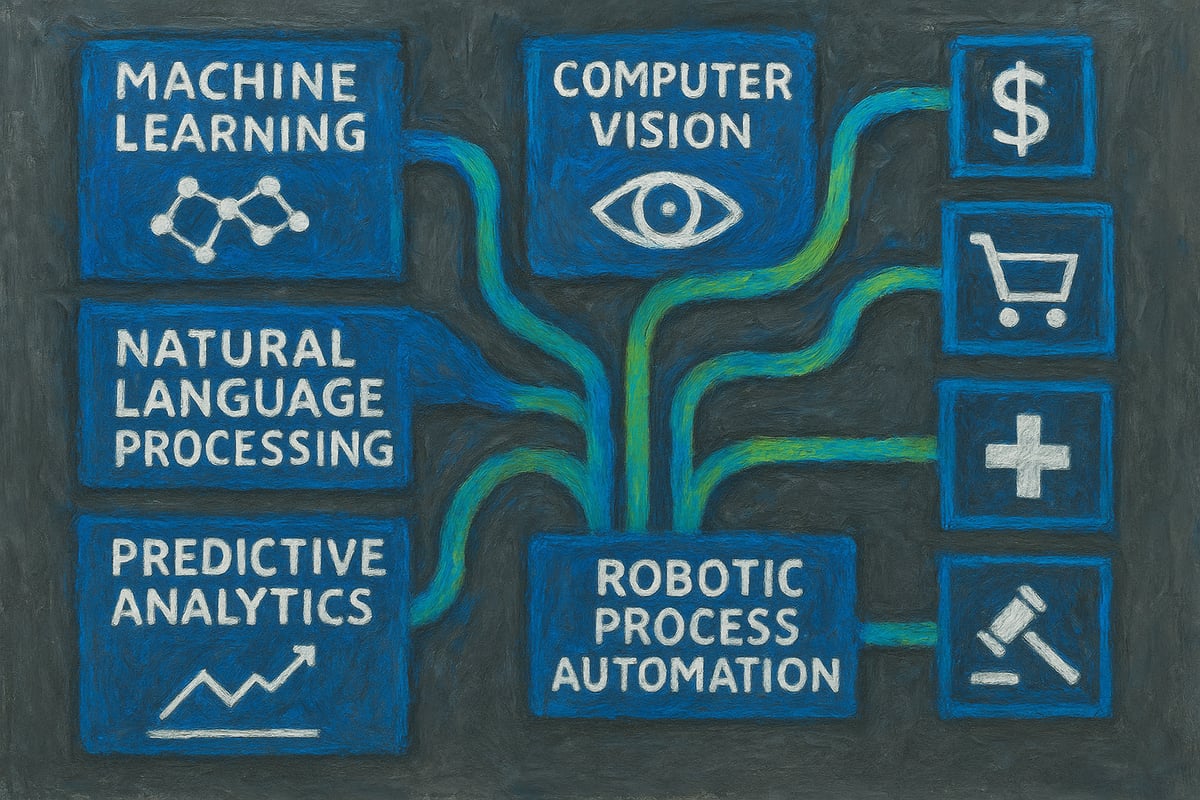
Artificial intelligence solutions now power the backbone of innovation across Australian industries. In 2026, businesses rely on a diverse suite of AI technologies, each tailored for specific operational needs. Understanding these categories helps leaders select the right tools and gain a competitive edge. For a deeper dive into trends and practical case studies, explore the Artificial intelligence blog articles from Synap.
1. Machine Learning
Machine learning sits at the heart of most artificial intelligence solutions. It enables systems to learn from data, identify patterns, and make predictions. In finance, models detect fraud by analysing transaction trends. Retailers use machine learning for dynamic pricing and stock optimisation.
A step-by-step example: An Australian e-commerce company gathers sales data. The AI model is trained to recognise purchase patterns. Over time, it predicts which products will trend, helping the business adjust inventory and reduce waste.
In 2026, Synap’s automation agents use machine learning to streamline repetitive analysis, freeing staff for higher-value work.
2. Natural Language Processing
Natural language processing (NLP) powers artificial intelligence solutions in customer service, sentiment analysis, and language translation. NLP tools interpret human language, enabling chatbots to answer queries or summarise documents.
For instance, a legal firm uses Synap’s AI-driven NLP agent to review contracts. The agent extracts key clauses, flags risks, and drafts summaries, saving hours each week.
Step-by-step, staff upload contracts, the AI reviews and highlights important sections, then generates a summary. This process improves turnaround time and accuracy, vital in Australia’s fast-paced legal sector.
3. Computer Vision
Computer vision allows artificial intelligence solutions to interpret visual information. In manufacturing, AI-driven cameras inspect products for defects. Healthcare providers use computer vision to analyse medical images for faster, more accurate diagnoses.
A real-world example: An Australian hospital adopts an AI platform that scans X-rays. The system flags anomalies, supporting radiologists in decision making.
Here’s how it works: Images are uploaded, the AI processes and marks potential issues, then doctors review flagged results. This step-by-step approach reduces errors and improves patient outcomes.
4. Predictive Analytics
Predictive analytics is a core capability of artificial intelligence solutions, offering insights into future trends, risks, and opportunities. Retailers forecast demand spikes, while banks assess loan risk using large datasets.
A mid-sized retailer in Sydney implements Synap’s AI-powered predictive analytics. The workflow: Sales data is collected, the AI analyses seasonal trends, and managers receive weekly reports. This enables proactive stock management, reducing overstock and missed sales.
Statistics show that businesses using predictive analytics report up to 20 percent higher inventory turnover and improved customer satisfaction scores.
5. Robotic Process Automation
Robotic process automation (RPA) uses artificial intelligence solutions to automate repetitive digital tasks. RPA bots handle invoice processing, data entry, and HR onboarding.
A step-by-step guide for RPA in action: A professional services firm identifies manual admin tasks. Synap designs a custom RPA agent. Staff provide sample workflows, the AI is trained, and bots are deployed. Within weeks, the firm saves 10-40 hours monthly, reallocating staff to client-facing roles.
RPA not only cuts costs but also improves accuracy and compliance, especially in sectors with strict data privacy needs.
Summary Table: AI Solution Types
| Solution Type | Key Industry Uses | Example Benefit |
|---|---|---|
| Machine Learning | Finance, Retail | Fraud detection, stock optimisation |
| Natural Language Processing | Legal, Customer Service | Contract analysis, chatbots |
| Computer Vision | Healthcare, Manufacturing | Diagnostics, quality control |
| Predictive Analytics | Retail, Finance | Demand forecasting, risk assessment |
| Robotic Process Automation | Professional Services, HR | Admin automation, compliance |
Artificial intelligence solutions are reshaping how Australian organisations operate. Leaders who understand these types can make informed decisions and unlock measurable value. For tailored advice, book a free online consult with a Synap AI technologist to explore which solution best fits your business.
Key Benefits of AI Solutions for Businesses
Artificial intelligence solutions are revolutionising how Australian organisations operate in 2026. Businesses are harnessing these tools for measurable gains in efficiency, cost savings, and customer satisfaction. The adoption of artificial intelligence solutions is no longer an option but a strategic necessity.

- Boosting Operational Efficiency
Artificial intelligence solutions automate repetitive and manual tasks. Processes such as invoice matching, data entry, and appointment scheduling become streamlined. This automation frees staff to focus on higher-value activities. According to recent industry reports, Australian businesses adopting artificial intelligence solutions save an average of 10–40 hours each month.
- Driving Significant Cost Savings
By reducing the need for manual intervention, artificial intelligence solutions lead to substantial cost reductions. Businesses report lower staffing requirements and decreased operational overhead. For example, a legal firm using Synap’s automation agent cut document review time by 30 percent, translating to direct savings.
- Enhancing Decision-Making and Insights
Artificial intelligence solutions enable real-time data analysis. Leaders can make faster, more informed decisions based on up-to-date insights. Predictive analytics uncover trends and risks before they impact the business. This empowers companies to stay a step ahead in a competitive market.
- Improving Customer Experience
Customers now expect personalised and instant service. Artificial intelligence solutions deliver tailored recommendations, proactive support, and 24/7 availability. AI-powered chat wrappers from Synap allow businesses to respond to client queries in seconds, improving retention and satisfaction.
- Accelerating Innovation Cycles
With artificial intelligence solutions, businesses can rapidly test new ideas and scale successful products. Automation reduces the time required to develop, launch, and refine offerings. This agility fosters a culture of continuous improvement and keeps organisations at the forefront of their industries.
- Strengthening Compliance and Risk Management
Regulatory requirements are tightening, especially regarding data privacy. Artificial intelligence solutions help monitor compliance, flag anomalies, and ensure secure data handling. Synap’s focus on data sovereignty ensures that sensitive information remains protected on Australian servers.
Step-by-Step Example: Transforming a Professional Services Firm
- The firm identified repetitive document processing as a major bottleneck.
- They partnered with Synap to assess data readiness and map workflow steps.
- Synap deployed a custom automation agent using artificial intelligence solutions tailored to legal document review.
- Staff received training on the new AI system and ongoing support.
- Within weeks, the platform reduced manual review time by half.
- The firm captured 1,200+ new leads and experienced a measurable increase in client satisfaction.
Recent studies show that more than 60 percent of Australian SMEs have adopted some form of artificial intelligence solutions, with reported productivity gains of up to 25 percent (AI adoption in Australian SMEs). These results demonstrate why investing in artificial intelligence solutions is essential for future-ready businesses.
Ready to explore how artificial intelligence solutions can deliver these benefits for your organisation? Book a complimentary online consult with an AI technologist to discuss tailored options for your needs.
Step-by-Step Guide: Successfully Implementing AI Solutions in 2026
Adopting artificial intelligence solutions is a journey that requires clear planning, collaboration, and ongoing optimisation. Following a structured, step-by-step process helps businesses maximise value, reduce risks, and achieve measurable results. Here’s how to successfully implement artificial intelligence solutions in 2026.

1. Define Objectives and Assess Data Readiness
Start by defining clear business objectives for your artificial intelligence solutions. Ask what problems you want to solve. Align AI initiatives with your overall strategy. For example, do you want to improve customer service, reduce costs, or drive innovation?
Next, assess your data readiness. Evaluate the quality, quantity, and structure of your data. Ensure your data complies with Australian privacy regulations. Clean, well-organised data is the foundation for reliable artificial intelligence solutions.
Conduct a thorough readiness assessment to identify gaps and opportunities. Many Australian businesses use frameworks like Synap AI’s readiness assessment to benchmark their preparedness. This evaluation helps you prioritise projects and allocate resources efficiently.
For a comprehensive guide on these foundational steps, see How to implement AI solutions.
2. Solution Selection and Integration
Choose the right artificial intelligence solutions for your needs. Compare developing solutions in-house with buying off-the-shelf platforms or partnering with consultants.
Consider the following factors:
- Customisation: Custom-built solutions align closely with your unique processes. Off-the-shelf platforms offer speed and cost efficiency.
- Resources: In-house development requires skilled staff and ongoing support. External partners like Synap AI bring expertise and proven methodologies.
- Scalability: Ensure the solution can grow with your business.
| Approach | Pros | Cons |
|---|---|---|
| Build | Tailored fit, full control | High cost, longer timeline |
| Buy | Fast deployment, lower upfront cost | May lack custom features |
| Partner | Expert guidance, best practices | Ongoing consulting fees |
Integrate the chosen artificial intelligence solutions with your existing systems. Ensure compatibility with current workflows, IT infrastructure, and user interfaces. Test integrations carefully to prevent disruptions.
3. Training, Monitoring, and Change Management
Invest in staff training to build AI literacy across your organisation. Provide hands-on workshops, learning modules, and support resources. Empower employees to understand and trust artificial intelligence solutions.
Monitor and measure performance using clear KPIs. Track outcomes such as productivity gains, cost savings, and customer satisfaction. Iterate based on feedback and data insights.
Change management is critical. Communicate the benefits of artificial intelligence solutions to all stakeholders. Address concerns, manage expectations, and provide continuous support. Businesses that actively manage change report up to 30% faster adoption rates and higher ROI.
4. Real-world Example: AI Inventory Management in Retail
A mid-sized Australian retailer wanted to optimise inventory management. They followed a step-by-step approach:
- Defined the objective: reduce stockouts and excess inventory.
- Assessed data: reviewed sales, supplier, and inventory data for completeness.
- Selected Synap AI’s inventory automation platform for tailored deployment.
- Integrated the AI solution with their POS and ERP systems.
- Trained staff in using predictive dashboards.
- Monitored KPIs: noticed a 25% drop in stockouts and 18% reduction in excess stock within six months.
- Managed change via regular updates and feedback sessions.
This structured method enabled the retailer to unlock the full value of artificial intelligence solutions, driving measurable improvements in efficiency and profitability.
5. Synap AI’s Structured Implementation Process
Synap AI offers an end-to-end approach for Australian businesses adopting artificial intelligence solutions. Their process includes:
- AI readiness assessment to evaluate current capabilities.
- Custom strategy development aligned with business goals.
- Solution design, deployment, and integration.
- Ongoing optimisation and support.
Clients report a 20–40% improvement in process efficiency and faster time-to-value. Structured implementation with expert guidance is proven to deliver higher ROI and sustained competitive advantage.
Ready to future-proof your business? Book a free online consult with our AI technologist to discuss your next steps.
Overcoming Challenges and Ethical Considerations
Addressing the challenges and ethical considerations of artificial intelligence solutions is essential for long-term business success. As adoption grows in Australia, organisations face a new set of hurdles that require careful planning and transparent decision-making.
Start with data privacy and security. Australian businesses must comply with strict regulations like the Privacy Act. Artificial intelligence solutions process large volumes of sensitive data, so robust encryption, access controls, and regular audits are critical. In 2023, nearly 60% of local companies reported increased investment in privacy safeguards for their AI deployments.
Next, tackle algorithmic bias. AI models can unintentionally reflect biases in their training data. This can lead to unfair outcomes in hiring, lending, or healthcare. To address this, businesses should regularly audit AI models, use diverse datasets, and involve cross-functional teams. Artificial intelligence solutions that prioritise fairness build greater public trust.
Integration is another key challenge. Legacy systems and data silos can hinder the smooth rollout of artificial intelligence solutions. A step-by-step approach includes mapping data flows, identifying integration points, and using middleware or APIs. Many organisations partner with consultancies like Synap to streamline this process and ensure seamless adoption.
Talent shortages are common as demand for AI skills outpaces supply. Upskilling existing staff is crucial. Offer training in data literacy and AI basics. Where in-house expertise falls short, consider external partners or managed services. Artificial intelligence solutions require ongoing support, so investing in people pays off.
Managing costs and expectations is vital. Begin with a clear business case. Pilot projects can demonstrate ROI before full-scale deployment. Phased rollouts reduce risk and allow for adjustments. In Australia, over 40% of companies using artificial intelligence solutions reported improved cost control after adopting structured implementation processes.
Ethical deployment must be at the core of every AI initiative. Transparency in data usage, model decisions, and outcomes is non-negotiable. Atlassian recommends public data policies and regular skill development. For a deeper dive into the public sentiment and regulatory landscape, explore the ethical challenges of AI in Australia.
Consider this real-world example. A major Australian healthcare provider noticed its patient outcome predictions showed bias against certain demographics. By auditing the training data and retraining the model with more representative samples, they reduced bias and improved accuracy. This step-by-step process demonstrates how artificial intelligence solutions can be refined for fairness.
For organisations looking to navigate these challenges, booking an online consult with an AI technologist can provide tailored guidance and a practical roadmap for responsible adoption.
The Future of AI Solutions: What to Expect Beyond 2026
Artificial intelligence solutions are set for rapid evolution beyond 2026, shaping industries and society in ways we are only beginning to realise. The next generation of AI will bring greater autonomy, deeper integration, and new opportunities for innovation. Businesses that understand these coming shifts will be best positioned to lead.
The Next Generation: Generative and Agentic AI
Generative AI will continue to transform content creation, design, and product development. In 2026 and beyond, agentic AI will take centre stage. These solutions act independently, learning from data and making decisions with minimal human input. Digital twins, or virtual replicas of real-world assets, will allow organisations to simulate, test, and optimise operations on a new scale.
- Generative AI will automate tasks like writing reports, designing marketing materials, and producing code.
- Agentic AI will manage workflows, customer interactions, and even supply chain decisions without direct oversight.
- Digital twins will help businesses predict equipment failures, reduce downtime, and improve planning.
Privacy, Edge AI, and Convergence
Privacy concerns are pushing artificial intelligence solutions towards edge and on-premise deployments. Sensitive sectors such as healthcare and finance will increasingly use AI that processes data locally, ensuring compliance with strict regulations. By 2027, more than 60 percent of new AI deployments in Australia are expected to use edge or hybrid models.
- Edge AI reduces latency and enhances data protection.
- On-premise models give businesses greater control over sensitive information.
- The convergence of AI with IoT, blockchain, and quantum computing will unlock new capabilities, from real-time analytics to secure, transparent transactions.
Australia’s commitment to AI innovation is strong, as highlighted in AI research and innovation in Australia, which details the nation’s growing ecosystem of patents, research, and commercial applications.
Explainability, Industry Platforms, and Real-World Impact
As artificial intelligence solutions become more complex, there is a rising demand for explainable and ethical AI. Organisations will insist on transparency, fairness, and accountability in their systems. Industry-specific AI platforms and marketplaces will emerge, offering tailored tools for sectors like healthcare, law, and manufacturing.
- Explainable AI will help businesses build trust and meet regulatory requirements.
- Sector-specific platforms will accelerate adoption and reduce development time.
- According to Dell and Atlassian, AI-driven automation will boost productivity by up to 40 percent in some Australian industries.
Real-World Example: Smart Cities and Future Steps
Smart cities are already using artificial intelligence solutions to improve sustainability, safety, and citizen services. For example, Australian urban planners deploy AI-powered traffic management to cut congestion and emissions. Digital twins model city infrastructure, helping councils plan upgrades and respond to emergencies faster.
Looking ahead, the future belongs to organisations that invest early and stay informed. To explore how your business can capitalise on future-ready artificial intelligence solutions, consider booking a free online consult with an AI technologist. Take the next step to ensure your organisation thrives in the new AI era.
As we look ahead to 2026, it’s clear that artificial intelligence is more than just a trend—it’s reshaping how Australian businesses operate and compete. If you’re ready to translate these insights into real results, let’s talk about what’s possible for your organisation. Whether you need guidance on AI strategy, workflow automation, or secure data solutions, I can help you take the next step with confidence. You deserve expert support tailored to your specific needs and industry realities. Curious about how AI could work for you?
Book a Consultant Now