In 2026, Australian businesses are seeing AI reshape the landscape at a pace never before witnessed. Recent breakthroughs in generative AI and private AI agents have delivered measurable results, with companies reporting faster decision-making and improved customer experiences.
AI for business is now a necessity for growth, efficiency, and resilience in a rapidly changing market. Companies that embrace AI are gaining a competitive edge, while those who hesitate risk falling behind.
Discover the eight ways AI is revolutionising business, from intelligent automation to data-driven insights. Ready to see how these trends are shaping the future? Read on.
The Evolution of AI in Business: 2020–2026
Australia’s business landscape has transformed dramatically since 2020. The rise of ai for business has shifted from early curiosity to an essential pillar of growth and innovation. Today, organisations regard AI as a strategic asset, not just a technical upgrade.
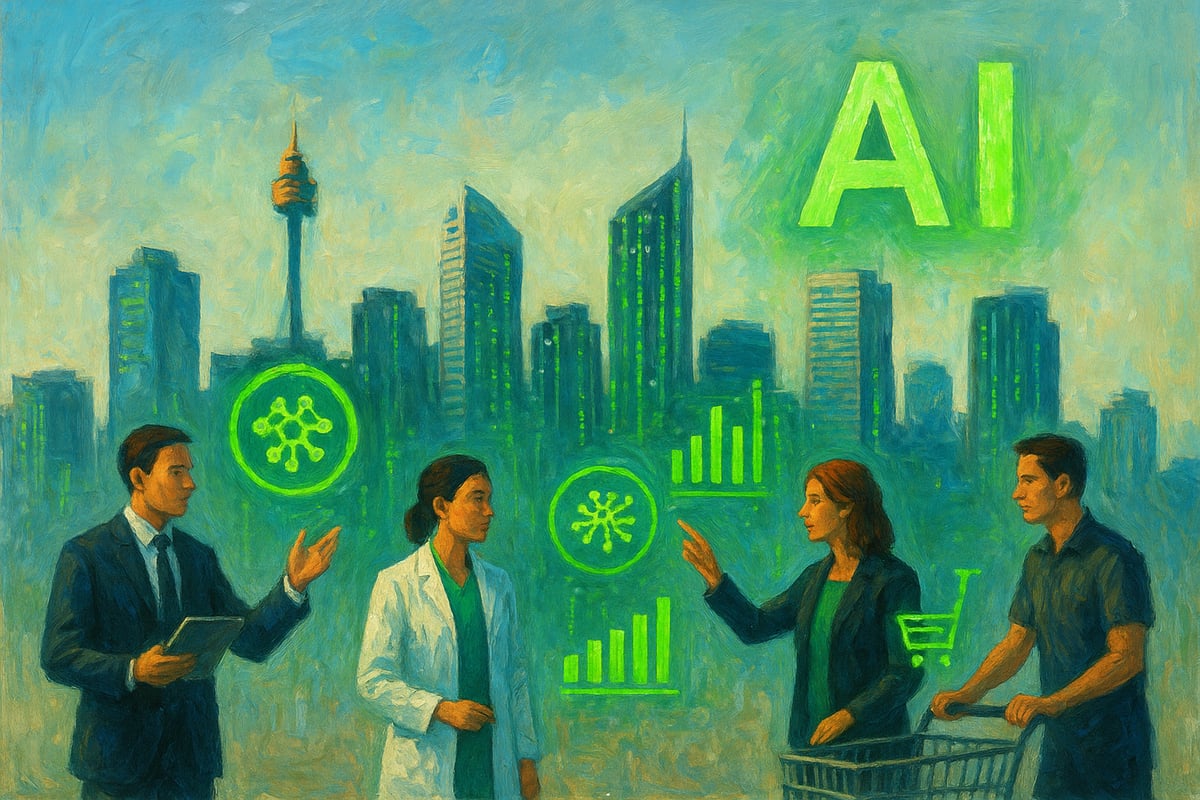
The journey began with basic automation tools, but rapid advances brought generative AI and private AI agents into the mainstream. By 2023, businesses were experimenting with language models for content creation and customer service. Regulatory changes soon followed, focused on ethical standards and data privacy, especially as ai for business became more embedded in daily operations. Companies started to replace legacy platforms with advanced AI-driven solutions, such as Synap’s workflow automation and analytics products.
A turning point arrived between 2023 and 2026. According to industry reports, ai for business adoption in Australia surged by 38 percent, as firms recognised the need to remain competitive. A recent AI adoption among Australian SMEs to surge by 2026 report highlights that small and medium businesses are leading this charge, driven by strong ROI and operational efficiencies. Business leaders now see AI as a way to accelerate decision-making, boost productivity, and unlock new revenue streams.
The cultural shift has been significant. Initially, many executives viewed ai for business with caution, fearing disruption or job displacement. Over time, successful pilot projects and clear productivity gains changed perspectives. Leadership teams began investing in upskilling and fostering innovation-friendly environments. The COVID-19 pandemic was a catalyst, forcing companies to embrace digital transformation faster than anticipated. Remote work, virtual collaboration, and automated customer support became the norm, powered by AI.
Real-world impact is evident across sectors. In finance, ai for business is used for fraud detection and risk modelling. Healthcare providers rely on AI for patient triage, diagnostics, and resource management. Retailers leverage AI for inventory optimisation and personalised marketing. For example, a leading Australian supermarket chain adopted Synap’s automation platform, streamlining supply chain operations and reducing manual workload by 40 percent. These advances have set new benchmarks for efficiency and service delivery.
As adoption grows, so does the focus on data sovereignty and privacy. Australian businesses demand solutions that comply with local regulations and protect sensitive information. AI systems are increasingly designed with built-in privacy safeguards and transparent decision-making. Looking ahead, experts predict that ai for business will continue to evolve, with greater emphasis on ethical AI, explainability, and responsible innovation. Companies that prioritise these factors are best positioned to thrive in the next era of digital transformation.
Top 8 Ways AI for Business Is Transforming Companies in 2026
Artificial intelligence is fundamentally reshaping the Australian business landscape in 2026. From automating routine tasks to driving strategic decisions, ai for business is unlocking new opportunities for growth and efficiency. Let’s explore the eight most impactful ways ai for business is transforming organisations this year.
1. Intelligent Automation of Repetitive Tasks
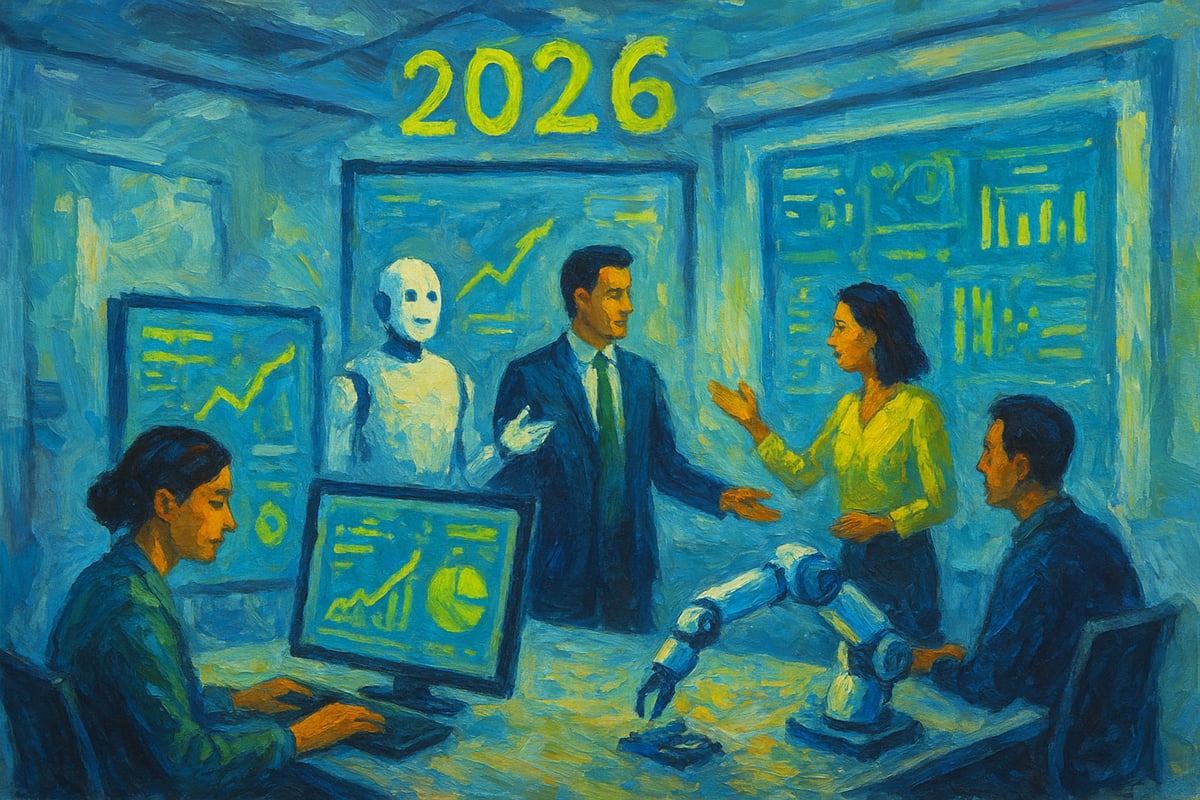
Ai for business has reached a tipping point in automating high-volume, repetitive tasks across industries. In 2026, companies are mapping their workflows, identifying bottlenecks, and deploying AI agents to handle routine processes like invoice processing, payroll, and HR onboarding.
- Map out manual workflows and identify repetitive steps.
- Integrate AI agents, such as Synap’s intelligent automation solutions, to process tasks.
- Monitor outputs and refine workflows based on AI-generated data.
Australian businesses report up to 60 percent time savings on manual processes after implementing ai for business. For example, a leading retail chain automated inventory management, resulting in faster restocking and fewer stockouts. Staff now focus on customer engagement and innovation instead of paperwork.
Despite these gains, challenges remain. Integrating AI with legacy systems and managing change can slow adoption. However, leaders are investing in training and clear communication to smooth the transition. The future points toward hyperautomation, where AI orchestrates entire workflows from end to end.
2. Enhanced Data-Driven Decision Making
Ai for business enables leaders to analyse massive datasets, uncover patterns, and drive faster, more accurate decisions. The process starts with data collection, followed by AI model training, and culminates in the rollout of interactive dashboards for real-time insights.
- Gather and cleanse relevant business data.
- Train AI models on historical and live datasets.
- Deploy dashboards and analytics agents for decision support.
According to industry surveys, 72 percent of companies say ai for business improves both decision speed and accuracy. Financial firms use AI to assess risk and optimise portfolios, while manufacturers predict supply and demand fluctuations.
Predictive analytics and scenario planning are now standard, helping organisations forecast trends and adapt swiftly. Data privacy and compliance remain top priorities, with solutions designed to meet Australian regulations. Integration with BI tools and custom analytics agents further enhances value.
To explore how advanced products can drive better outcomes, consider reviewing AI solutions for business growth.
3. Personalised Customer Experiences at Scale
The rise of ai for business has transformed customer engagement. Companies now deliver tailored marketing, sales, and support experiences to millions, thanks to advanced AI algorithms.
- Segment audiences using AI-driven analytics.
- Deploy chatbots and virtual assistants to handle inquiries.
- Personalise content, offers, and recommendations in real time.
A Salesforce study found 80 percent of consumers expect personalised experiences. E-commerce sites leverage ai for business to recommend products and predict customer churn, increasing loyalty and conversion rates.
Omnichannel engagement and sentiment analysis allow brands to connect authentically across platforms. The main challenge lies in integrating data from diverse sources while maintaining genuine interactions. Looking ahead, AI-driven voice assistants and hyper-personalisation will set new standards for customer experience.
4. Advanced Predictive Analytics for Market Trends
Ai for business is empowering organisations to predict market shifts, anticipate demand, and outmanoeuvre competitors. Companies follow a structured approach:
- Collect and aggregate market and competitor data.
- Train predictive models using AI algorithms.
- Interpret outputs to inform strategic planning.
An industry survey reports that 65 percent of executives rely on ai for business in strategic planning. FMCG companies use AI to forecast demand spikes and adjust pricing or inventory accordingly.
These predictive tools also optimise supply chains and enhance inventory control. Competitive advantages arise from quicker, more informed responses to market dynamics. While accuracy and bias are concerns, continuous model improvement and integration with IoT and real-time data feeds are enhancing reliability.
5. AI-Driven Cybersecurity and Risk Management
With cyber attacks in Australia rising by 25 percent in 2025, ai for business is now essential for cybersecurity. AI systems monitor network activity, detect anomalies, and issue automated alerts.
- Set up AI-powered monitoring tools.
- Detect suspicious patterns and flag potential threats.
- Automate incident response to reduce breach impact.
AI-driven tools have cut breach response times by 40 percent, giving businesses a critical edge. Financial institutions, for instance, use AI to detect fraud in real time. Benefits include 24/7 monitoring, adaptive learning, and reduced risk of human error.
However, false positives and the need for human oversight persist. Compliance with Australian privacy laws is mandatory. The next wave will see AI-powered zero-trust security frameworks, further strengthening defences.
6. Streamlined Supply Chain and Logistics Operations
Ai for business is revolutionising supply chain management. Companies now optimise procurement, inventory, and delivery through AI-driven processes.
- Forecast demand with AI models.
- Optimise delivery routes and automate procurement.
- Use IoT sensors for real-time tracking and predictive maintenance.
AI-driven logistics can reduce operational costs by up to 15 percent. Manufacturing firms deploy AI for predictive maintenance, minimising downtime and extending equipment lifespan.
Integration with IoT enables real-time inventory visibility and faster fulfilment. While data silos and legacy systems can hinder progress, businesses are investing in unified platforms. The future includes autonomous vehicles and drones, further streamlining logistics.
7. Empowering Workforce Productivity and Collaboration
Ai for business supports employees by automating routine work and facilitating collaboration. Organisations deploy AI chat wrappers and virtual assistants to manage schedules, knowledge bases, and communication flows.
- Implement AI-powered scheduling and task management.
- Integrate AI with collaboration platforms for seamless workflows.
- Use AI-driven training programs to upskill staff.
A recent HR survey found that 68 percent of employees believe ai for business reduces their daily workload. Law firms, for example, use AI to conduct case research and draft documents, freeing lawyers for higher-value work.
Remote and hybrid work environments benefit from AI tools that bridge gaps and maintain productivity. Upskilling is a focus, with AI-powered learning tailored to individual needs. While concerns about job security and transparency exist, clear communication and ethical guidelines help build trust. The future will bring team performance analytics powered by AI.
8. Sustainable Business Practices and ESG Reporting
Ai for business is crucial in advancing sustainability and ESG (Environmental, Social, Governance) initiatives. Companies use AI to collect, track, and report on sustainability metrics.
- Gather ESG data from across the organisation.
- Automate compliance reporting using AI agents.
- Identify areas for improvement and risk management.
Statistics reveal that 54 percent of ASX-listed companies now use ai for business to monitor sustainability KPIs. Energy companies leverage AI for real-time emissions tracking and reduction strategies.
Benefits include improved transparency, reduced manual errors, and the ability to proactively manage risks. AI also supports circular economy initiatives by optimising resource use and minimising waste. Regulatory compliance and public expectations are driving broader adoption. Future innovations will see AI-powered dashboards providing real-time ESG insights.
Implementing AI in Your Organisation: Step-by-Step Guide
Adopting ai for business can be transformative, but success depends on a clear, stepwise approach. Australian organisations in 2026 need to be methodical, strategic, and compliant to maximise results and minimise risks.

Assess Organisational Readiness and Identify High-Impact Areas
Begin by evaluating your company's digital maturity. Identify departments where ai for business will deliver the most value, such as operations, finance, or customer service.Conduct an AI Readiness Assessment
Use free tools from Synap to determine your current capabilities. This step highlights gaps in data infrastructure, skills, and processes. For a comprehensive guide, refer to How to implement AI in organisations.Develop a Clear AI Strategy Aligned with Business Goals
Set specific objectives, such as reducing manual workload or increasing sales. Define how ai for business supports broader company ambitions.Choose Between Off-the-Shelf, Platform, or Custom AI Solutions
Evaluate whether your needs are best met with ready-made products, platform-based tools, or custom-built AI agents. This choice affects speed, cost, and flexibility.Ensure Data Security, Privacy, and Compliance
Australian laws require strict data governance. Integrate ai for business solutions that comply with privacy standards and prioritise data sovereignty.Pilot AI Solutions in Select Departments
Start small. Implement a pilot project, such as automating invoice processing or onboarding with Synap automations. Measure ROI and gather feedback before scaling.Upskill Staff and Foster a Culture of Innovation
Provide AI training for employees. Invest in workshops, online courses, and hands-on sessions to build confidence and expertise across teams.Partner with Local AI Consultants for Ongoing Support
Engage experts for implementation, troubleshooting, and optimisation. Many Australian businesses find that external guidance accelerates ai for business adoption and minimises risk.Book an Online Consult for Tailored Advice
Ready to take the next step? Schedule a consultation with an AI technologist for personalised recommendations that fit your business needs. Book an online consult to get started.
Example:
A leading Australian retailer followed these steps to automate their inventory management. Starting with a readiness assessment, they piloted Synap's AI-driven solution in one store. After seeing a 40% reduction in manual errors and faster reordering, they scaled the system nationwide.
Summary Table: Steps to Implement AI for Business
| Step | Action | Outcome |
|---|---|---|
| 1 | Assess readiness | Identify opportunities |
| 2 | AI assessment | Reveal gaps & needs |
| 3 | Set strategy | Align with goals |
| 4 | Select solution | Find best fit |
| 5 | Ensure compliance | Data security |
| 6 | Pilot & measure | Validate ROI |
| 7 | Upskill staff | Build expertise |
| 8 | Partner with experts | Ongoing support |
| 9 | Book consult | Custom advice |
Embedding ai for business into your organisation requires planning, people, and the right partners. Follow these steps to unlock sustainable growth and resilience in 2026.
Overcoming Common Challenges in AI Adoption
Adopting ai for business in Australia is a strategic move, but it comes with real challenges. Companies often face hurdles that can slow or even derail digital transformation. Understanding these barriers is the first step towards unlocking the full potential of ai for business.

Common Barriers to AI for Business Adoption
Many organisations encounter similar roadblocks when integrating ai for business.
- Data quality issues make it hard to train reliable models.
- Legacy systems may not connect easily with modern AI platforms.
- Employees often resist change, fearing job loss or complexity.
- Lack of clear objectives causes projects to stall.
- Ethical concerns, such as bias and transparency, must be addressed.
A recent industry review revealed that 47% of failed AI projects lacked clear goals. This underscores the importance of planning and communication.
Step-by-Step Solutions for Successful Implementation
To overcome these challenges, follow a proven approach:
- Start with a thorough data audit and cleansing process.
- Map existing workflows to identify where ai for business can add value.
- Launch pilot programs in one department, measuring outcomes carefully.
- Engage stakeholders early, explaining benefits and addressing concerns.
- Invest in continuous training so staff can adapt to new tools.
- Use cross-functional teams to ensure smooth integration with legacy systems.
- Promote transparency by documenting AI decisions and model logic.
By following these steps, companies reduce risk and build confidence in their ai for business journey.
Real-World Example: Overcoming Data Silos
An Australian SME in the retail sector faced fragmented customer data across multiple platforms. This made it difficult to implement ai for business solutions in customer service.
They partnered with an AI consultant to:
- Consolidate their data sources into a single platform.
- Clean and structure the data for analysis.
- Deploy an AI-powered chatbot to handle customer enquiries.
- Train staff on new workflows and monitor performance.
Within six months, response times improved by 30%, and customer satisfaction scores increased. This example shows how targeted action can break down barriers.
Best Practices and Expert Support
Successful ai for business adoption requires more than just technology.
- Secure leadership buy-in by linking AI projects to business outcomes.
- Set measurable objectives for every AI initiative.
- Foster a culture of innovation, encouraging feedback and learning.
- Address ethical and regulatory requirements to maintain public trust.
- Engage Australian experts for tailored guidance and support.
For businesses seeking a smooth transition, leveraging AI consulting services for business can be invaluable. These experts help navigate technical, regulatory, and cultural challenges unique to the Australian market.
Ready to accelerate your ai for business journey? Book an online consult with our AI technologist for personalised advice and next steps.
As we’ve explored the top eight ways AI is transforming Australian businesses in 2026—from intelligent automation to sustainable practices—it’s clear that embracing AI is essential for growth and resilience. Whether you’re looking to boost productivity, sharpen decision making, or enhance customer experiences, starting the AI journey can feel daunting. That’s where local expertise comes in. If you’re considering how AI could unlock new value for your organisation, I invite you to connect with a specialist who understands the unique needs of Australian businesses. Take the next step and Book a Consultant Now to discuss tailored AI solutions for your future.