Artificial intelligence is reshaping how we work, communicate, and solve problems at an unprecedented pace. By 2026, businesses and individuals are surrounded by smart technologies, yet confusion lingers over terms like AI-powered, AI-driven, and AI-enabled.
This guide cuts through the noise. We demystify powered ai, explain the key concepts, and offer a practical roadmap for unlocking intelligent solutions in your organisation.
You will discover clear definitions, the latest technology landscape, actionable steps for implementation, real-world use cases, and future trends. Ready to harness the next wave of AI? Let’s get started.
Understanding "Powered AI": Definitions & Distinctions
Artificial intelligence has become part of daily business in 2026, but the terms surrounding it can be confusing. What does it really mean when a solution is described as "powered ai", "AI-driven", "AI-enabled", or "AI-assisted"? In practice, these labels reflect different levels of intelligence and automation within software and business processes.
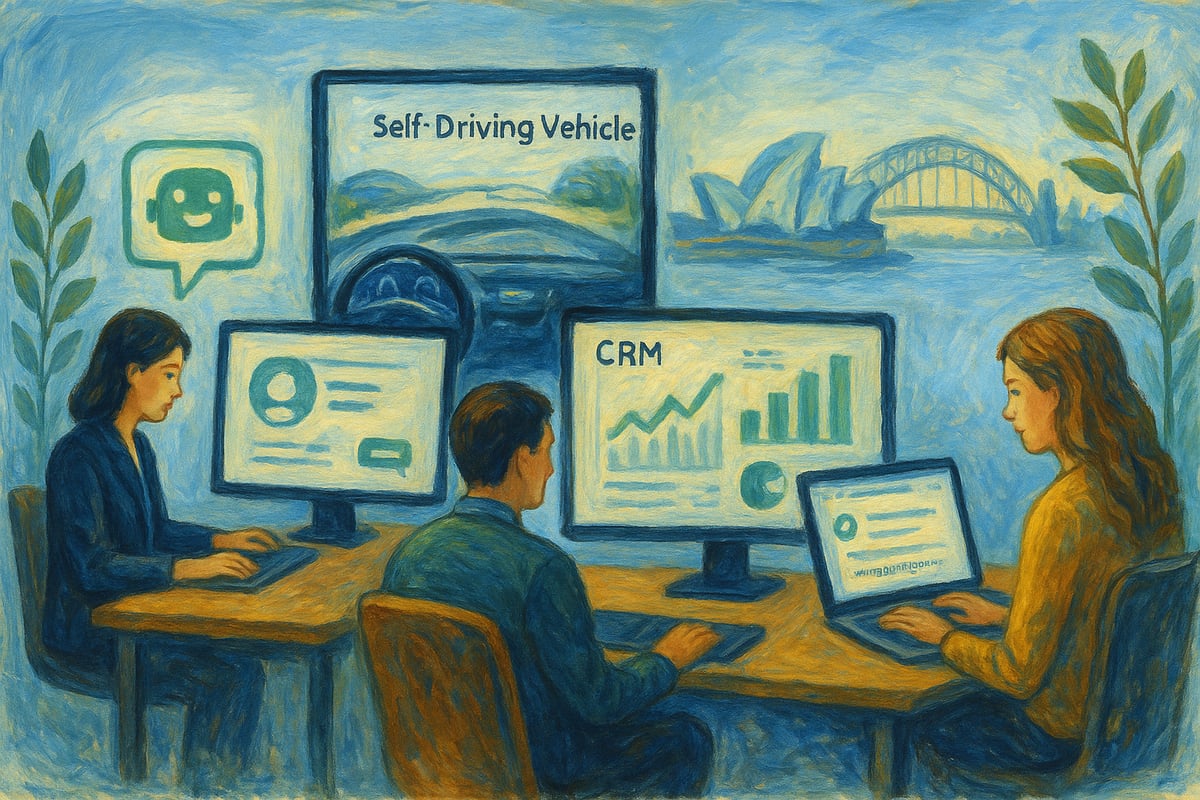
"AI-powered" typically refers to systems where artificial intelligence is the core engine. For example, a customer support chatbot that handles queries end-to-end operates as a powered ai solution. "AI-driven" takes this further, describing systems that make independent decisions, such as autonomous vehicles navigating city traffic. "AI-enabled" means traditional tools are enhanced with AI features, like a CRM that predicts customer churn but does not operate autonomously. "AI-assisted" describes tools that help humans make better decisions, such as Grammarly suggesting grammar improvements while the writer remains in control.
These distinctions have real impact on business strategy. Choosing between powered ai and AI-enabled solutions affects investment, risk, and expected outcomes. For instance, powered ai can automate entire workflows, unlocking efficiency, while AI-assisted tools may simply augment staff productivity. The depth of integration also shapes required skills and change management. According to Gartner, 80% of enterprises in 2025 reported confusion around AI terminology, leading to mismatched expectations and failed projects.
Recent industry reports highlight this challenge. Articles in Harvard Business Review and Medium point to a lack of consensus, with companies often using powered ai as a catch-all phrase. This confusion can stall adoption and make it harder to measure ROI. Synap AI has responded by clarifying solution categories in their consulting, helping clients align technology choices with business goals. The Overview of Synap AI services breaks down offerings by level of automation and intelligence, guiding organisations to the right fit.
To see these terms in action, consider these real-world examples. Autonomous vehicles are AI-driven, making independent decisions and adapting to road conditions without human input. Grammarly is AI-assisted, providing suggestions while the user remains in control. Netflix recommendations are powered ai, constantly analysing viewing habits to deliver personalised content. Many Australian businesses use AI-enabled CRMs to forecast sales, but the final decisions still rest with human managers. These distinctions are not just academic—they determine user experience, compliance, and competitive advantage.
To summarise the differences, review the table below:
| Term | Description | Example |
|---|---|---|
| Powered AI | AI is the core engine, automates full workflow | Chatbots, Netflix recommendations |
| AI-Driven | AI makes autonomous decisions | Self-driving cars |
| AI-Enabled | Traditional tools enhanced with AI features | CRM with predictive analytics |
| AI-Assisted | AI supports human decisions | Grammarly, image tagging |
Understanding these definitions helps leaders select the right powered ai solution. Clarity reduces confusion and increases project success rates. As the AI landscape evolves, businesses benefit from step-by-step guidance and expert advice.
The 2026 AI Technology Landscape: What’s New and What Matters
The AI landscape in 2026 is evolving at record speed. Businesses across Australia are adopting powered ai solutions to boost productivity, improve customer experience, and stay ahead of the competition. Understanding what is new and what matters most is crucial for making smart, future-proof decisions.

Key Breakthroughs in AI Technology
Since 2024, powered ai has experienced several transformative breakthroughs. First, generative models have advanced, enabling machines to create realistic text, images, and even code. In 2026, agentic AI is now capable of autonomous decision-making, handling complex business workflows without direct human input.
Natural language processing has made leaps forward, allowing powered ai to understand and generate human-like responses in real time. Computer vision and multimodal AI now combine text, voice, and image understanding, making interactions richer and more intuitive.
Australian businesses are leading the way with private, sovereign AI platforms. In 2025, 65 percent of companies adopted new powered ai tools, according to the ABS. Synap AI, for example, has deployed custom agents that automate everything from workflow approvals to document triage.
Open-source models are also gaining traction, giving organisations more control and flexibility. Proprietary platforms, however, still offer unique advantages in security and support.
These advancements are driving measurable results. Businesses using powered ai report sharp increases in productivity and customer satisfaction. The technology is also enabling faster innovation cycles, letting teams experiment and iterate quickly.
The bottom line: powered ai is not just a trend. It is a practical toolkit for unlocking new value in business, education, healthcare, and beyond.
The Role of Data Sovereignty and Security
In 2026, data privacy and sovereignty are at the heart of every powered ai discussion. Australian regulations require organisations to keep sensitive data within national borders. Compliance is non-negotiable, especially for legal, healthcare, and government sectors.
Local AI platforms, such as Synap AI, ensure that all data remains securely hosted in Australia. This is especially important for industries with strict confidentiality needs. For instance, law firms and hospitals need powered ai solutions that guarantee patient and client data never leaves the country.
Recent data shows that 90 percent of Australian enterprises list data security as their top concern when deploying powered ai, according to Deloitte. The risks of global hosting are clear: data leakage, regulatory breaches, and loss of control.
- Review your current data storage locations.
- Choose powered ai partners that offer local hosting.
- Ensure encryption for all data in transit and at rest.
- Regularly audit compliance with Australian privacy laws.
These trends are not unique to Australia. As highlighted in Gartner's AI Sovereignty Predictions, more countries are moving to region-specific AI platforms to secure their data.
By prioritising local, sovereign powered ai, businesses protect both their reputation and their customers.
Integrating AI into Existing Systems
Connecting powered ai to legacy and cloud systems can be challenging, but it is essential for real-world impact. Most businesses rely on a mix of old and new software, making seamless integration a top priority.
- Identify key workflows for automation, such as invoice processing or email triage.
- Use APIs and middleware to bridge powered ai with your current tools.
- Work with experts like Synap AI to customise integrations for unique needs.
- Address challenges early, including data silos, incompatible formats, and technical debt.
A real-world example: A healthcare provider uses Synap AI to automate patient intake, linking their powered ai agent directly with existing medical records. This reduces manual entry and speeds up service.
According to McKinsey, 70 percent of failed powered ai projects in 2025 were due to poor integration. This highlights the need for a step-by-step approach:
- Start with a pilot in a high-impact area.
- Monitor results closely and refine integration.
- Scale up once proven.
Ongoing maintenance and monitoring are critical to ensure powered ai continues delivering results as your systems evolve.
Step-by-Step Guide: Unlocking Intelligent Solutions with Powered AI
Unlocking value with powered ai starts with a clear, structured approach. Whether you are new to automation or looking to scale, this step-by-step guide will help your organisation move confidently towards intelligent solutions. Each step leverages best practices, real-world examples, and proven frameworks for success.
Step 1: Assess AI Readiness and Identify Opportunities
Start your powered ai journey with a readiness assessment. Evaluate your existing workflows, data quality, and pain points. Map out where inefficiencies exist and where automation could deliver maximum impact. For example, a Victorian law firm used Synap AI to automate document review, saving hours each week.
Conduct a thorough review of your data sources. Are they structured, clean, and accessible? According to Forrester, 60% of successful powered ai projects in 2025 began with a detailed readiness assessment. Engage with Synap AI for a free initial consultation to identify tailored opportunities.
Identify high-impact areas like customer service or operations. Powered ai thrives where repetitive, rules-based tasks exist. Gather relevant data and check for gaps before moving to the next stage.
Step 2: Define Clear Objectives and Success Metrics
Set measurable goals for your powered ai implementation. Define what success looks like, such as reducing manual processing time by 50% or improving customer satisfaction scores. Align your objectives with overall business priorities and ensure compliance requirements are met from the beginning.
Involve key stakeholders early to secure buy-in and clarify expectations. Establish clear KPIs such as productivity gains, cost savings, or increased upsell conversion rates. For instance, a leading retailer used powered ai to boost upsell conversion by 30%.
Industry data shows that 75% of powered ai projects with defined KPIs deliver ROI within 12 months (PwC, 2025). Use benchmarks from industry leaders to guide your own targets.
Step 3: Select the Right AI Platform or Partner
Evaluate potential platforms for powered ai based on security, scalability, and data sovereignty. Prioritise solutions that keep your sensitive data within Australia, such as Synap AI. Compare features like custom agent development, workflow automation, and private chat wrappers.
Check that your chosen provider supports seamless integration with your existing systems and offers flexible pricing models. For example, an Australian educational institution selected Synap AI for student support, benefiting from pay-per-agent pricing and no lock-in contracts.
Validate the expertise and support offered by your vendor. The right partner will help your organisation unlock the full potential of powered ai while maintaining compliance.
Step 4: Implement and Integrate AI Solutions
Develop a phased rollout plan for your powered ai deployment. Begin with pilot projects in high-impact areas. Use Synap AI’s implementation roadmap for a guided approach and provide staff training to ensure smooth adoption.
Integration is critical. Connect your powered ai solutions to legacy and cloud systems through APIs, custom integrations, and middleware. For practical guidance, refer to Integrating AI into business systems. Address data silos and interoperability challenges early.
Monitor initial results closely and adjust as needed. For example, a healthcare provider automated patient intake forms with powered ai, streamlining admin and improving patient experience. Ongoing support and maintenance are essential for long-term success.
Step 5: Monitor, Optimise, and Scale
Track performance against your KPIs and success metrics. Use analytics to identify bottlenecks and opportunities for optimisation. Powered ai solutions should evolve in response to user feedback and regulatory changes.
Optimise workflows regularly to boost efficiency and accuracy. When pilot projects prove successful, scale your powered ai initiatives across the organisation. For instance, a manufacturer rolled out AI-powered quality control at multiple sites, improving reliability and productivity.
Ensure ongoing compliance with privacy regulations and invest in continuous improvement. To explore how powered ai can transform your business, book a free online consultation with a Synap AI technologist.
Real-World Applications: Powered AI in Action Across Industries
Across Australia, powered ai is transforming every sector, unlocking new levels of efficiency, accuracy, and customer value. Let us explore step by step how powered ai delivers measurable results in five key industries.

Professional Services and Legal
- Australian law firms now automate document review, contract analysis, and compliance using powered ai.
- Step one: Identify repetitive legal tasks. Step two: Deploy Synap AI’s secure workflow agent for document handling. Step three: Integrate with case management systems for seamless processing.
- A leading Melbourne firm reduced contract review time by 60 percent after adopting powered ai.
- These solutions ensure sensitive data remains onshore, meeting legal privacy demands.
- By 2026, 40 percent of legal practices in Australia reported using powered ai tools.
- According to Australia's AI Ecosystem Report, rapid adoption is driving higher client satisfaction and measurable ROI.
- Ready to transform your legal workflows? Consider booking a consult with an AI technologist.
Healthcare and Medical
- Hospitals and clinics use powered ai to manage patient triage, diagnostic support, and admin automation.
- Start by mapping patient intake and identifying bottlenecks. Next, implement Synap AI’s automated patient data processing agent. Then, train staff on new digital workflows.
- At a Sydney hospital, powered ai reduced patient wait times by 30 percent and improved diagnostic accuracy.
- All health data stays within Australia, ensuring compliance with strict privacy laws.
- In 2025, 55 percent of healthcare providers used powered ai for admin, according to AIHW.
- These advances lead to better patient outcomes and freed-up clinician time.
- Interested in healthcare automation? Schedule an AI readiness assessment.
Education and Training
- Universities and schools integrate powered ai for tutoring, grading, and student support.
- First, assess student needs and administrative pain points. Second, deploy Synap AI’s AI-powered Q and A agent to assist students around the clock. Third, automate grading and feedback processes.
- One university saw student engagement rise by 25 percent after introducing powered ai chatbots.
- All student data is securely hosted in Australia, supporting privacy compliance.
- By 2026, 35 percent of Australian universities used powered ai for student services.
- These approaches personalise learning, support faculty, and increase retention.
- Explore how powered ai can support your education organisation with a tailored consultation.
Retail and E-Commerce
- Retailers leverage powered ai for personalised recommendations, inventory management, and customer service.
- Step one: Analyse purchasing trends. Step two: Integrate Synap AI for order automation and customer queries. Step three: Optimise stock with predictive analytics.
- A national chain increased upsell conversions by 30 percent after adopting powered ai marketing.
- Inventory accuracy improved, while customer service is available 24/7.
- By 2026, 60 percent of Aussie retailers used powered ai for personalisation, as reported by Retail Doctor Group.
- These solutions drive sales growth and operational savings.
- Want to enhance retail operations? Book a powered ai strategy session.
Manufacturing and Operations
- Factories and logistics providers depend on powered ai for predictive maintenance, quality control, and workflow automation.
- Begin with an audit of equipment and production data. Deploy Synap AI’s monitoring agent to detect faults. Integrate alerts and maintenance schedules with existing systems.
- A Brisbane manufacturer cut downtime by 40 percent using powered ai for equipment monitoring.
- Data is protected locally to safeguard proprietary processes.
- In 2025, 50 percent of manufacturers adopted powered ai-driven automation, according to AiGroup.
- These improvements enhance reliability, reduce costs, and boost productivity.
- Curious about scaling powered ai in manufacturing? Arrange a free consult with our AI technologist.
Choosing the Right AI Partner: Spotlight on Synap AI
Selecting the right partner for powered ai is crucial as Australian businesses move into 2026. Synap AI stands out as a leader in consulting and platform development, specialising in intelligent solutions tailored for the local market.
Why Synap AI Leads in Powered AI
Synap AI’s approach to powered ai is built on three pillars: local expertise, privacy, and flexibility. All data is stored and processed within Australia, ensuring compliance with national regulations. This local focus is vital for sectors with strict data controls, like legal, healthcare, and government.
Clients benefit from direct access to Australian support teams and technologists. This ensures rapid response, context-aware solutions, and genuine partnership throughout every powered ai project.
Core Services and Consulting Expertise
Synap AI offers a broad range of services designed for the real needs of Australian enterprises. Their AI consulting and strategy services guide organisations from readiness assessment through to implementation. Services include:
- AI readiness assessments to identify optimal automation opportunities.
- Custom agent development for workflow transformation.
- End-to-end workflow automation, including document review and invoice processing.
- Private chat wrappers for secure, internal communication.
- Bespoke software tailored to industry requirements.
This end-to-end model means Synap AI can handle everything from initial planning to ongoing optimisation, making powered ai accessible and effective for all business sizes.
| Service | Description | Industry Use |
|---|---|---|
| Readiness Assessment | Identify AI opportunities and risks | All |
| Custom Agents | Automate workflows and tasks | Legal, Healthcare, Retail |
| Workflow Automation | Streamline core processes | Manufacturing, Education |
| Private Chat | Secure, internal AI-powered communication | Legal, Healthcare |
| Bespoke Software | Industry-specific powered ai solutions | All |
Real-World Example: Powered AI in Action
Consider an Australian law firm that used Synap AI to automate document review and compliance. By deploying custom agents and private chat wrappers, they reduced manual workload by 40 percent and improved turnaround time for clients. Powered ai ensured all sensitive client data remained onshore, satisfying privacy requirements and boosting client trust.
Flexible Pricing and Industry Reach
Synap AI’s flexible pay-per-agent pricing model allows organisations to scale powered ai projects as needed, without lock-in contracts. This approach lowers risk and encourages innovation.
Synap AI serves a wide range of industries. Legal, healthcare, education, retail, and manufacturing clients all report measurable gains in productivity, cost savings, and compliance through powered ai.
Step-by-Step Guide: Engaging Synap AI
- Book a free online consultation with a Synap AI technologist.
- Complete an AI readiness assessment to map business needs.
- Review a tailored powered ai solution proposal.
- Begin pilot project with ongoing support and training.
- Monitor results and scale successful automations across your organisation.
Security remains at the core. With all powered ai data managed within Australia, your business is protected against offshore data risks.
Ready to unlock intelligent solutions? Book an online consultation with a Synap AI expert Book now and see how powered ai can transform your business.
Future Trends: The Next Wave of Intelligent Solutions in 2026 and Beyond
The future of powered ai is unfolding rapidly, with 2026 marking a significant leap forward in intelligent solutions. Businesses and individuals are witnessing a transformation in how AI is designed, deployed, and integrated. Let us explore the next wave of advancements, their impact on Australian organisations, and actionable steps for staying ahead in this dynamic landscape.
Evolution of Agentic and Multimodal AI
Agentic AI is evolving fast. By 2026, autonomous agents are managing complex workflows, making decisions, and even optimising operations without constant human oversight. These agents learn from data, adapt to new scenarios, and collaborate with other systems.
Multimodal AI is also on the rise. This technology combines text, voice, and vision, allowing for richer, more natural interactions. For example, a powered ai solution in a hospital can interpret patient speech, analyse medical scans, and process written notes—all in real time. According to industry experts, this convergence is set to redefine customer experience and productivity.
For a deeper dive into these trends and their real-world applications, explore the Latest articles on AI advancements.
Data Sovereignty, Explainable AI, and Ethical Priorities
Data privacy remains a top concern. In 2026, 85 percent of new powered ai deployments are expected to prioritise data sovereignty, ensuring information stays within national borders and complies with local regulations.
Australian organisations are embracing sovereign AI platforms, such as Synap AI and IBM's solutions. These platforms guarantee local data hosting and robust security. For more on this shift, see IBM's Sovereign AI Platform.
Explainable and ethical AI are now essential. Stakeholders demand transparency in how decisions are made. Businesses must address bias, accountability, and compliance as core aspects of any powered ai initiative.
AI Integration Across Business Functions
Powered ai is moving beyond isolated pilots. By 2026, it will be woven into every business function—from HR to supply chain management.
- HR teams use powered ai for talent acquisition and workforce analytics.
- Supply chains leverage AI agents for demand forecasting and logistics.
- Customer service integrates chatbots and smart agents for 24/7 support.
- Operations automate repetitive tasks, boosting efficiency and reducing costs.
A real-world example: Synap AI custom agents have enabled Australian manufacturers to automate quality control, leading to fewer defects and higher output.
Continuous Learning, Next Steps, and Action
The journey does not end with implementation. Ongoing education and upskilling in powered ai are critical for long-term success. Organisations must:
- Invest in regular AI training for staff.
- Stay updated with the latest trends and regulatory changes.
- Partner with trusted AI experts for tailored strategies.
- Monitor and refine AI models to ensure optimal results.
A step-by-step approach ensures businesses remain agile and competitive. Ready to unlock the full potential of powered ai for your organisation? Book a free online consult with our AI technologist today.
As we’ve explored, unlocking the true value of powered AI in 2026 means more than just understanding the latest buzzwords—it’s about making confident, informed decisions that move your business forward. If you’re ready to cut through the noise and discover how intelligent solutions can genuinely transform your operations, you don’t have to navigate this journey alone. Let’s work together to identify the right AI opportunities for your unique needs and ensure your data stays secure right here in Australia. Take the next step and Book a Consultant Now to start your tailored AI journey.