Artificial intelligence is transforming at lightning speed, and businesses face more pressure than ever to keep up. The need for scalable, secure, and production-ready solutions is at an all-time high. That’s where openshift ai steps in, offering a reliable path to innovation.
In this essential handbook, you’ll find everything you need to confidently leverage OpenShift AI for 2026 and beyond. We’ll explore what makes it unique, step through implementation, dive into integration, unravel security and compliance, and showcase advanced, real-world use cases. Ready to unlock the full power of AI? Let’s get started together.
Understanding OpenShift AI: The 2026 Landscape

1. What is OpenShift AI?
OpenShift AI is an enterprise platform designed to manage the full AI and machine learning lifecycle across hybrid and multi-cloud environments. Built on an open-source foundation and backed by Red Hat’s leadership in AI infrastructure, it provides robust support for both predictive and generative AI models.
Businesses can choose between a managed service or a self-managed product, ensuring flexibility for every operational need. OpenShift AI accelerates AI deployment, offering seamless integration with popular open-source tools like Jupyter, TensorFlow, and PyTorch. This means teams can move from experimentation to production quickly.
A real-world example comes from an Australian financial institution that leveraged OpenShift AI for fraud detection, resulting in faster insights and reduced risk. To explore the platform’s capabilities in detail, see the Red Hat OpenShift AI Overview.
2. Key Trends Shaping OpenShift AI in 2026
The landscape for OpenShift AI in 2026 is shaped by several important trends. First, demand for AI at the edge and in the cloud is surging, as businesses seek agility and scalability. Data sovereignty and compliance are now critical, with Australian organisations prioritising local data residency to meet regulations.
There is a rapid expansion of AI model catalogues, including production-ready, third-party models. Automation is revolutionising model training, serving, and monitoring, which saves time and resources. Distributed inference frameworks, such as vLLM, are gaining traction for cost-effective scaling.
Hybrid cloud deployment is becoming the default for enterprise AI. According to Red Hat AI Insights 2025, 70 percent of Australian enterprises plan to scale AI workloads across hybrid environments by 2026. These trends highlight how OpenShift AI is meeting the evolving demands of modern business.
3. OpenShift AI vs. Competing Platforms
When comparing OpenShift AI with platforms like AWS SageMaker, Azure ML, and Google AI Platform, several unique strengths stand out. OpenShift AI offers open-source flexibility, strong enterprise security, and deep integration with Red Hat Enterprise Linux and Ansible Automation. These features make it a preferred choice for organisations with strict compliance needs.
Let’s break it down:
- OpenShift AI provides a curated model catalogue and native Kubernetes support.
- It enables seamless hybrid deployment for AI workloads.
- Integration with Red Hat’s ecosystem enhances automation and operational efficiency.
A healthcare provider in Australia selected OpenShift AI over competitors due to its ability to meet local compliance requirements and ensure data security. For businesses with similar priorities, OpenShift AI delivers a proven, adaptable platform ready for production at scale.
Core Features and Benefits of OpenShift AI
OpenShift AI is designed to help organisations move from AI experimentation to real business value. Its core features empower teams to scale, secure, and automate every stage of their AI journey. Let’s explore what makes openshift ai the platform of choice for Australian enterprises.

1. End-to-End AI/ML Lifecycle Management
OpenShift AI streamlines the entire AI and machine learning lifecycle.
- Teams can acquire and prepare data using guided workflows, reducing manual steps.
- Model training, fine-tuning, and optimisation are managed in one place.
- Automated deployment ensures models move to production faster, with built-in monitoring.
- Governance features like audit trails and model lineage help maintain transparency.
A leading manufacturing company in Australia cut its model deployment time by 40% after adopting openshift ai. This efficiency means businesses can respond quickly to market shifts and drive innovation.
2. Hybrid Cloud and Edge Deployment
With openshift ai, organisations enjoy a seamless experience whether running workloads on-premises, in the public cloud, or at the edge.
- Integration with AWS, Azure, Google Cloud, and IBM Cloud simplifies migration and scaling.
- Edge support brings AI inference closer to data sources, enabling real-time decisions.
- Consistency across environments reduces operational headaches.
Did you know 60% of new AI workloads in Australia are now edge-deployed? This shows how openshift ai is keeping pace with the needs of modern enterprises.
3. Security, Compliance, and Data Sovereignty
Security and compliance are at the heart of openshift ai.
- Enterprise-grade security controls, role-based access, and multi-tenancy protect sensitive projects.
- The platform is designed to meet Australian and global data protection standards, supporting private, onshore processing.
- Audit trails and model lineage tracking make compliance reporting straightforward.
For example, a government agency uses openshift ai to analyse documents securely, knowing all data remains within Australia. This level of trust is vital for regulated sectors.
4. Advanced Model Serving and Inference
OpenShift AI delivers high-performance model serving for production use.
- Distributed inference frameworks like vLLM enable cost-effective scaling and low latency.
- Access a curated catalogue of third-party models ready for deployment.
- Self-service tools make it easy for teams to manage and scale models.
- Cost management features help control inferencing expenses.
A major media company serves personalised content recommendations to millions, powered by openshift ai’s robust serving capabilities. For a deeper dive into the latest serving enhancements, see the Red Hat OpenShift AI 2.15 Enhancements.
OpenShift AI brings together security, scalability, and ease of use, making it a future-ready platform for Australian businesses. If you’d like expert guidance on how openshift ai could transform your AI projects, consider booking a free online consult with our AI technologist.
Step-by-Step Guide: Implementing OpenShift AI in 2026
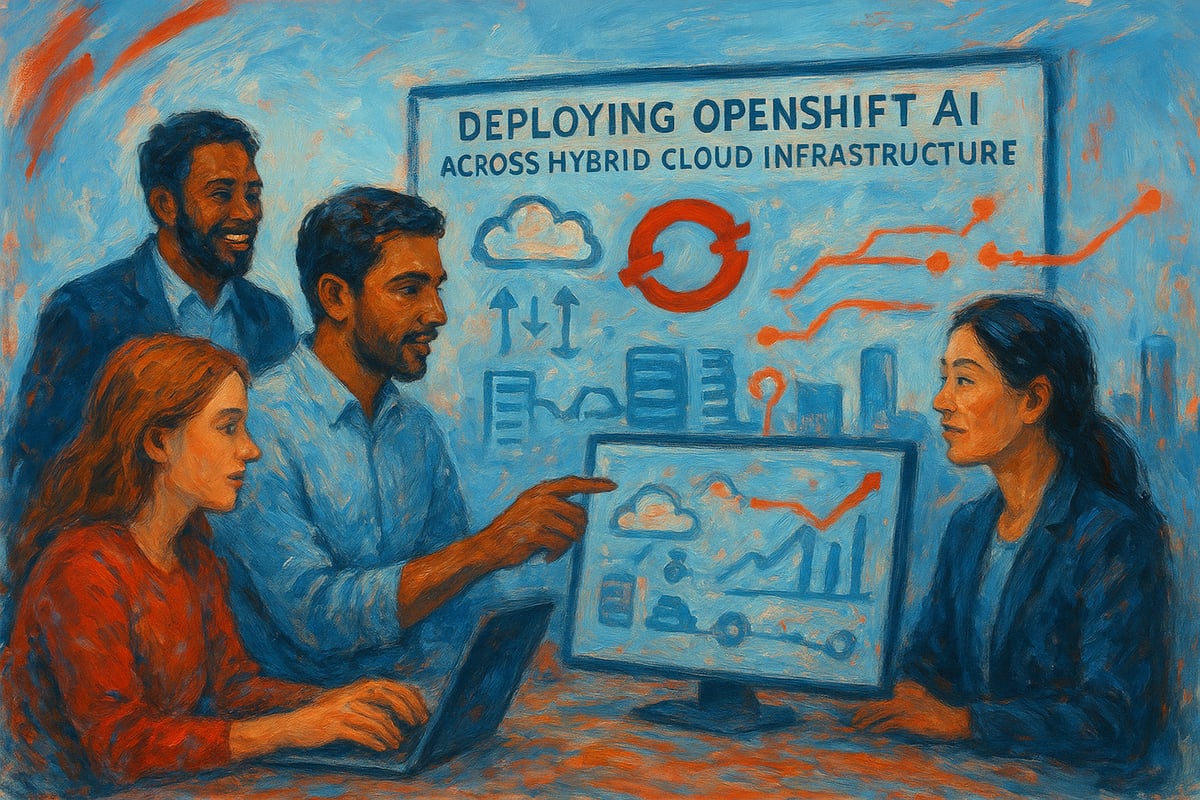
Embarking on your openshift ai journey in 2026 is more straightforward than ever. Let’s break down the process into five clear steps. Each stage helps you move from planning to production, while making sure your team and systems are ready for the road ahead.
1. Assessing Organisational AI Readiness
Start by taking stock of where you stand.
- Review your data infrastructure—are your platforms, storage, and governance up to scratch?
- Pinpoint business objectives and target the most valuable use cases for openshift ai.
- Bring together IT, data science, and compliance stakeholders early.
- Document current skills, technology gaps, and compliance needs.
A legal firm, for example, mapped their document automation requirements before rolling out openshift ai, ensuring every department was aligned and ready for change.
2. Preparing the Hybrid Cloud Environment
Once your objectives are clear, set up your technical foundation.
- Decide between managed service or self-managed openshift ai deployment.
- Launch your Red Hat OpenShift cluster on-premises or in the cloud.
- Integrate identity and access management to control permissions.
- Configure networking, storage, and security policies.
For hands-on support and tailored solutions, check out AI services for Australian businesses. This can help streamline your openshift ai rollout, keeping projects on track and compliant with Australian standards.
3. Installing and Configuring OpenShift AI
Now, move to installation and configuration.
- Access the openshift ai operator from the OpenShift console.
- Deploy components like model servers, pipelines, and Jupyter notebooks.
- Connect to your data sources and storage solutions.
- Set up user roles and permissions for secure collaboration.
An education provider enabled students to use AI-powered notebooks, unlocking innovation while maintaining oversight and security through openshift ai.
4. Building, Training, and Deploying AI Models
With your environment ready, it’s time to get hands-on.
- Use Jupyter, TensorFlow, and PyTorch within openshift ai for experimentation.
- Create automated pipelines for data processing and model training.
- Tune hyperparameters and validate your models.
- Deploy to production using built-in serving frameworks.
Insurance companies have used openshift ai to quickly roll out fraud detection models, responding to threats in real time and keeping customer data safe.
5. Monitoring, Scaling, and Optimising AI Workloads
The final step is about keeping everything running smoothly.
- Monitor model health and resource usage via built-in dashboards.
- Set up automated alerts for anomalies and data drift.
- Dynamically scale workloads based on demand.
- Optimise costs with distributed inference and hardware acceleration.
After adopting openshift ai, organisations in Australia have reported up to 30 percent reduction in infrastructure costs, all while boosting reliability and performance.
Integrating OpenShift AI with Leading Tools and Ecosystems
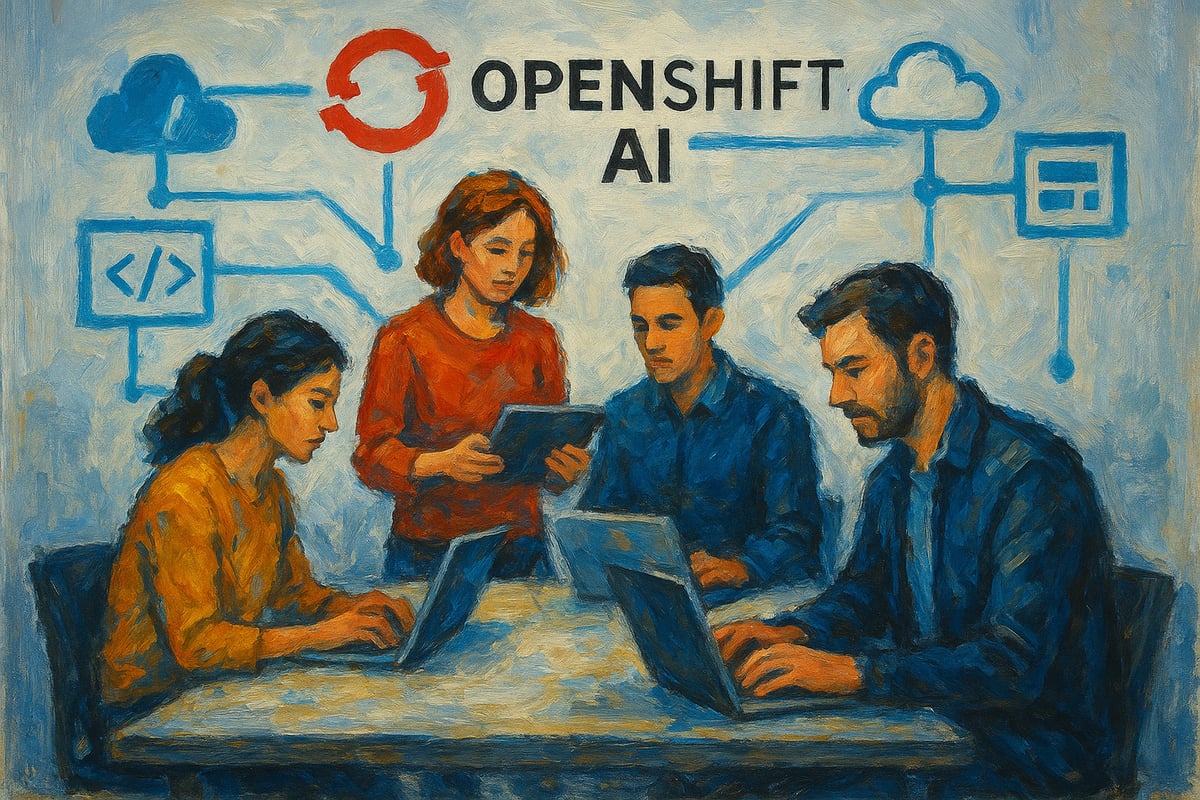
OpenShift AI is designed for seamless integration, making it easy to connect to your favourite tools and scale AI across your business. Whether you are a research team, an enterprise, or a startup, the ecosystem around openshift ai empowers you to innovate faster and more securely. Let’s explore how to connect openshift ai with the platforms and partners that matter most.
Seamless Integration with Open Source Tools
With openshift ai, integrating leading open source frameworks is straightforward. You can connect Jupyter, TensorFlow, PyTorch, and scikit-learn without hassle.
- Start by launching Jupyter notebooks directly in the openshift ai console.
- Use integrated MLOps features to automate model versioning and pipeline deployment.
- Collaborate across teams with shared workspaces and reproducible experiments.
A research team at an Australian university rapidly accelerated experimentation by combining openshift ai with pipeline automation. For hands-on steps, see the How to use Synap AI tools guide.
Partner Ecosystem and Third-Party Models
Openshift ai gives you access to Red Hat’s curated partner model catalogue. This means you can deploy industry-specific models and take advantage of hardware integrations with NVIDIA, Intel, AMD, Dell, and Lenovo.
- Select certified models tailored for your industry.
- Optimise performance with hardware acceleration.
- Stay compliant with local and global standards.
For example, a media company used openshift ai and partner models to launch a recommendation engine that reached millions of users in days.
Connecting with Enterprise Systems
Bringing openshift ai into your enterprise is simple thanks to API-driven integrations and workflow automation.
- Use Red Hat Ansible to automate AI workflows end-to-end.
- Connect openshift ai to business applications, data warehouses, and ERP systems.
- Enable real-time data ingestion from IoT and edge devices.
A major retailer integrated openshift ai for demand forecasting, linking their ERP to AI-powered insights and boosting supply chain responsiveness.
Automation and DevOps Best Practices
Automation is at the heart of openshift ai, making model management and deployment more efficient.
- Apply GitOps to manage models and infrastructure with version control.
- Set up automated CI/CD pipelines for rapid, reliable releases.
- Implement role-based access and audit controls for security.
Did you know 80 percent of openshift ai users automate model deployment using CI/CD pipelines? This drives faster innovation and ensures governance across teams.
Security, Compliance, and Data Sovereignty for Australian Enterprises
Australian businesses face some of the world’s most stringent data privacy and compliance expectations. As AI adoption accelerates, organisations need platforms that not only deliver innovation but also keep sensitive information safe and within the country. Let’s break down how openshift ai rises to meet these demands for security, local compliance, and trustworthy governance.
1. Meeting Australian Data Privacy Regulations
Australian law requires data to be processed and stored onshore. With openshift ai, companies can deploy workloads on local infrastructure and ensure full control over where data resides.
- Review your data flows with compliance officers.
- Select local data centres for deployment.
- Configure storage policies to keep all information within Australia.
This approach helps you comply with OAIC and ISO 27001. For deeper insight, see this overview of Australian Data Sovereignty and AI. For example, a healthcare provider recently used openshift ai to guarantee that patient records never leave the country, protecting both privacy and reputation.
2. Enterprise-Grade Security Features
Security is a top concern for 90 percent of large Australian organisations. Openshift ai delivers robust protections every step of the way.
- Enable multi-factor authentication and role-based access.
- Encrypt data at rest and during transfer.
- Use network segmentation to isolate workloads.
Continuous vulnerability scanning and patch management reduce risk. Synap’s private AI platform extends these features, offering extra automation and compliance for regulated sectors. By following best practices, your team creates a resilient foundation for every AI project.
3. Model Governance and Auditability
Trust in AI comes from transparency and accountability. With openshift ai, you can track every model decision and change.
- Activate model lineage tracking for full audit trails.
- Set up automated logging and compliance reporting.
- Involve compliance teams in regular reviews.
A leading financial institution used openshift ai to audit its loan approval models, ensuring every decision could be traced and justified. If your business needs tailored guidance on secure, compliant AI, consider booking a free online consult with a Synap AI technologist.
Advanced Use Cases and Future Directions
Let us step into how openshift ai is transforming industries and shaping the future. As we look to 2026, Australian organisations are driving innovation with real-world applications, scalable deployments, and a strong focus on compliance and skills.
1. Industry-Specific Applications
Industries across Australia are leveraging openshift ai to solve unique challenges.
- In healthcare, hospitals use real-time diagnostic tools powered by AI to enhance patient outcomes.
- Financial institutions employ openshift ai for fraud detection and compliance automation, ensuring secure transactions.
- Universities deploy adaptive learning platforms, supporting students with AI-powered research and grading.
- Manufacturers predict equipment maintenance needs and optimise supply chains.
For example, an Australian university recently implemented openshift ai to personalise learning journeys for thousands of students. These targeted solutions are not just future concepts, they are being delivered today.
2. Generative AI and Agentic AI in Production
The rise of generative and agentic AI is transforming how businesses operate with openshift ai.
- Companies create content and summaries at scale, saving time and costs.
- Agentic AI now automates business processes, from HR onboarding to customer service.
- Enterprise chatbots and virtual assistants powered by openshift ai handle complex queries 24/7.
According to the Red Hat AI Trends Report, 50 percent of enterprises plan to deploy agentic AI solutions by 2026. Australian leaders are embracing these advances, gaining a competitive edge in their sectors.
3. Operationalising AI at Scale
Scaling openshift ai requires robust strategies and best practices.
- Organisations manage hundreds of models across departments, ensuring consistency and compliance.
- Centralised dashboards track model health and detect issues early.
- Distributed inference helps reduce costs, especially for real-time applications.
- For example, a logistics provider now uses openshift ai to optimise delivery routes, cutting fuel usage and improving timelines.
Teams follow step-by-step guides for deployment and monitoring, making large-scale AI possible even for complex organisations.
4. Preparing for the Future: Skills, Training, and Community
Staying ahead with openshift ai means investing in people as much as technology.
- Ongoing training and upskilling are vital, with Red Hat offering certifications tailored to openshift ai.
- Engaging with the local AI community provides support, resources, and shared learning.
- According to industry research, 65 percent of IT leaders cite skills shortages as a key barrier to AI adoption.
- Explore Latest AI industry insights to stay informed about trends and best practices.
We encourage all organisations to take the next step and book a free consult with our AI technologist for tailored guidance. Together, we can unlock the full potential of openshift ai for your industry.
We’ve covered a lot together in this OpenShift AI Guide from what makes OpenShift AI stand out for Aussie businesses to how you can put it to work while keeping your data safe and local. If you’re feeling inspired but wondering how to take the next step for your own team or project don’t go it alone. You don’t have to figure out all the details by yourself you can chat with a friendly expert who gets the challenges and opportunities of AI right here in Australia. Ready to see how this all fits your needs Book a Consultant Now and let’s make your AI journey a success together.