Australian businesses are experiencing a revolution in 2026, powered by data at every turn. Did you know that 80% of business income now comes from analysing unstructured data? The secret behind these insights is the seamless integration of machine learning and business intelligence.
In this guide, we'll show you how machine learning and business intelligence are transforming the way organisations operate. We’ll break down the fundamentals, highlight top trends for 2026, and walk you through practical steps to implement these technologies.
You'll discover how to:
- Understand the core concepts of ML and BI
- Stay ahead with 2026’s leading trends
- Take clear steps to integrate ML into your BI strategy
- Protect your data with robust security and privacy measures
- See real-world examples from Australian industries
Ready to unlock the future of business success? Dive in and let’s explore how your team can harness these powerful tools for growth.
Understanding Machine Learning and Business Intelligence in 2026
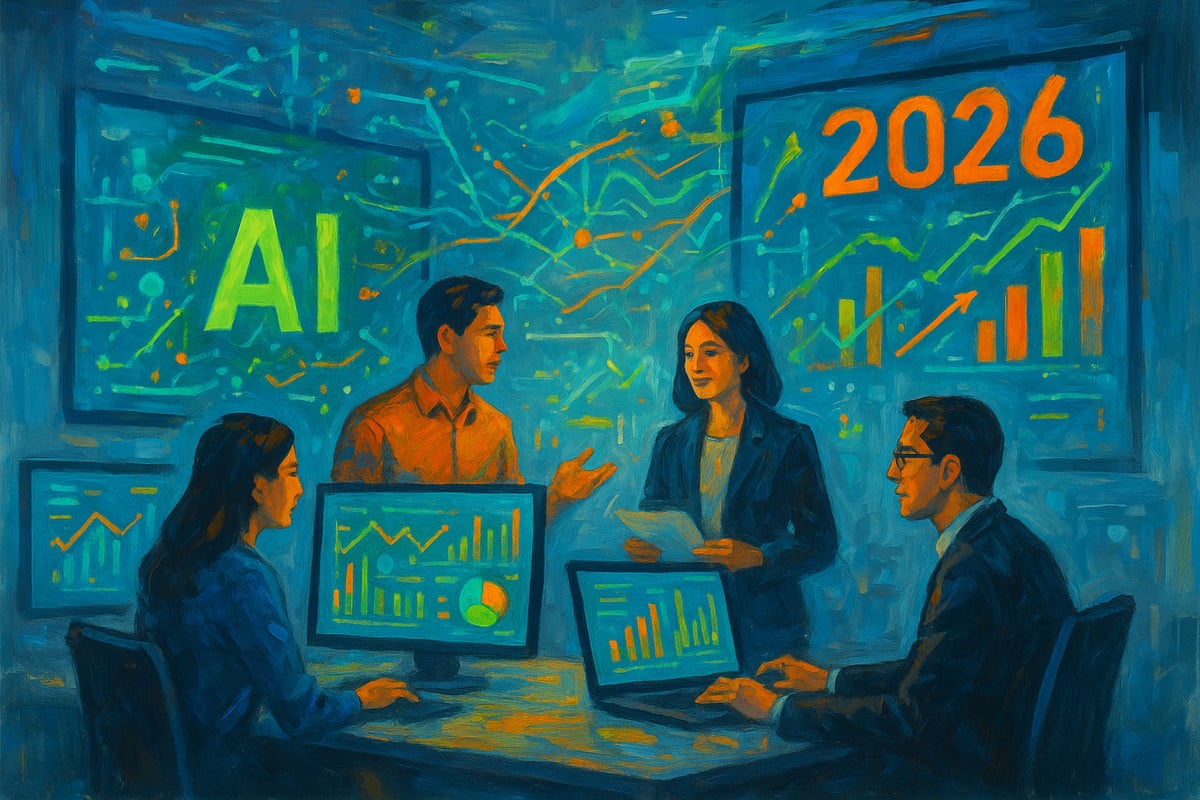
In 2026, machine learning and business intelligence are transforming how Australian businesses operate, compete, and innovate. With data at the heart of every decision, understanding these technologies is essential for success. Let’s explore how both have evolved and why their integration is now a game-changer.
Evolution of Business Intelligence
Business intelligence, or BI, is all about collecting, analysing, and reporting on data to guide better business decisions. Over the years, BI has moved beyond simple reports and static dashboards.
Now, BI can handle both structured data like sales numbers and unstructured data from customer emails or social media. This shift is critical, as competitor research shows that 80 percent of business income now comes from analysing unstructured data.
In 2026, BI delivers real-time analytics. For example, retailers use BI to track sales across online and physical stores instantly. With machine learning and business intelligence working together, businesses respond to trends as they happen, not after the fact.
Machine Learning: Concepts and Types
Machine learning is a branch of artificial intelligence focused on creating systems that learn from data. Unlike traditional AI, which may be rules-based, machine learning and business intelligence combine to automatically extract insights from huge data sets.
There are three main types of machine learning:
- Supervised learning: Models learn from labelled data.
- Unsupervised learning: Finds patterns in unlabelled data.
- Reinforcement learning: Learns by trial and error to maximise results.
Machine learning algorithms excel at spotting patterns and predicting outcomes. One real-world example is banks using machine learning for real-time fraud detection, reducing risk and saving millions.
The Convergence of ML and BI
When machine learning and business intelligence come together, the results are powerful. ML now automates data cleaning, integration, and reporting, making analytics faster and more accurate.
Businesses use ML for advanced analytics, including predictive, prescriptive, and diagnostic insights. For instance, ML-driven tools segment customers and forecast demand with greater precision. Natural language processing and computer vision extract insights from text, images, and video, opening new possibilities.
Industry benchmarks show that BI tools with embedded ML increase forecast accuracy by up to 30 percent. Healthcare organisations use machine learning and business intelligence to predict patient outcomes, improving care and efficiency.
Augmented analytics has become the new standard for 2026. With tools like AI and business intelligence automation, even non-technical users can access deep insights. However, success depends on high-quality, diverse data sources.
In this new landscape, integrating machine learning and business intelligence is not just an advantage, it’s essential for Australian businesses to stay ahead.
Key Trends Shaping Machine Learning and Business Intelligence in 2026
In 2026, machine learning and business intelligence are rewriting the rules for Australian companies. From instant insights to ironclad data security, the landscape is evolving faster than ever. Let’s explore the top trends shaping how we work, make decisions, and stay ahead.
Real-Time Analytics and Automation
Real-time analytics are now at the heart of machine learning and business intelligence. Companies process data instantly to drive smarter, faster decisions.
- Businesses use ML-powered agents to automate repetitive BI tasks such as data integration, report generation, and anomaly detection.
- Competitor insight shows that 70 percent of large enterprises deploy real-time BI dashboards.
- Logistics companies optimise delivery routes based on live data, saving time and fuel with each trip.
- According to Emerging AI and ML trends, automation will continue to accelerate, reshaping how we approach business challenges.
By embracing real-time tools, organisations not only increase efficiency but also gain a competitive edge. Machine learning and business intelligence integration is no longer optional, it’s essential.
Data Privacy, Security, and Sovereignty
Data privacy and security are top priorities in the 2026 landscape for machine learning and business intelligence.
- Companies must comply with GDPR, Australian Privacy Principles, and sector-specific rules.
- ML-driven security analytics now detect and prevent threats in real time, protecting sensitive data.
- Competitor research reveals that ML models handle both structured and unstructured data securely.
- Financial institutions lead the way, using ML to monitor and instantly flag suspicious transactions.
- In 2026, 90 percent of organisations name data privacy as their number one concern for BI and ML.
Strong privacy practices help build trust and protect business value. Data sovereignty, keeping information within Australian borders, is now a key requirement for many sectors.
Augmented Intelligence and Human-AI Collaboration
Augmented intelligence is transforming machine learning and business intelligence by blending human expertise with advanced AI.
- BI tools now offer natural language queries and conversational analytics, making data accessible for everyone.
- AI assistants guide users through data exploration, supporting faster, more accurate decisions.
- Sales teams use AI chatbots for instant customer insights, improving performance and satisfaction.
- Industry data shows that 60 percent of BI users interact with data via conversational interfaces.
- The shift from analyst-driven insights to self-service, AI-powered analytics is changing the workplace.
- Explainable AI is gaining traction, making BI results more transparent and trustworthy.
- AI upskilling has become essential, as teams learn to collaborate with smart systems.
With augmented intelligence, machine learning and business intelligence are more user-friendly and impactful than ever.
Australian AI Solutions: Synap Case Study
Synap is leading the way in Australia’s machine learning and business intelligence journey.
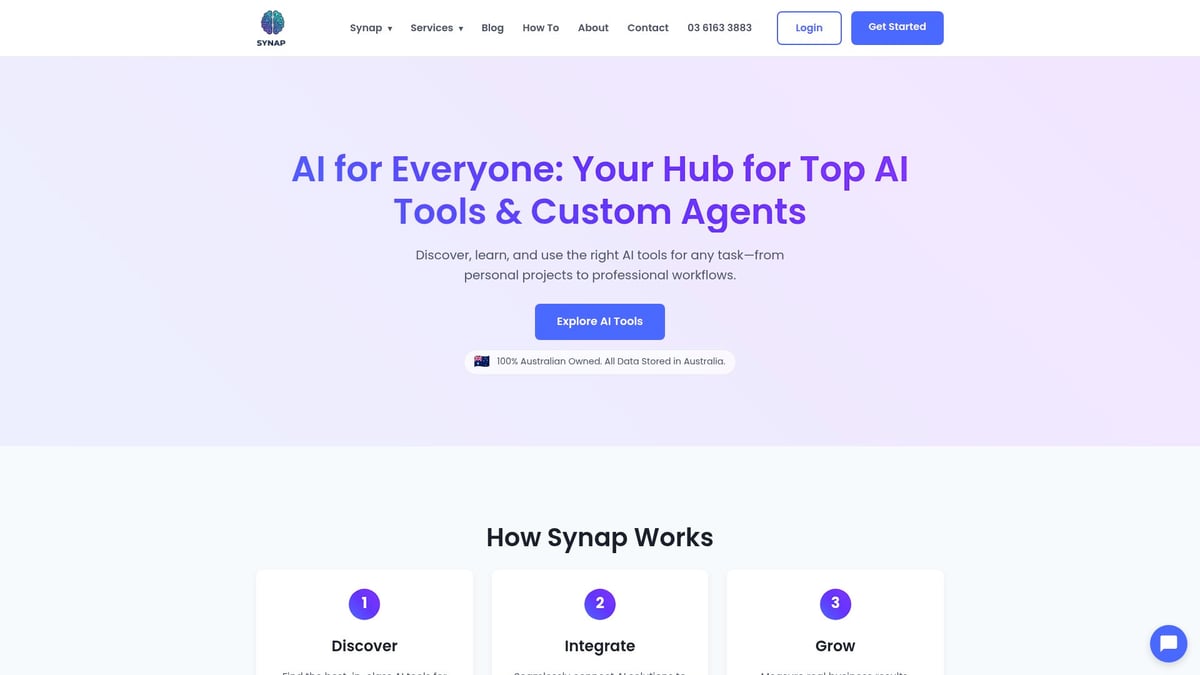
- Synap’s AI solutions focus on data sovereignty, keeping all information within Australian borders.
- Their AI agents automate critical business processes like invoice processing, legal research, and customer support.
- Custom AI wrappers serve industries from education to healthcare and law.
- A major legal firm now leverages Synap AI for contract analysis and precedent search, saving hours each week.
- With flexible, pay-per-agent pricing and enterprise support, Synap makes ML-BI accessible for all.
Ready to secure your data and unlock smarter insights? Book an online consult with a Synap AI technologist for tailored guidance.
Step-by-Step Guide: Implementing Machine Learning in Business Intelligence
Unlocking the full potential of machine learning and business intelligence can seem complex, but breaking it down into manageable steps makes it achievable for any Australian business. Let's work through the essential stages together and see how real companies are already turning data into results.
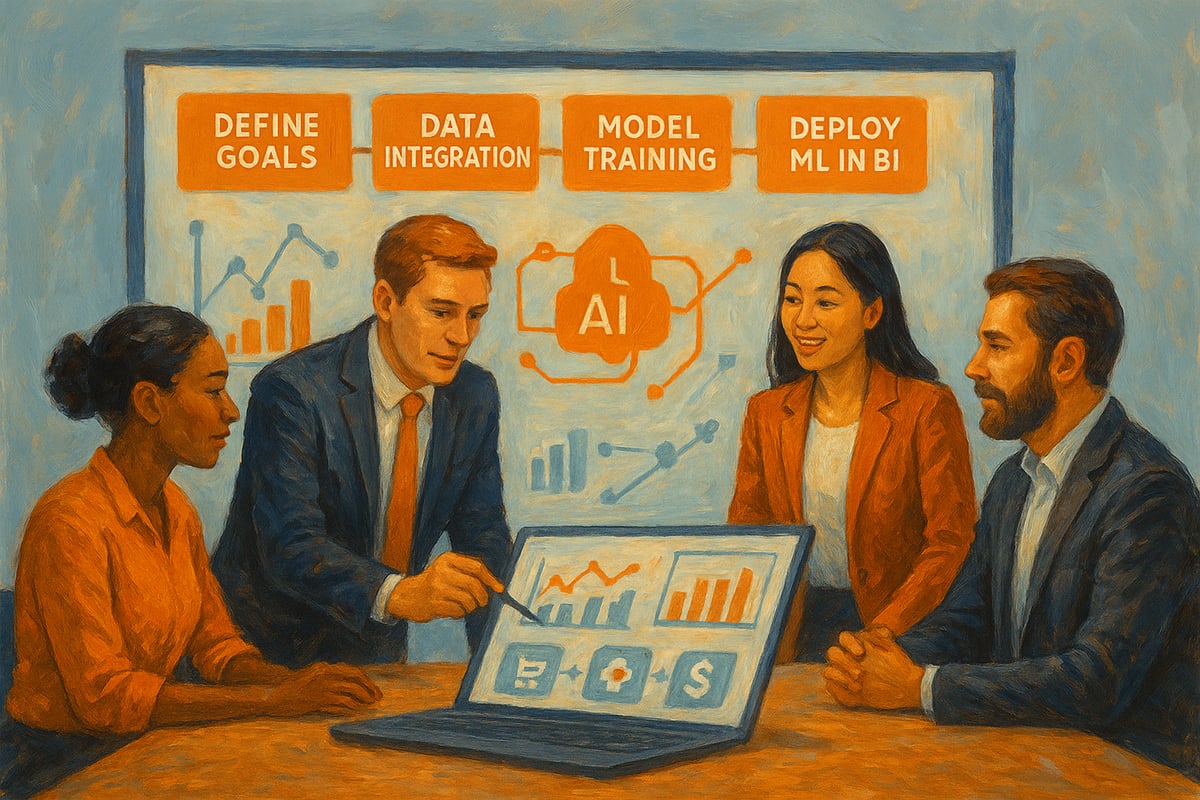
Step 1: Define Clear Business Objectives
- Start by pinpointing the most pressing business challenges or opportunities where machine learning and business intelligence can make a difference.
- Set measurable and realistic goals, such as reducing customer churn by 10 percent or boosting forecast accuracy.
- Bring together key stakeholders from across departments so everyone is aligned on the vision and outcomes.
Research shows that starting with small, focused projects delivers the best results. For example, one local retailer used machine learning and business intelligence to personalise product recommendations, increasing repeat sales by 18 percent within months. Remember, clear objectives lay the foundation for every successful project.
Step 2: Data Collection, Integration, and Preparation
- Audit all available data sources, including both structured and unstructured information.
- Prioritise data quality by cleaning and validating records before moving forward.
- Integrate data from multiple systems such as CRM, ERP, IoT devices, and social media.
Data privacy and compliance are essential at this stage. In healthcare, for instance, a provider consolidated patient records and IoT device data, then applied machine learning and business intelligence to improve patient care while meeting privacy obligations. High-quality, unified data is the backbone of accurate analytics.
Step 3: Selecting and Training ML Models
- Choose the right machine learning algorithms based on your business objectives—classification, regression, or clustering.
- Use automated ML tools for faster prototyping and iteration.
- Split your data into training and test sets to validate model performance.
Competitors recommend using stratified 5-fold cross-validation for robust results. One Australian bank trained machine learning models on transaction data to detect anomalies, reducing fraud losses by 30 percent. With the right approach, machine learning and business intelligence can quickly deliver actionable insights.
Step 4: Integration with BI Tools and Automation
- Embed trained machine learning models into your existing BI platforms, such as Power BI or Tableau.
- Automate report generation and alerting using ML-driven workflows.
- Enable self-service analytics so business users can access insights anytime.
A manufacturing company automated quality control reporting with ML-powered BI, saving hundreds of hours annually. For seamless integration and secure deployment, Synap offers industry-leading AI automation. Explore the Synap services overview for tailored solutions that make machine learning and business intelligence work for you.
Ready to take the next step? Book a free 30-minute online consult with our AI technologist and get personalised guidance for your business.
Security, Privacy, and Ethical Considerations for ML-BI in 2026
Safeguarding data has become a top priority for any business using machine learning and business intelligence in 2026. With more sensitive information processed every day, strong security, ethical practices, and compliance are essential. Let's break down how you can protect your organisation, build trust, and stay ahead of regulations.

Data Security and Privacy Best Practices
Protecting sensitive information is the first step when adopting machine learning and business intelligence. Strict access controls are vital. Only authorised users should access critical data. Encrypt all sensitive data, both in transit and at rest.
- Begin with a full audit of your current data security policies.
- Implement robust encryption and multi-factor authentication for all users.
- Ensure compliance with GDPR and the Australian Privacy Principles at every stage.
- Use machine learning and business intelligence tools for real-time anomaly detection. These can spot unusual activity instantly.
- For extra assurance, consider fuzzy probabilistic neural networks for advanced privacy analysis.
For example, an Australian insurance company uses machine learning and business intelligence to detect and prevent data breaches. Their systems alert teams to suspicious activity as it happens, reducing risk and keeping customer data secure.
Ethical AI and Responsible Data Use
Responsible use of machine learning and business intelligence is just as important as security. Start by addressing bias in model development. Use diverse training data and test for unintended outcomes.
- Create an AI ethics policy covering transparency, accountability, and fairness.
- Use explainable AI methods so you can understand how decisions are made.
- Regularly audit your machine learning and business intelligence models for bias or drift.
- Involve diverse teams in model review to catch blind spots.
For instance, a recruitment platform employs explainable machine learning and business intelligence tools to ensure fair candidate selection. By 2026, 75% of enterprises have AI ethics policies in place, making ethical AI a standard, not an afterthought.
Data Sovereignty and Localisation
With machine learning and business intelligence, data sovereignty is a growing concern. Keeping sensitive data within Australian borders is now a requirement for many sectors.
- Store and process all data on local servers to ensure compliance.
- Choose solutions like Synap, which guarantee 100 percent Australian data sovereignty.
- Local data processing offers better performance and peace of mind for compliance.
- For industry-specific needs, Synap’s enterprise-grade business solutions for enterprises are tailored for privacy and regulatory requirements.
A medical practice in Sydney switched to local AI solutions to meet strict healthcare regulations. If you want to ensure your machine learning and business intelligence strategy meets all security and compliance needs, consider booking a free online consult with our AI technologist for personalised guidance.
Real-World Applications and Industry Case Studies
In 2026, machine learning and business intelligence are transforming how Australian organisations operate, compete, and innovate. Let's explore practical applications shaping results across industries. Each example shows how businesses turn data into smarter decisions, better customer experiences, and measurable growth.
Customer Segmentation and Personalisation
Machine learning and business intelligence give businesses a powerful edge in understanding their customers.
- Start by collecting customer data from websites, apps, and social media.
- Use ML models to analyse buying habits, preferences, and patterns.
- Segment customers into groups for precise marketing and tailored offers.
Competitor research shows ML-driven segmentation increases campaign ROI by 25 percent. For example, an e-commerce platform boosted sales by delivering AI-powered recommendations in real time. Synap’s AI agents automate customer analysis, making it easy for teams to act on insights quickly. With machine learning and business intelligence, personalisation becomes both scalable and effective.
Predictive Analytics for Forecasting and Planning
Businesses rely on predictive analytics to stay ahead in 2026. Machine learning and business intelligence work together to forecast demand, inventory needs, and revenue trends.
- Gather historical sales and operations data.
- Train ML models to spot seasonal trends and predict future outcomes.
- Use BI dashboards to visualise and adjust plans instantly.
Retail chains now adjust inventory based on ML forecasts, reducing stockouts and lost sales. Adoption of predictive analytics is growing by 40 percent year-on-year. Manufacturing firms use ML-powered BI to optimise production schedules, cutting waste and boosting efficiency. According to AI and data analytics trends, these innovations are rapidly reshaping how businesses plan for growth.
Fraud Detection and Risk Management
Machine learning and business intelligence are changing the game in fraud detection and risk management.
- Train ML models on transaction and behavioural data.
- Automate alerts for suspicious actions and assign risk scores in real time.
- Continuously improve detection accuracy with feedback loops.
Competitors report that ML reduces false positives in fraud detection by 60 percent. Banks use these systems to instantly flag questionable activity across accounts. Insurance firms have also minimised claims fraud using advanced analytics. With machine learning and business intelligence, businesses can respond faster to threats and safeguard their reputation.
Industry-Specific Use Cases
Every sector is finding new value with machine learning and business intelligence. Here’s how:
- Healthcare organisations predict patient outcomes and allocate resources more efficiently.
- Legal teams use AI agents to summarise case law and automate contract review.
- Education providers deploy AI chatbots for student support and automate admin work.
- Customer service teams analyse sentiment and automate ticket routing for faster response.
For instance, one Australian university uses Synap AI to enhance student support and research productivity. Synap also offers tailored AI and BI automation for industries like medical, legal, and education. If you want industry-specific guidance, book an online consult with Synap’s AI technologist via the Contact Synap for AI consult page. Machine learning and business intelligence are helping every sector work smarter and deliver better outcomes.
The Future of Machine Learning and Business Intelligence: What’s Next?
The future of machine learning and business intelligence is more exciting than ever. Australian businesses in 2026 are embracing new technologies to stay competitive and thrive. Let’s explore where this powerful combination is heading and how you can prepare for what’s next.
Emerging Technologies and Innovations
Machine learning and business intelligence are evolving rapidly. In 2026, generative AI is helping businesses create content, automate decision support, and improve customer interactions. Quantum computing is starting to speed up model training, making it easier to process huge datasets.
Edge AI is another game-changer. It processes data right at the source, like point-of-sale systems, for instant insights. For example, retailers now use AI at checkout to offer real-time recommendations, boosting both sales and customer satisfaction.
According to AI trends transforming business, half of all new BI features in 2026 are powered by AI. This makes machine learning and business intelligence more accessible, accurate, and valuable than ever before.
Skills and Organisational Readiness
To succeed with machine learning and business intelligence, businesses need to invest in people. AI literacy is now essential for every team, from marketing to operations. Upskilling programs are in high demand, with 80% of organisations investing in AI training for their staff.
A step-by-step approach helps teams adapt:
- Assess current skills and identify gaps.
- Enrol staff in tailored AI/ML training.
- Encourage hands-on learning with real-world projects.
- Partner with experts, like Synap, for onboarding and continuous support.
For instance, a mid-sized business recently worked with Synap to train their workforce, enabling faster adoption of AI-powered BI tools and smoother digital transformation.
Strategic Roadmap for 2026 and Beyond
Developing a long-term strategy for machine learning and business intelligence is crucial. Start by setting clear goals for AI adoption. Next, perform regular technology audits to keep up with the latest advancements.
Form partnerships with trusted AI providers to drive ongoing innovation and compliance. For example, an Australian enterprise built a three-year AI strategy with Synap, ensuring sustainable growth and future readiness.
As more organisations focus on financial outcomes, the AI's financial impact in 2026 is clear: those who invest wisely in machine learning and business intelligence will see measurable returns. Ready to future-proof your business? Book a 30-minute online consult with our AI technologist for a strategic review.
We’ve just explored how machine learning and business intelligence are transforming the way Aussie businesses operate in 2026—from smarter decision-making to keeping your data secure right here at home. If you’re feeling inspired to take your own business to the next level but aren’t sure where to start, you’re not alone. Let’s work through it together. Whether you’re curious about tailored AI solutions, data privacy, or just want a clearer roadmap for the future, why not chat with a friendly expert who understands the local landscape? You can Book a Consultant Now and get personalised guidance to make your next steps easier.