Artificial intelligence is rapidly reshaping how we live and work in 2026. From smart assistants to automated decision-making, AI is everywhere, creating new opportunities and challenges for individuals and businesses alike.
This guide is designed to help every reader, from beginners to experts, unlock the full potential of user ai. You will find practical advice, clear steps, and real-world examples that make AI adoption achievable.
Explore key topics including AI fundamentals, evolving user personas, hands-on adoption guides, industry use cases, ethical considerations, and future trends. Discover how to take action and confidently integrate AI into your daily routine.
Understanding Artificial Intelligence in 2026
Artificial intelligence in 2026 is no longer just a futuristic concept. It is an integral part of our daily routines, quietly shaping how we work, learn, and solve problems. For anyone seeking to master user ai, understanding the current landscape is essential.

What Is AI in 2026?
AI in 2026 covers more than just chatbots or smart speakers. It includes generative AI, large language models (LLMs), and adaptive agents that learn and evolve with user preferences.
- Generative AI now creates text, images, and even video, transforming how content is produced.
- LLMs, like Gemini 2.5, power advanced conversational tools and business solutions.
- Adaptive agents personalise user ai experiences, adjusting responses and automating tasks based on user feedback.
These systems are embedded in everyday applications, making user ai both accessible and powerful for all skill levels.
Core Capabilities and Reach
The reach of user ai is vast. AI systems now excel at:
- Natural language processing—enabling clear, context-aware conversations.
- Image recognition—allowing instant analysis of photos and documents.
- Decision automation—streamlining approvals, alerts, and reminders.
- Predictive analytics—forecasting trends, risks, and opportunities.
By 2026, 80% of businesses report using AI in at least one process (Gartner, 2025). For more recent numbers, see 20 Mind-Blowing AI Statistics Everyone Must Know About Now. This widespread adoption means user ai is now a critical tool for productivity, efficiency, and decision-making in nearly every industry.
Comparing AI Types
Understanding the types of AI is vital for user ai success. Here is a simple comparison:
| AI Type | Description | Example Use |
|---|---|---|
| Narrow AI | Specialised for one task | Voice assistants |
| General AI | Human-like reasoning across domains | Not yet achieved |
| Generative AI | Creates new content, adapts to user intent | Content generation |
Narrow AI handles specific actions, while generative AI can create and adapt, making user ai more versatile. General AI, which would match human cognition, remains a goal for the future.
AI in Everyday Tools and Real-World Example
AI is now integrated into daily tools:
- Smart assistants manage schedules and reminders.
- Customer service bots resolve queries instantly.
- Document summarisation tools condense reports and articles in seconds.
A real-world example: An Australian medical centre uses user ai to summarise patient records, saving clinicians hours each week. In the legal sector, AI automates research and contract review, streamlining operations for busy firms.
Here is a simplified AI workflow for automating legal research:
input: legal query
AI agent searches case law database
AI summarises relevant cases
output: concise legal summary
This step-by-step process highlights how user ai transforms routine tasks.
Understanding Limitations and Human Oversight
Despite remarkable progress, user ai still has limitations.
- AI can introduce bias if trained on unbalanced data.
- Hallucinations—false or misleading outputs—are possible.
- Human oversight is essential to verify and validate results.
For every user ai implementation, it is crucial to combine AI’s speed with human judgment. This ensures accuracy, fairness, and trust in every outcome.
The Evolving User: AI Personas and Adoption Patterns
Artificial intelligence is reshaping how people interact with technology, and by 2026, the user ai landscape is more diverse than ever. Understanding the unique ways people engage with AI is crucial for successful adoption and effective implementation. As organisations invest in user ai solutions, recognising different user behaviours and mindsets helps drive better outcomes.
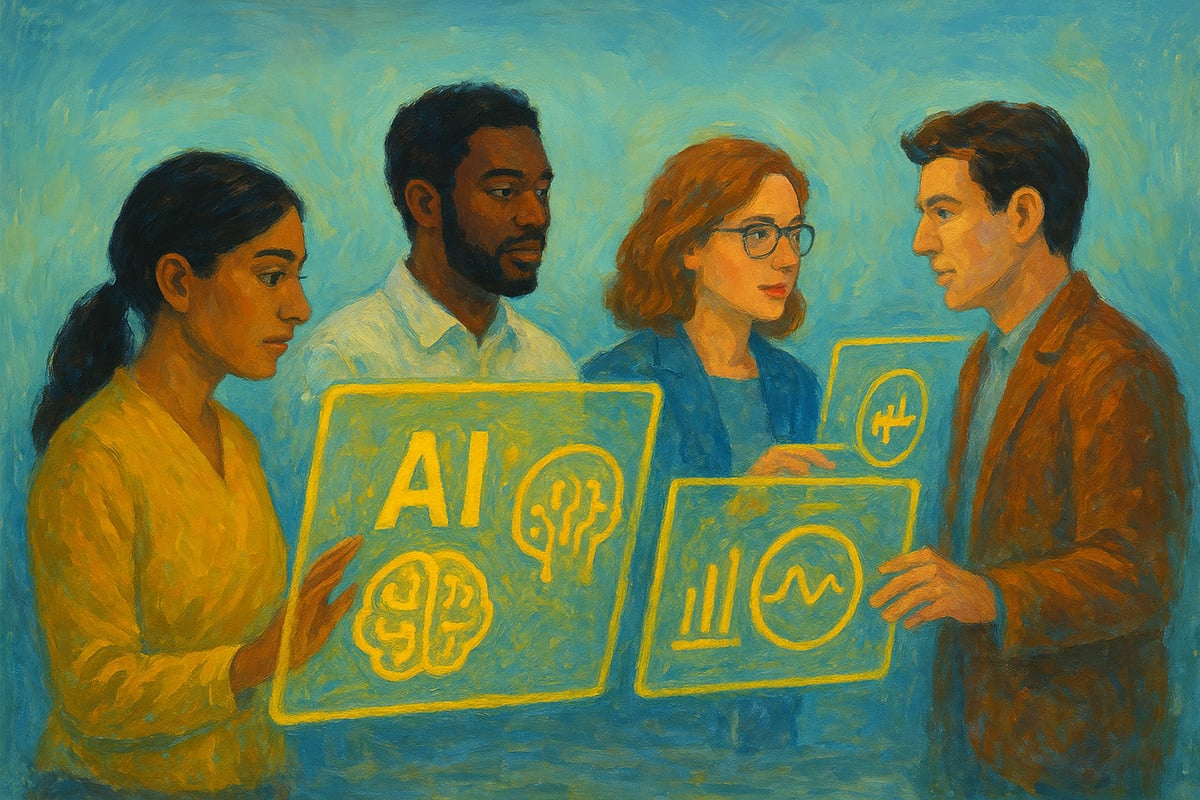
Four User AI Personas in 2026
Researchers have identified four core user ai personas, each with distinct attitudes and behaviours:
- Unconscious User: Engages with AI daily, often unaware it is present in their favourite apps or services.
- Avoidant User: Holds scepticism or mistrust towards AI, especially in sensitive domains like finance or healthcare.
- AI Enthusiast: Actively seeks out new user ai technologies, trying the latest tools to automate tasks at home or work.
- Informed AI User: Leverages AI for complex decisions, always verifying and cross-checking AI outputs for accuracy.
The Four-Persona Framework (Indiana University School of Medicine, 2025) provides deep insight into these categories and their impact on user ai adoption.
Comparing User AI Personas
Understanding the differences between these personas is vital. The table below summarises their key characteristics:
| Persona | Attitude Towards AI | Knowledge Level | Typical Behaviour | Example Scenario |
|---|---|---|---|---|
| Unconscious User | Neutral, unaware | Low | Uses AI passively | Relies on smart assistants for reminders |
| Avoidant User | Sceptical, cautious | Moderate | Actively disables AI features | Opts out of AI-powered finance apps |
| AI Enthusiast | Optimistic, curious | High | Experiments with new AI tools | Automates home lighting with AI |
| Informed AI User | Pragmatic, analytical | Advanced | Validates AI recommendations | Cross-checks AI contract suggestions |
These personas influence how user ai systems are designed and deployed. For example, an AI Enthusiast might adopt a new productivity agent immediately, while an Avoidant User might need extra assurance regarding data privacy.
Sentiment, Digital Literacy, and User AI Adoption
User sentiment plays a critical role in the pace and depth of user ai adoption. Optimistic users embrace change, sceptical users require transparency, and pragmatic users demand proven results. Real-world data shows that digital literacy and trust are decisive. In 2025, studies indicated that user ai adoption increases by 35% when organisations invest in digital skills training and transparent communication.
A practical example: In a Sydney-based law firm, the Informed AI User reviews contract drafts produced by Synap's AI agent, ensuring compliance and accuracy, while the Unconscious User benefits from automated calendar scheduling without realising AI is involved.
Research, Personalisation, and the Future of User AI
To maximise the potential of user ai, ongoing user research is essential. By mapping personas and sentiment, businesses can tailor onboarding, support, and feature sets for each group. Advancements in personalised AI, such as those described in PersonaMem-v2: Towards Personalized Intelligence, show how adaptive agents can learn from individual patterns, offering more relevant and effective user ai experiences.
As the user ai landscape continues to evolve, organisations must remain agile, prioritising digital literacy, ethical design, and ongoing feedback. This ensures every user, regardless of persona, can harness AI’s transformative potential with confidence.
Step-by-Step Guide: Harnessing AI for Personal and Professional Productivity
Artificial intelligence is revolutionising how Australians work and live. By 2026, adopting user ai is no longer a luxury but a necessity for staying competitive and efficient. Whether you're seeking to streamline daily tasks or transform your business, a clear, actionable roadmap can help you navigate the journey.
1. Identify Repetitive or High-Volume Tasks
Start by pinpointing tasks that consume significant time or involve repetitive actions. Examples include sorting emails, processing invoices, scheduling meetings, or data entry. In both personal and professional settings, user ai can automate these workflows, freeing up valuable time for more strategic work.
2. Evaluate Available AI Tools
Review the AI tools suited to your needs. Consider whether public cloud-based solutions or private, locally hosted platforms are best for your data privacy requirements. Public tools often offer broader features, while private platforms provide stronger data control, crucial for sensitive industries. This comparison table highlights key differences:
| Feature | Public AI Tools | Private AI Tools |
|---|---|---|
| Data Privacy | Variable, may store data offshore | Local hosting, strong sovereignty |
| Customisation | Limited | Highly customisable |
| Compliance | May not meet all local standards | Designed for local compliance |
| Cost | Often subscription-based | May require upfront investment |
Evaluating these options ensures your user ai journey aligns with both productivity and compliance goals.
3. Pilot an AI Solution
Select a single workflow to automate and implement a pilot project. For example, start with AI-powered email triage or document summarisation. Monitor how user ai handles real-world data and integrates with your existing processes. This step allows you to test functionality while minimising risk.
For practical guidance on getting started, see How to use Synap AI for detailed instructions and tips.
4. Monitor Results
Track the impact of your pilot by measuring efficiency gains, error rates, and user satisfaction. Set clear benchmarks before starting. For example, aim to reduce manual data entry time by 40% or decrease customer response times by half. Collect feedback from all participants to gauge how user ai is reshaping workflows.
5. Scale Adoption
If your pilot succeeds, expand AI integration to other areas. Gradually automate additional processes such as report generation, scheduling, or customer queries. Use lessons from the pilot to refine your approach and address any challenges before full-scale deployment.
6. Provide User Training and Support
Offer training sessions to help users understand how user ai works and its limitations. Foster an open environment where team members can ask questions and share concerns. Ongoing support is essential for building trust and ensuring effective adoption.
7. Continuously Review and Refine
Regularly assess the performance of your AI tools. Stay updated on new capabilities and industry trends. Use feedback loops to improve AI usability and accuracy. This continuous improvement mindset keeps your user ai solutions relevant and effective.
Real-World Example: Education Sector Transformation
An Australian education provider identified manual lecture note summarisation and student inquiry responses as bottlenecks. By introducing user ai for note summarisation and automating common queries, they increased staff productivity by 30%. Staff reported higher job satisfaction, and students received faster, more accurate support.
Synap AI: Empowering Australian Productivity
Synap AI offers workflow automation and custom agent development designed for local businesses. Their solutions prioritise privacy, compliance, and user-centric design. Australian firms in legal, education, and retail sectors have successfully deployed Synap's user ai agents to streamline contract analysis, automate inventory management, and enhance customer service.
Take the Next Step
Ready to unlock the full potential of user ai in your organisation? Book a free online consult with an AI technologist to assess your readiness and receive tailored recommendations: https://cal.com/hamish-mackellar-9sxhbs/30min
Real-World Applications: AI in Key Industries
Artificial intelligence is reshaping industries across Australia, making user ai a crucial driver of innovation and efficiency. In 2026, organisations are rapidly adopting AI technologies to solve complex problems and streamline operations. Let’s look at how user ai is transforming healthcare, law, education, customer service, finance, and retail.

1. Healthcare: Smarter Care with User AI
Healthcare is embracing user ai to improve patient outcomes and reduce administrative strain. AI systems now summarise patient histories in seconds, drawing key details from years of medical records. Diagnostic support tools analyse scans and test results, helping doctors spot patterns faster.
AI-powered platforms sift through thousands of medical journal articles, keeping clinicians up to date. In Australia, hospitals use user ai to automate appointment scheduling and manage patient follow-ups. By 2026, more than 80% of healthcare providers use AI in at least one workflow.
- Summarising complex records for clinicians
- Analysing scans for early disease detection
- Streamlining patient communication
This means less time on paperwork and more time for patient care.
2. Legal: Automating Insights with User AI
Law firms are leveraging user ai to handle repetitive legal research and document analysis. AI tools draft contracts, review precedents, and summarise case law, saving lawyers hours each week.
For example, user ai solutions can flag unusual clauses in contracts or identify relevant case outcomes from vast databases. Australian legal teams trust AI to automate compliance checks and speed up due diligence.
- Drafting and reviewing legal documents
- Researching case law and precedents
- Automating compliance monitoring
Synap AI’s custom agents, built for the legal sector, ensure sensitive data remains secure and compliant with Australian regulations.
3. Education: Personalised Learning with User AI
Education providers are using user ai to support teachers and students alike. AI research assistants help students find credible sources and summarise lecture notes. Automated grading tools reduce marking time and provide instant feedback.
Campus support bots answer common student questions, improving response times. In 2026, user ai enables educators to tailor lessons to individual learning needs and free up staff for more creative teaching.
- Summarising academic content for students
- Automating assignment grading
- Powering virtual campus assistants
The result is more engaged students and efficient staff.
4. Customer Service, Finance, and Retail: Seamless Experiences
Customer service teams rely on user ai to handle enquiries, triage support tickets, and analyse customer sentiment. By 2026, 65% of customer service interactions are managed by AI, leading to faster response times and higher satisfaction.
In finance, user ai detects fraud, automates reporting, and personalises investment advice. Retailers use AI to manage inventory and recommend products based on real-time trends.
- Automating customer queries
- Detecting financial anomalies
- Managing stock and personalising offers
Synap AI delivers secure, locally hosted AI-powered solutions and services that help Australian businesses automate these tasks while protecting sensitive data.
5. Real-World Example: Melbourne Retailer and Synap AI
A Melbourne-based retailer recently adopted user ai agents from Synap AI to automate inventory management and customer support. Staff now receive real-time alerts for low stock, while customers get instant answers to product questions.
After implementation, the retailer reported a 40% reduction in manual admin and a 25% boost in customer satisfaction. This is just one example of user ai driving measurable business results in Australia.
6. Conclusion: Start Your User AI Journey
Across every sector, user ai is creating smarter, more responsive organisations. The key is choosing tools that fit your needs and ensuring staff are supported throughout the transition.
Ready to discover how AI can transform your business? Book a free online consult with our AI technologist here to assess your user ai readiness and next steps.
Ethical, Legal, and Practical Considerations for AI Users
Artificial intelligence brings immense opportunity, but every user ai journey comes with critical ethical and legal questions. Bias in AI outputs can reinforce existing inequalities when not properly managed. Transparency and accountability are essential, as user ai systems need to make their decision-making process understandable to both users and regulators.
Australian data privacy laws have evolved rapidly, especially as user ai tools become more integrated in business and government. Local data hosting is now a top priority, with 70% of Australian businesses prioritising data sovereignty in their AI adoption strategies according to ABS, 2025. This means user ai solutions are increasingly designed to keep sensitive information onshore and within strict compliance boundaries.
Hallucinations, or fabricated outputs, remain a challenge for user ai systems. These errors can lead to misinformation, especially in high-stakes areas like healthcare or legal advice. Every user ai implementation should include human oversight to validate important decisions and outputs. Without this safeguard, the risk of costly mistakes or reputational damage increases.
To ensure safe and effective user ai deployment, best practices are essential. These include keeping a human-in-the-loop, conducting regular audits of AI outputs, and maintaining clear communication around the strengths and limitations of each tool. Consulting with specialists, such as Synap AI consulting services, can help organisations design robust frameworks for ethical and compliant user ai adoption.
Australian businesses are not alone in this journey. Recent reports, such as Global AI Adoption in 2025, highlight that the digital divide and regulatory landscape are shaping how user ai is used worldwide. In a recent case, a government agency selected locally hosted AI platforms to meet strict compliance standards, ensuring privacy and accountability for all stakeholders.
A practical, step-by-step checklist for ethical user ai use:
- Assess data sources for quality and legal compliance.
- Validate user ai outputs with human review before acting on critical information.
- Document all AI-driven decision processes for transparency.
- Provide clear feedback channels for staff and customers to report concerns.
- Schedule regular audits of user ai systems, updating protocols as regulations evolve.
- Offer targeted training so all users understand both the power and the limits of user ai.
The future of user ai depends on trust, transparency, and ongoing education. To equip your team for success, consider booking a free online consult with an AI technologist to review your compliance and readiness.
The Future of User AI: Trends and Next Steps
The pace of change in user ai is accelerating rapidly. By 2026, individuals and businesses will experience AI in ways that were once unimaginable. Adapting to these shifts is essential for staying competitive and confident in the digital landscape.
Synthetic users and AI-generated personas are emerging as powerful tools in UX research and product design. By 2026, companies will use AI-driven personas to simulate real user behaviours, testing digital products before launch. For example, a financial services firm might deploy synthetic users to identify pain points in a new app interface, reducing costly errors. This trend allows for faster, more inclusive feedback, shaping user ai experiences that better meet diverse needs.
Next, advances in multimodal AI are transforming how people interact with technology. Systems now process and respond to text, voice, and images simultaneously, creating seamless and intuitive user ai experiences. Imagine an education provider using an AI assistant that understands spoken student questions, analyses uploaded assignments, and provides instant, tailored feedback. According to industry analysts, 85% of digital platforms will integrate multimodal AI by 2026, making daily interactions more natural and efficient.
AI literacy is becoming a core skill for Australians. As user ai becomes embedded in everyday workflows, understanding its capabilities, limitations, and ethical considerations is critical. Synap AI offers guides and case studies through their Synap AI blog and insights, helping users stay informed about emerging trends and best practices. To future-proof your skills, consider these steps:
- Learn the basics of user ai and its applications.
- Stay updated on new tools and platforms.
- Participate in training or workshops.
- Practice verifying AI outputs in your daily tasks.
Regulatory changes are on the horizon, influencing how organisations adopt user ai. Governments are introducing stricter data privacy and transparency requirements. Businesses must adapt by choosing solutions that prioritise local data hosting and compliance. Upskilling teams will be vital, with ongoing education ensuring users can navigate evolving standards and make informed choices. For a global perspective on adoption, watch AI Adoption in Europe: 20% of Companies Use AI in 2025 to compare how trends differ across regions.
Looking ahead, user ai will only grow more sophisticated and central to Australian life. Now is the time to explore its potential, whether you are a business leader, educator, or everyday user. To find out how prepared you are, book a free online consult with an AI technologist and take the first step towards harnessing the future of user ai.
As we’ve explored—from understanding AI’s fundamentals to overcoming adoption challenges—harnessing artificial intelligence in 2026 is all about taking practical, informed steps. Whether you’re just beginning or ready to scale up, having expert guidance can make all the difference, especially when it comes to privacy and custom solutions tailored to your business needs. If you’d like to talk through your next move or see how local AI consulting can accelerate your goals, I invite you to Book a Consultant Now. Let’s make your AI journey a confident and successful one.