Artificial intelligence is reshaping the future of business, and the pace of change in ai cloud service technology is only accelerating as 2026 approaches. Companies across Australia and the globe are facing mounting pressure to keep up with these advancements or risk falling behind.
To stay competitive, leaders must adopt robust strategies that leverage the latest capabilities in ai cloud service solutions. This article reveals seven game-changing approaches designed to help businesses transform their operations and future-proof their technology stack.
You can expect actionable insights and proven methods that go beyond buzzwords. These strategies are tailored for organisations aiming to boost efficiency, improve security, and unlock new opportunities.
As you read on, you will build awareness of the latest AI trends, spark interest in innovative cloud strategies, and develop a desire to drive change within your business. Take the next step—discover how to implement these breakthroughs and put your organisation ahead of the curve.
Why AI Cloud Service Strategies Matter in 2026
The rapid convergence of AI and cloud is reshaping how businesses operate in every industry. By adopting an ai cloud service, organisations unlock the ability to process data, automate workflows, and scale operations faster than ever before.
According to Statista, the global AI market is projected to reach $1.3 trillion by 2030, highlighting the explosive growth and investment in this space. Early adopters of ai cloud service solutions already see significant competitive advantages, from accelerated digital transformation to reduced operational costs.
Consider a real-world example: Australian businesses leveraging Synap automations have reported up to 40% reduction in manual admin time. This demonstrates how cloud-based AI can deliver measurable productivity gains.
To harness these benefits, companies should follow a step-by-step approach. First, assess current processes for automation potential. Next, integrate AI tools for analytics and intelligent decision-making. Then, monitor performance and optimise continuously.
Security and compliance are also critical, especially in 2026 as regulations tighten. Choosing providers with robust privacy measures and local data sovereignty is essential. Scalable, flexible, and localised AI solutions are in high demand, particularly for organisations needing to adapt quickly.
For businesses exploring options, the AI Cloud Services Overview offers a comprehensive look at available platforms and strategies. Staying informed and proactive today will ensure your organisation remains competitive and resilient tomorrow.

7 Game-Changing AI Cloud Service Strategies for 2026
The ai cloud service landscape is evolving rapidly. Businesses seeking future-ready solutions must explore seven proven strategies to stay ahead. Each strategy below is actionable, backed by real-world examples, and tailored for 2026.
1. Custom AI Agents for Workflow Automation
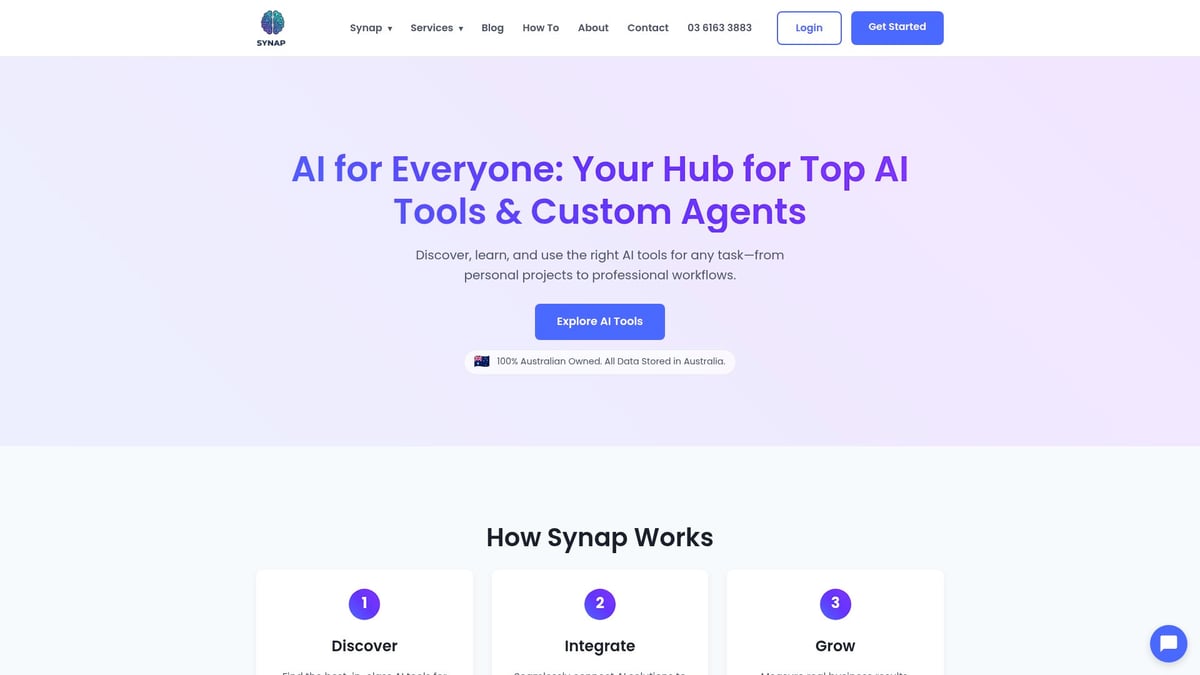
Custom AI agents are revolutionising how repetitive business tasks are managed. Using an ai cloud service like Synap’s custom AI workflow solutions, companies can deploy agents with pay-per-agent pricing and ensure Australian data sovereignty.
- Identify repetitive workflow tasks.
- Select a tailored AI agent.
- Integrate the agent into your existing process.
- Monitor and refine the agent’s output.
Australian SMEs have seen admin time drop by 40 percent after deploying Synap agents, boosting productivity, compliance, and scalability. These agents are perfect for education, legal, and medical sectors.
2. Multi-Cloud AI Deployment
A multi-cloud ai cloud service strategy distributes AI workloads across AWS, Azure, and Google Cloud. This increases resilience and reduces vendor lock-in.
- Map out critical AI tasks.
- Choose compatible cloud providers.
- Integrate AI models using standard APIs.
- Monitor performance and costs.
According to Flexera, 85 percent of enterprises now use multi-cloud for key AI workloads. The financial sector, for example, ensures uninterrupted fraud detection through this approach. While it reduces risk, it requires careful management.
3. AI-Powered Data Security and Privacy
Securing data in the ai cloud service era is vital. AI-driven tools now detect threats and automate compliance.
- Deploy AI security monitoring on cloud data.
- Configure alerts for suspicious activity.
- Regularly retrain models for evolving threats.
Healthcare providers use AI to monitor patient data, reducing breach risks. IBM reports 67 percent of breaches are prevented by AI security tools. Real-time monitoring is a major advantage, though ongoing model updates are essential.
4. Edge AI Integration with Cloud Services
Edge AI combines local device intelligence with centralised ai cloud service analytics. This approach is ideal for industries needing instant insights.
- Connect IoT devices to the cloud.
- Enable edge AI analytics for local processing.
- Sync data with cloud for deeper analysis.
Manufacturing plants use edge AI for predictive maintenance, reducing downtime. Gartner predicts 40 percent of new enterprise apps will include edge AI by 2026. Setup is complex, but the reward is faster decision-making.
5. AI-Driven Personalisation Engines
Cloud-based personalisation engines transform customer engagement using ai cloud service capabilities.
- Integrate personalisation APIs into digital platforms.
- Analyse customer behaviour in real time.
- Adjust recommendations dynamically.
Retailers have seen higher sales from AI-powered suggestions. McKinsey notes 76 percent of consumers now expect tailored experiences. Quality data and regular optimisation are key for success.
6. Low-Code/No-Code AI Cloud Platforms
Low-code/no-code platforms democratise ai cloud service development. These tools let non-coders build AI solutions fast.
- Choose a low-code AI platform.
- Drag and drop components to create workflows.
- Launch and monitor solutions.
HR teams automate candidate screening without coding. Forrester forecasts 65 percent of app development will use these platforms by 2026. While fast, complex customisation is limited.
7. Continuous AI Model Optimisation in the Cloud
AI models must adapt to new data. Continuous optimisation in an ai cloud service ensures accuracy and value.
- Set up automated retraining pipelines.
- Feed updated data regularly.
- Monitor model performance and adjust as needed.
Logistics firms improve route planning with continuous learning. IDC finds 58 percent of AI models degrade within a year without retraining. This strategy demands robust data pipelines and MLOps skills.
Key Implementation Steps for Adopting AI Cloud Strategies
Adopting an ai cloud service in 2026 requires a strategic approach, balancing innovation with operational needs. Start by following these essential steps to ensure success and future readiness.

Assess your current business processes. Identify areas where automation and ai cloud service integration could drive efficiency or reduce manual work.
Prioritise data security, privacy, and compliance. Ensure every solution aligns with Australian regulations and industry standards.
Select the right partners and platforms. Use resources like the AI Product Explorer to compare ai cloud service options tailored to your needs.
Develop a phased rollout plan. Start with pilot projects, then expand ai cloud service adoption based on feedback and measurable results.
Train your staff on new tools and workflows. Provide ongoing support to maximise adoption and minimise disruption.
Monitor key performance metrics. Regularly review automation outcomes, cost savings, and user satisfaction, then refine your strategies as needed.
Consider real-world results. For example, an Australian retailer implemented Synap automation, achieving 30 percent faster order processing after integrating ai cloud service solutions.
For tailored advice, book a 30-minute consult with an AI technologist to discuss the best path forward for your business.
By following these steps, you can confidently future-proof your organisation and unlock the full potential of ai cloud service technology.
Future Trends in AI Cloud Services
Industry-specific solutions will become the norm by 2026, with sectors like healthcare and finance demanding tailored ai cloud service offerings. Ethical AI and transparent algorithms will be non-negotiable, as businesses face stricter regulations and growing consumer scrutiny.
Quantum computing is set to revolutionise ai cloud service performance, allowing for faster processing and deeper insights. Generative AI models will empower creative industries, from media to design, to automate content and drive innovation.
Sovereign cloud solutions are on the rise in Australia, addressing local compliance and data residency requirements. To stay ahead, businesses should regularly assess emerging technologies, drawing on insights from resources like the AI Insights and Trends Blog.
Real-world example: Australian media agencies are already leveraging generative AI in the cloud for campaign automation. For tailored guidance, book a consult with our AI technologist.

As we look ahead to 2026, it’s clear that staying competitive means embracing smarter, more secure AI cloud solutions tailored for Australian businesses. You’ve just explored practical strategies for automating workflows, safeguarding data, and scaling innovation—all while keeping your information local and compliant. If you’re ready to future proof your operations and want AI that truly fits your needs, now’s the perfect time to take the next step. Let’s work together to bring seamless AI integration into your business—Join Now and start your journey with Synap today.