
The integration of ai in company operations has evolved from experimental technology to essential infrastructure. Australian businesses across sectors now leverage artificial intelligence to streamline operations, reduce costs, and gain competitive advantages. Recent data shows 98% of small businesses in the U.S. are using AI-enabled tools, with 40% employing generative AI solutions. This transformation demands strategic implementation rather than rushed adoption. Understanding how to deploy ai in company workflows requires careful planning, proper assessment, and expert guidance.
Understanding AI Applications Across Business Functions
Modern ai in company infrastructure extends beyond simple automation. These systems analyse vast datasets, predict market trends, and optimise resource allocation in real-time.
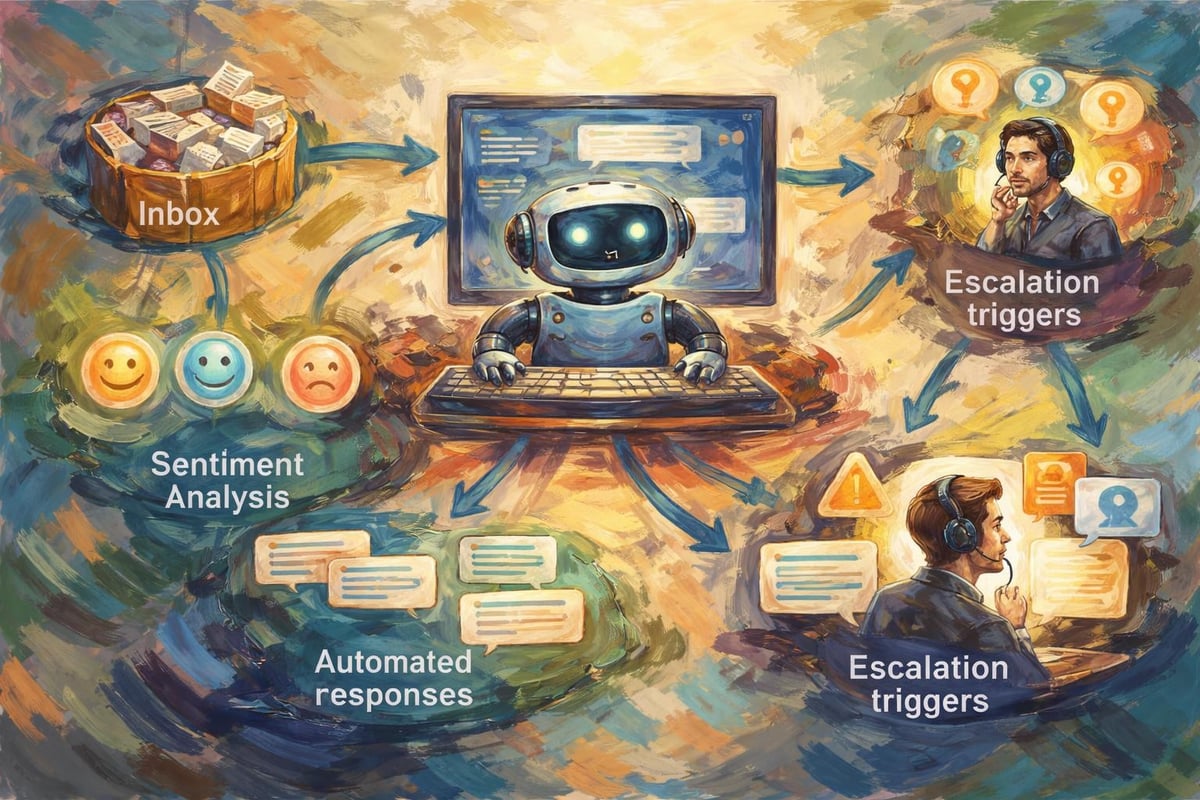
The scope of AI applications in business continues expanding. Customer service departments deploy chatbots handling routine enquiries. Finance teams utilise predictive analytics for forecasting. Marketing divisions leverage AI for personalised campaign targeting. Operations managers implement intelligent inventory systems.
Key Application Areas for 2026
- Customer relationship management - AI systems analyse interaction patterns and predict customer needs
- Supply chain optimisation - Intelligent forecasting reduces waste and improves delivery timeframes
- Financial analysis - Automated systems detect anomalies and predict cash flow patterns
- Human resources - Recruitment tools screen candidates and identify top talent
- Quality control - Computer vision systems inspect products with greater accuracy than manual processes
Companies implementing ai in company operations report significant efficiency gains. Manufacturing firms reduce defect rates by 35%. Service businesses improve response times by 60%. Retail operations decrease inventory holding costs by 25%.
Strategic Implementation Framework
Deploying ai in company systems requires structured methodology. Rushed implementations often fail to deliver promised returns.
Step-by-Step Implementation Process
- Conduct readiness assessment - Evaluate existing infrastructure, data quality, and team capabilities
- Identify high-value use cases - Prioritise applications offering measurable ROI within 6-12 months
- Secure stakeholder buy-in - Present clear business cases with projected costs and benefits
- Establish data governance - Implement policies ensuring quality, security, and compliance
- Select appropriate solutions - Match technology capabilities to specific business requirements
- Deploy pilot programmes - Test systems in controlled environments before full rollout
- Monitor performance metrics - Track KPIs demonstrating value creation
- Scale successful initiatives - Expand proven applications across additional departments
- Provide ongoing training - Ensure teams understand how to maximise AI tool effectiveness
- Review and optimise - Continuously refine systems based on performance data
Leading companies like Tesla, Netflix, and Google demonstrate the power of systematic AI integration. These organisations didn't adopt every available technology. They identified specific problems AI could solve better than existing methods.
Australian businesses benefit from working with local experts who understand regional compliance requirements. AI consulting services in Melbourne provide tailored guidance for Victorian businesses. Similar expertise exists for organisations across Sydney and other major centres.
Real-World Implementation Example
Consider a Melbourne-based manufacturing company struggling with production inefficiencies. Their challenge involved unpredictable equipment failures causing costly downtime.
The Implementation Journey
- Assessment phase - Technologists reviewed maintenance logs spanning three years
- Data preparation - Historical records were cleaned and standardised
- Model development - Predictive maintenance algorithms were trained on equipment sensor data
- Testing period - The system ran parallel to existing processes for validation
- Full deployment - AI-driven maintenance scheduling replaced reactive approaches
- Results measurement - Unplanned downtime decreased 47% within six months
This ai in company transformation required $85,000 initial investment. The business recovered costs within 11 months through reduced downtime and maintenance expenses. Equipment lifespan extended by an average 23%.
The manufacturer didn't stop with predictive maintenance. They expanded AI applications to quality control, inventory management, and demand forecasting. Each implementation built upon previous successes.
| Implementation Phase | Duration | Investment | Annual Savings |
|---|---|---|---|
| Predictive Maintenance | 4 months | $85,000 | $112,000 |
| Quality Control | 3 months | $62,000 | $94,000 |
| Inventory Optimisation | 5 months | $78,000 | $156,000 |
| Demand Forecasting | 6 months | $91,000 | $203,000 |
Overcoming Common Implementation Challenges
Despite clear benefits, many businesses struggle with ai in company integration. Recent research indicates AI still isn't living up to its full potential for numerous organisations.

Addressing Frequent Obstacles
- Data quality concerns - Implement cleaning protocols before AI deployment
- Skills shortages - Partner with consultants or invest in staff training programmes
- Integration complexity - Select solutions designed for existing infrastructure compatibility
- Budget limitations - Start with high-ROI projects demonstrating value quickly
- Change resistance - Involve employees early and communicate benefits clearly
- Vendor selection - Evaluate providers based on industry experience and support quality
- Security requirements - Prioritise solutions meeting Australian privacy standards
- Unclear ROI expectations - Establish measurable KPIs before implementation begins
Australian businesses face unique considerations including data sovereignty requirements and regional privacy regulations. Choosing consultants familiar with these requirements prevents compliance issues.
A readiness assessment identifies gaps between current capabilities and AI implementation requirements. This evaluation covers technology infrastructure, data maturity, and organisational readiness.
Measuring AI Performance and ROI
Successful ai in company initiatives require continuous performance monitoring. Vague metrics don't demonstrate value to stakeholders.
Essential Performance Indicators
- Cost reduction percentages - Compare operational expenses before and after implementation
- Time savings metrics - Measure hours saved through automation
- Revenue impact - Track sales increases attributable to AI-driven insights
- Customer satisfaction scores - Monitor NPS and CSAT improvements
- Error rate reductions - Document quality improvements
- Processing speed increases - Measure throughput enhancements
- Employee productivity gains - Calculate output per staff member
- Market share growth - Assess competitive advantages gained
| Metric Category | Measurement Method | Target Improvement |
|---|---|---|
| Operational Efficiency | Time per transaction | 30-50% reduction |
| Customer Service | Response time | 40-60% decrease |
| Financial Performance | Cost per unit | 20-35% savings |
| Quality Standards | Defect rates | 25-45% reduction |
| Employee Productivity | Output per hour | 15-30% increase |
Despite billions invested in AI initiatives, many companies struggle to demonstrate returns. The difference lies in measurement discipline and realistic expectations.
Industry-Specific Applications
Different sectors leverage ai in company operations in unique ways. Understanding industry-specific applications helps businesses identify relevant opportunities.
Manufacturing Sector
- Predictive maintenance - Sensors monitor equipment health and predict failures
- Quality inspection - Computer vision detects defects faster than human inspectors
- Production optimisation - AI adjusts parameters for maximum efficiency
- Supply chain coordination - Systems synchronise procurement with production schedules
- Energy management - Algorithms reduce consumption during non-peak operations
Retail Industry
- Demand forecasting - Historical data predicts future purchasing patterns
- Dynamic pricing - AI adjusts prices based on competition and demand
- Inventory optimisation - Stock levels balance availability with carrying costs
- Personalised marketing - Customer data drives targeted campaigns
- Theft prevention - Visual systems identify suspicious behaviours
Professional Services
- Document analysis - Natural language processing extracts key information
- Client matching - Algorithms pair clients with appropriate service providers
- Scheduling optimisation - AI maximises billable hours and resource utilisation
- Risk assessment - Predictive models identify potential compliance issues
- Knowledge management - Systems organise and retrieve institutional expertise
Applications of AI in business extend across virtually every sector. The key involves identifying processes where AI provides meaningful advantages over traditional approaches.

Building Internal AI Capabilities
Sustainable ai in company transformation requires developing internal expertise. Complete reliance on external vendors creates long-term dependencies.
Capability Development Roadmap
- Identify AI champions - Select enthusiastic employees for advanced training
- Provide foundational education - Ensure leadership understands AI fundamentals
- Establish data literacy - Train staff on data quality and management principles
- Create experimentation frameworks - Allow safe environments for testing ideas
- Document learnings - Build institutional knowledge from successes and failures
- Develop governance structures - Implement approval processes for AI initiatives
- Foster innovation culture - Reward creative AI applications
- Build vendor partnerships - Maintain relationships with expert consultants
- Invest in tools - Provide appropriate software and platforms
- Measure skill development - Track certification attainment and capability growth
Australian organisations benefit from local AI expertise understanding regional business contexts. AI consulting services provide knowledge transfer alongside implementation support.
Privacy and Compliance Considerations
Deploying ai in company environments demands strict attention to regulatory requirements. Australian Privacy Principles govern how organisations handle personal information.
Compliance Framework Elements
- Data collection transparency - Inform customers how their information is used
- Consent management - Obtain appropriate permissions before processing data
- Purpose limitation - Use data only for stated purposes
- Data minimisation - Collect only necessary information
- Storage security - Implement appropriate protection measures
- Access controls - Restrict data access to authorised personnel
- Retention policies - Delete information when no longer required
- Breach protocols - Establish notification procedures for security incidents
- Cross-border transfers - Manage international data movements appropriately
- Regular audits - Review compliance status periodically
Private AI implementations offer enhanced control over sensitive information. Organisations handling confidential data often require on-premises solutions rather than cloud-based services.
Future-Proofing Your AI Strategy
Technology evolution accelerates continuously. Effective ai in company strategies anticipate future developments.
Strategic Planning Considerations
- Scalable architecture - Design systems accommodating growth
- Vendor evaluation - Assess long-term viability and innovation capacity
- Skill investment - Develop capabilities transferable across platforms
- Data strategy - Build high-quality datasets enabling future applications
- Integration planning - Ensure new systems connect with existing infrastructure
- Budget allocation - Reserve funds for emerging opportunities
- Partnership networks - Maintain relationships with innovation leaders
- Competitive monitoring - Track industry AI adoption trends
Working with experienced consultants helps businesses navigate rapidly changing landscapes. Expert guidance prevents costly missteps and identifies emerging opportunities.
Professional AI implementation support ensures projects deliver intended value. Whether exploring initial opportunities or scaling existing initiatives, specialist expertise accelerates success. For organisations ready to transform operations through intelligent automation, booking a consultation with AI technologists provides clarity on next steps.
Implementing ai in company operations represents a strategic imperative rather than optional enhancement. Australian businesses successfully deploying these technologies gain measurable advantages in efficiency, customer satisfaction, and competitive positioning. The journey requires careful planning, expert guidance, and commitment to continuous improvement. Synap AI provides Australian businesses with private AI consulting and platform development expertise, ensuring your organisation captures the full value of intelligent automation while maintaining complete control over sensitive data and proprietary processes.