
The newest AI technologies are fundamentally altering how Australian businesses operate, compete, and deliver value. From autonomous agents that execute complex workflows to multimodal systems processing text, images, and video simultaneously, the AI landscape has transformed dramatically. Understanding these advancements is critical for organisations seeking competitive advantages in an increasingly automated marketplace.
The Current State of AI Innovation
The newest AI developments mark a significant departure from traditional systems. Modern AI platforms demonstrate capabilities that were theoretical just 18 months ago. These systems now exhibit reasoning abilities, contextual understanding, and autonomous decision-making that surpass earlier generations.
According to research on AI generational evolution, we're witnessing a transition toward AI 4.0, characterised by self-directed systems capable of setting independent goals. This represents a fundamental shift from tools that respond to commands to platforms that anticipate needs and propose solutions.
The newest AI models process information across multiple formats simultaneously. They analyse text documents, interpret visual data, understand audio inputs, and generate video content within unified frameworks. This multimodal capability enables businesses to automate previously siloed workflows.
Statistical evidence supports the acceleration. The AI boom has produced over 15 major large language model releases in 2025 alone. Investment in AI infrastructure exceeded USD 200 billion globally in 2025, representing a 47% increase from the previous year.
Enterprise Adoption Metrics
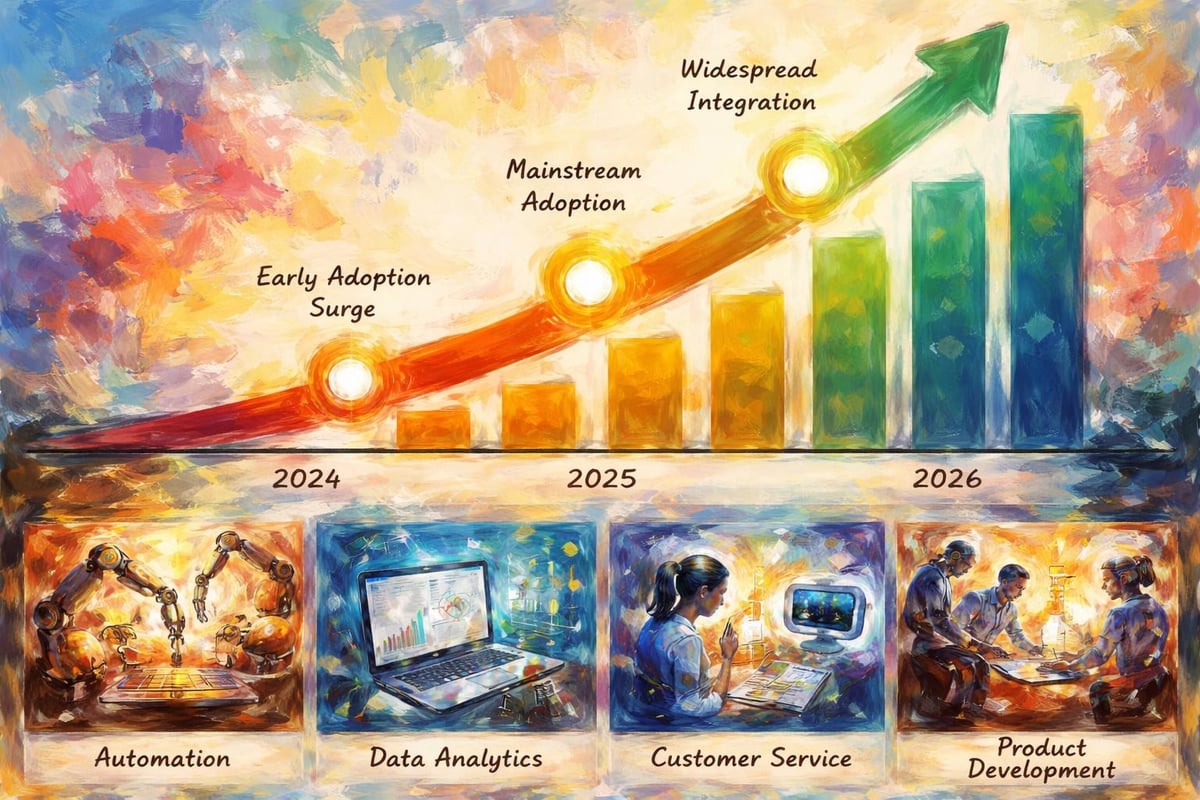
Australian businesses are deploying these technologies at unprecedented rates. Current data indicates:
- 68% of mid-sized enterprises implemented at least one AI system in 2025
- Automation initiatives reduced operational costs by an average of 31% across service sectors
- Customer service response times decreased by 54% following AI chatbot deployment
- Data processing speeds increased by 8x in organisations using multimodal AI platforms
These figures demonstrate tangible business value beyond theoretical potential.
Breakthrough Technologies Defining 2026
The newest AI systems released this year introduce capabilities that redefine automation boundaries. Understanding these technologies helps businesses identify implementation opportunities.
Autonomous AI Agents
AI agents now execute multi-step workflows without human intervention. Unlike previous chatbots that responded to queries, these systems:
- Monitor data sources continuously
- Identify patterns requiring attention
- Execute predetermined response protocols
- Escalate complex scenarios to human operators
- Learn from outcomes to improve future performance
OpenAI's Operator exemplifies this category. Released in early 2026, it performs web automation tasks including research compilation, form completion, and cross-platform data synchronisation. Businesses deploy these agents for procurement, compliance monitoring, and customer onboarding.
Multimodal Processing Platforms
Google's Gemini model demonstrates advanced multimodal capabilities. These platforms process diverse input types within single inference cycles. A marketing team might input product images, customer feedback transcripts, and sales data spreadsheets simultaneously. The system generates comprehensive campaign recommendations incorporating all information sources.
This capability eliminates traditional workflow bottlenecks where data required manual reformatting between analysis stages. Processing time reductions of 70-80% are typical for businesses migrating from sequential to multimodal workflows.
Reasoning-Enhanced Models
The newest AI architectures incorporate explicit reasoning mechanisms. DeepSeek's approach to chain-of-thought processing enables systems to show their logical progression. This transparency builds trust in AI-generated recommendations.
When evaluating investment opportunities, reasoning-enabled AI documents each analytical step. It explains why certain factors received greater weight, which assumptions influenced conclusions, and where uncertainty exists. This auditability addresses governance requirements in regulated industries.
Implementation Framework for Australian Businesses
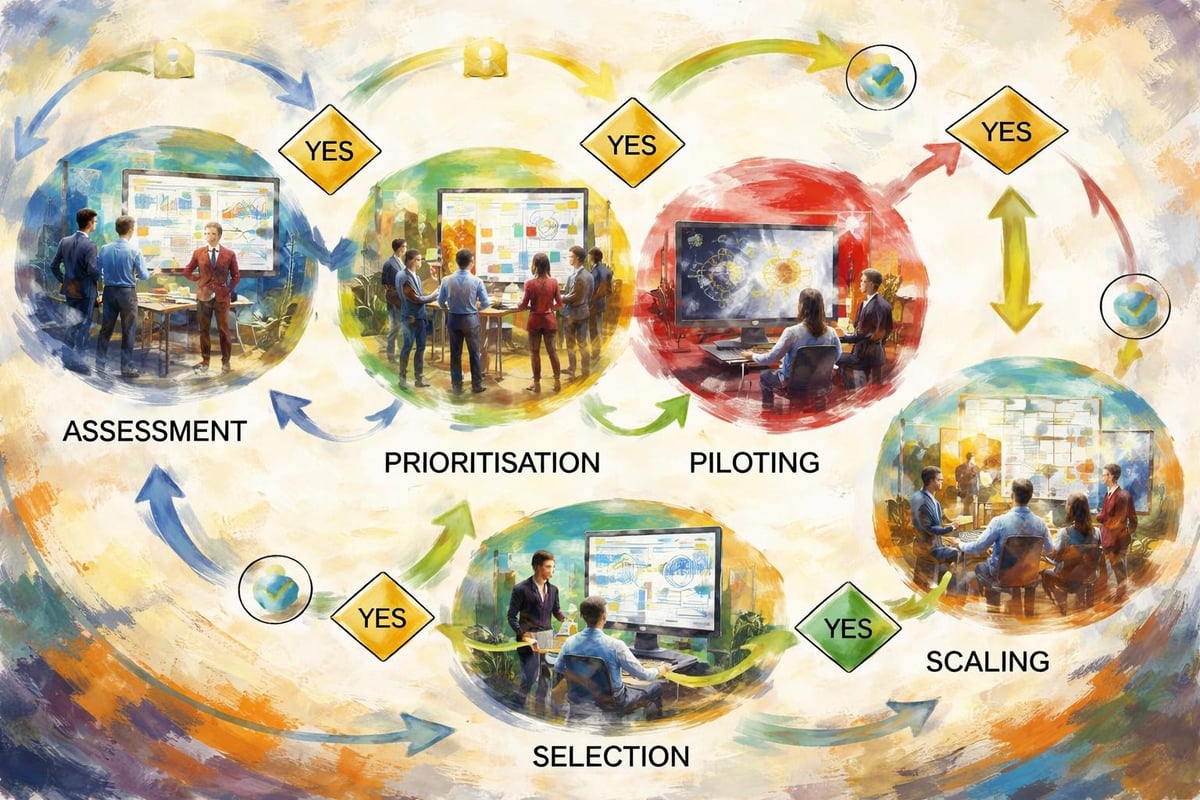
Deploying the newest AI technologies requires structured approaches. Random experimentation wastes resources and produces inconsistent results. Follow this implementation methodology:
Step 1: Readiness Assessment
Begin by evaluating current infrastructure and processes. The AI readiness assessment framework examines:
- Data quality and accessibility across systems
- Technical infrastructure capacity for AI workloads
- Staff capability and training requirements
- Regulatory compliance obligations
- Budget allocation for technology and change management
Document current state comprehensively. Identify gaps between existing capabilities and AI deployment prerequisites.
Step 2: Use Case Prioritisation
Not all business functions benefit equally from AI implementation. Prioritise based on:
- Potential ROI calculated from efficiency gains
- Implementation complexity and resource requirements
- Strategic importance to competitive positioning
- Risk tolerance for the specific function
- Data availability and quality for the use case
Create a prioritised roadmap spanning 12-24 months. Quick wins build momentum for larger transformations.
Step 3: Technology Selection
Match capabilities to requirements precisely. The newest AI platforms vary significantly in:
| Capability | Enterprise Models | Mid-Market Solutions | Specialised Tools |
|---|---|---|---|
| Customisation | Fully bespoke | Template-based | Fixed configurations |
| Data privacy | On-premise options | Hybrid deployment | Cloud-only |
| Integration complexity | Complex APIs | Standard connectors | Limited integration |
| Pricing structure | Usage-based | Seat licencing | Subscription tiers |
Avoid over-engineering. The most sophisticated platform isn't always optimal. Balance capability against implementation burden.
Step 4: Pilot Deployment
Launch controlled pilots before full-scale rollouts. Define success metrics explicitly:
- Accuracy thresholds for AI-generated outputs
- Processing speed requirements
- User adoption rates
- Cost per transaction comparisons
- Quality consistency measurements
Run pilots for minimum 90 days. Capture detailed performance data and user feedback. Iterate based on findings before expanding scope.
Step 5: Scaling and Optimisation
After successful pilots, scale implementations systematically. Monitor performance continuously. The newest AI systems improve through usage, but only with proper feedback loops.
Establish governance frameworks covering:
- Model performance review schedules
- Bias detection and mitigation protocols
- Output verification procedures
- Retraining trigger conditions
- Incident response protocols
Regulatory Landscape Shaping AI Deployment
The newest AI capabilities have prompted regulatory responses globally. Australian businesses must navigate evolving compliance requirements.
European AI Act Implications
The EU's Artificial Intelligence Act establishes risk-based regulatory tiers. High-risk applications face stringent requirements including:
- Comprehensive documentation of training data
- Human oversight mechanisms
- Accuracy and robustness testing
- Transparency in decision-making processes
- Cybersecurity measures
Australian exporters to EU markets must comply regardless of domestic operations. Implementation costs range from AUD 50,000 to AUD 500,000 depending on system complexity.
Australian Governance Developments
While Australia lacks comprehensive AI legislation currently, sector-specific regulations apply. Financial services, healthcare, and government contractors face particular scrutiny.
Privacy obligations under existing frameworks extend to AI applications. Businesses must demonstrate:
- Lawful collection and use of training data
- Consent mechanisms for personal information processing
- Data security appropriate to sensitivity levels
- Breach notification procedures
- Individual access and correction rights
The newest AI implementations often process significant personal data. Legal review during design phases prevents costly retrofitting.
United States Framework Influence
The US Department of Homeland Security's AI framework emphasises human-centric values and safety in critical infrastructure. While not directly applicable to Australian businesses, it signals international consensus on AI governance priorities.
This framework prioritises:
- Transparency in AI system operations
- Accountability for automated decisions
- Privacy protection by design
- Security against adversarial attacks
- Reliability and resilience requirements
Adopting these principles voluntarily positions businesses favourably as Australian regulations develop.
Real-World Business Applications
The newest AI technologies deliver measurable value across industries. Examining specific implementations illustrates practical applications.
Professional Services Automation
A Melbourne-based AI consulting firm implemented document processing automation for a legal practice. The system:
- Ingests contracts in multiple formats
- Extracts key terms and obligations
- Identifies compliance risks automatically
- Generates summary reports for review
- Flags anomalies requiring human attention
Processing time per contract decreased from 45 minutes to 7 minutes. Accuracy improved by 23% compared to manual review. The system paid for itself within five months through efficiency gains.
Manufacturing Quality Control
A regional manufacturer deployed computer vision systems for defect detection. The newest AI models identify microscopic irregularities invisible to human inspectors.
Results included:
- Defect detection rates increased from 87% to 99.2%
- False positive rates decreased by 64%
- Inspection throughput increased 3.5x
- Product returns decreased 41% within six months
- Warranty claims reduced by 38%
The implementation required AUD 180,000 in equipment and integration costs. Annual savings exceed AUD 420,000 through reduced waste and returns.
Customer Service Enhancement
Apple Intelligence integration demonstrates on-device AI capabilities. A Sydney-based retailer implemented similar private AI infrastructure for customer interactions.
The system processes queries locally without transmitting data externally. This approach:
- Maintains customer privacy completely
- Reduces latency to under 200 milliseconds
- Eliminates ongoing API costs
- Functions without internet connectivity
- Complies with strictest data residency requirements
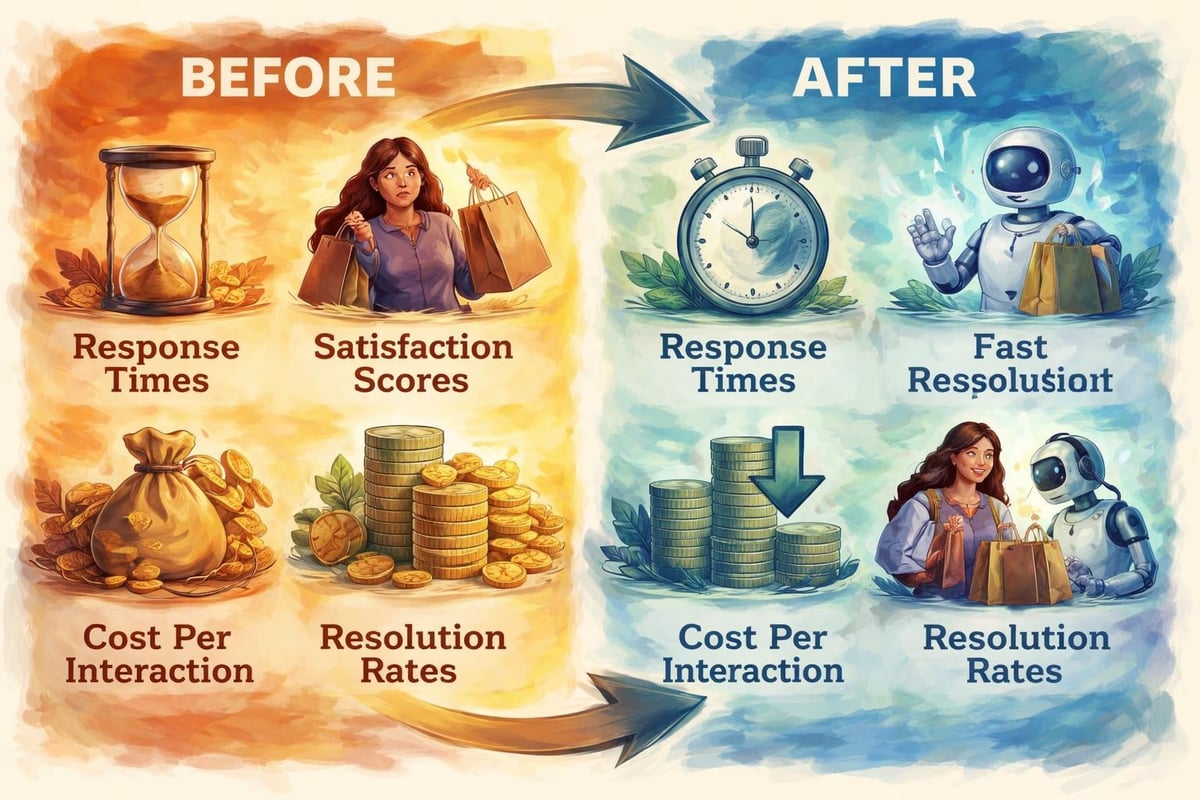
Customer satisfaction scores increased 18 points. Support costs decreased 29% despite handling 34% more interactions.
Emerging Trends and Future Developments
The newest AI capabilities previewed in early 2026 indicate upcoming possibilities. Businesses should monitor these developments for strategic planning.
Video Generation Mainstream Adoption
AI video creation tools are achieving production quality. Predictions for 2025 anticipated this mainstream adoption. By mid-2026, businesses generate:
- Product demonstrations without filming
- Training content in multiple languages simultaneously
- Personalised video messages at scale
- Brand content variations for A/B testing
- Virtual spokespersons for consistent messaging
Production costs decreased 85% compared to traditional video creation. Quality now matches professional standards for most business applications.
National AI Task Forces
Russia's national AI task force exemplifies sovereign technology development. Multiple nations are establishing similar initiatives.
This trend creates:
- Divergent technical standards across regions
- Data localisation requirements
- Restricted technology transfer between jurisdictions
- Competitive pressure on private sector development
- Opportunities for domestic AI service providers
Australian businesses should assess geopolitical implications for their technology strategies.
Investment Scrutiny Intensification
AI investments face increased due diligence. Investors now demand:
- Clear ROI projections with supporting data
- Risk assessments including regulatory compliance
- Scalability demonstrations beyond pilot stages
- Vendor stability and technology roadmap evaluations
- Exit strategies if implementations underperform
The newest AI projects require more rigorous business cases than earlier initiatives. Speculative investments are declining while practical applications receive enhanced funding.
Strategic Recommendations for Implementation
Australian businesses should approach the newest AI technologies strategically rather than reactively. These recommendations provide actionable guidance.
Build Internal Capability
Relying exclusively on vendors creates dependencies and knowledge gaps. Develop internal expertise through:
- Targeted hiring of AI specialists
- Upskilling existing technical staff
- Executive education on AI capabilities and limitations
- Cross-functional AI working groups
- Partnerships with AI consulting specialists
Internal capability enables informed vendor selection and realistic expectation setting.
Prioritise Data Infrastructure
The newest AI systems require quality data. Invest in:
- Data governance frameworks defining ownership and standards
- Integration platforms connecting siloed systems
- Data quality monitoring and remediation processes
- Security controls appropriate to data sensitivity
- Backup and recovery procedures
AI performance correlates directly with data quality. Foundation work here multiplies returns from AI investments.
Start Small, Scale Fast
Avoid enterprise-wide transformations initially. Instead:
- Select bounded use cases with clear metrics
- Deploy minimum viable implementations
- Measure performance rigorously
- Iterate based on results
- Scale successful pilots aggressively
This approach reduces risk while building organisational confidence and capability.
Maintain Human Oversight
The newest AI systems operate autonomously but require governance. Establish:
- Regular output quality audits
- Exception handling protocols
- Escalation pathways for edge cases
- Retraining schedules based on performance drift
- Ethical review processes for sensitive applications
Automation should augment human judgment, not replace it entirely.
Plan for Continuous Evolution
AI technology evolves rapidly. Today's newest AI becomes tomorrow's legacy system. Create:
- Technology refresh cycles aligned with business planning
- Vendor relationship management for roadmap visibility
- Modular architectures enabling component replacement
- Skills development programs matching technological change
- Budget allocation for ongoing optimisation
Static implementations become obsolete quickly in this environment.
Measuring AI Implementation Success
Define success metrics before deployment. The newest AI projects should demonstrate value through:
| Metric Category | Example Measurements | Target Thresholds |
|---|---|---|
| Efficiency | Processing time reduction | >40% improvement |
| Quality | Error rate changes | <2% error rate |
| Financial | Cost per transaction | >25% reduction |
| User adoption | Active user percentage | >70% adoption |
| Strategic | Competitive advantage duration | >18 months lead |
Track metrics weekly during initial deployment. Monthly monitoring suffices after stabilisation. Share results transparently to build organisational support.
Benchmark against industry standards where available. A 30% efficiency gain might represent excellent performance in one sector but lag in another.
Calculate total cost of ownership including:
- Licence or subscription fees
- Implementation and integration costs
- Training and change management expenses
- Ongoing maintenance and support
- Opportunity costs during deployment
Compare against baseline costs for previous approaches. ROI calculations should extend beyond immediate savings to include strategic benefits.
The newest AI technologies represent genuine transformation opportunities for Australian businesses prepared to implement them strategically. Success requires balancing ambition with pragmatism, technology capability with organisational readiness, and automation with human judgment. Synap AI specialises in guiding businesses through this complexity, from initial readiness assessment through deployment and optimisation. If you're ready to explore how the newest AI can deliver competitive advantages for your organisation, book a consultation with our AI technologists to discuss your specific requirements and opportunities.