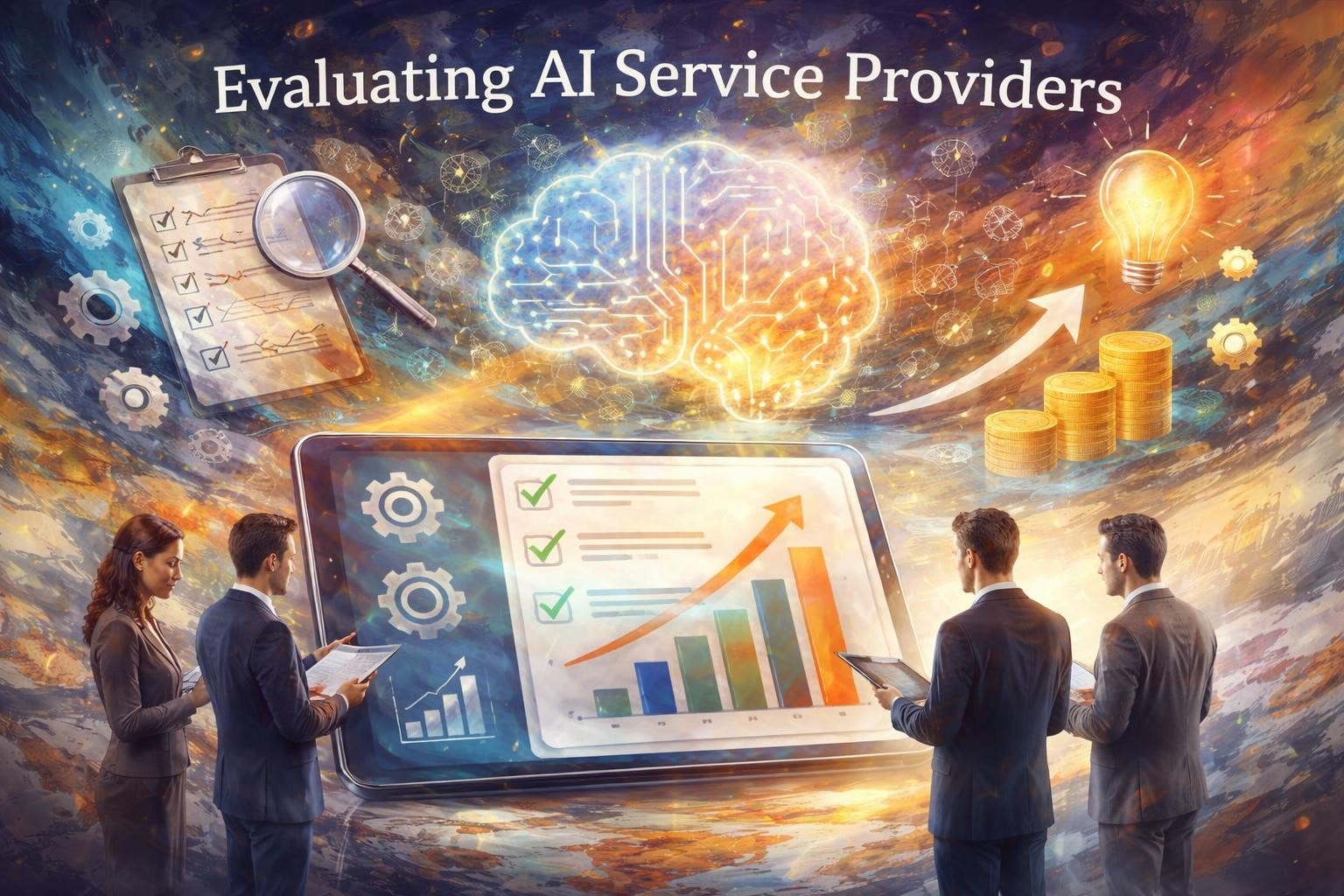
Selecting the right ai services company has become one of the most critical business decisions Australian organisations face in 2026. With 73% of enterprises now deploying artificial intelligence in at least one business function, the demand for specialised AI consulting and development has surged. The challenge lies not in finding providers, but in identifying partners who can deliver measurable results while navigating the complex landscape of privacy regulations, technical integration, and organisational change management.
Understanding What An AI Services Company Delivers
An ai services company provides strategic consulting, platform development, and implementation support for organisations adopting artificial intelligence technologies. These firms bridge the gap between technical capability and business value.
The scope of services typically spans multiple disciplines. Strategy development forms the foundation, where consultants assess organisational readiness and identify high-value use cases. Technical implementation follows, involving model selection, data pipeline construction, and integration with existing systems. Ongoing optimisation ensures solutions continue delivering value as business needs evolve.
Core Service Categories in 2026
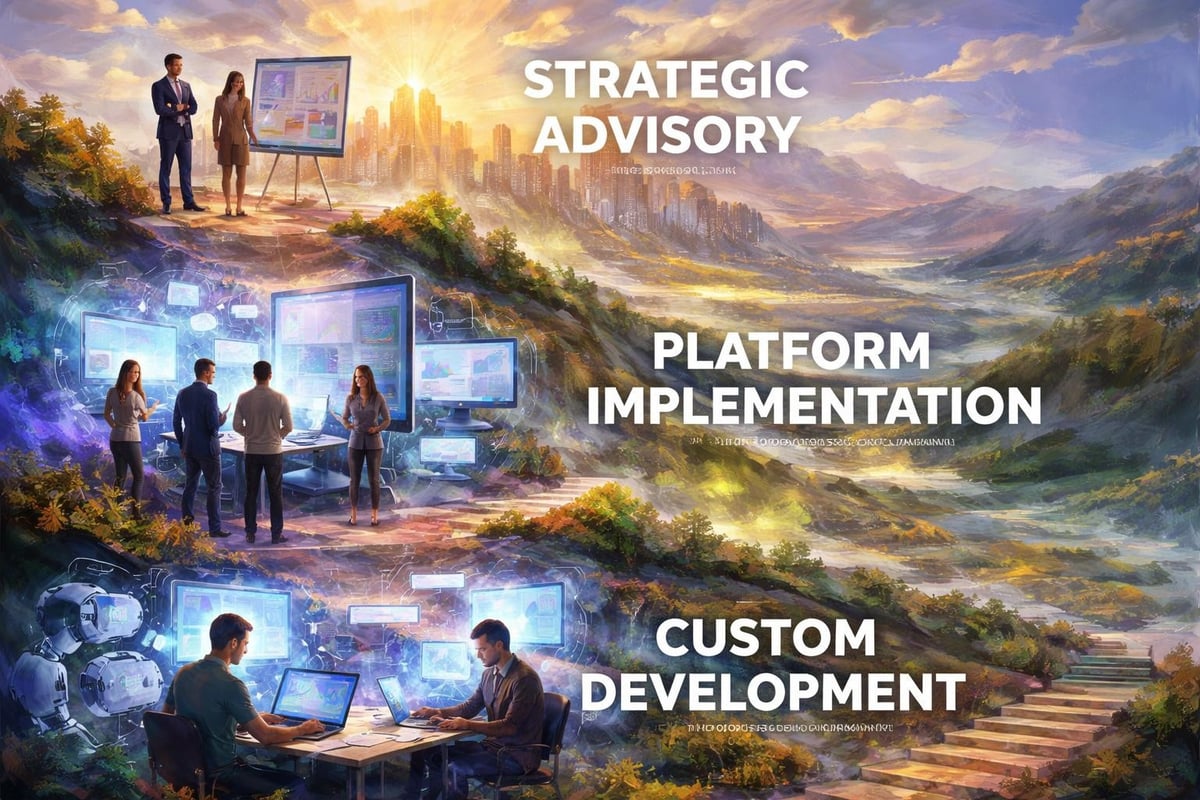
Modern AI consulting firms offer distinct service tiers. Custom development builds proprietary solutions tailored to unique business requirements. Platform implementation deploys pre-built AI systems configured for specific industries. Advisory services guide executive teams through strategic planning without hands-on technical work.
- Strategic roadmap development and feasibility studies
- Data infrastructure assessment and preparation
- Model development and training specific to business contexts
- Integration with existing enterprise systems and workflows
- Change management and employee upskilling programmes
- Performance monitoring and continuous improvement frameworks
Pricing models vary significantly across these categories. Retainer agreements suit ongoing advisory relationships, while project-based fees work well for discrete implementations. Outcome-based pricing, where fees tie directly to measurable business results, has grown 41% more common since 2024.
Evaluating Technical Expertise and Industry Experience
Technical depth separates capable providers from exceptional ones. An ai services company should demonstrate mastery across multiple AI disciplines, not just surface-level familiarity.
Machine learning expertise requires hands-on experience with supervised, unsupervised, and reinforcement learning approaches. Natural language processing capabilities enable chatbots, document analysis, and sentiment tracking. Computer vision skills support image recognition, quality control, and safety monitoring applications.
The technical team composition reveals true capability. Look for data scientists with advanced degrees and published research. Machine learning engineers who can deploy models at scale matter more than academic credentials alone. Domain specialists who understand your industry's unique challenges bring contextual knowledge that purely technical teams lack.
Assessing Implementation Track Record
Past performance indicates future results more reliably than marketing materials. Request detailed case studies from companies in similar sectors and of comparable size.
- Review the specific problems each project addressed
- Examine the technical approach and tools employed
- Verify quantifiable outcomes like cost reduction or revenue growth
- Check implementation timelines against original estimates
- Investigate how solutions performed six months post-deployment
- Confirm the client relationship remains active
According to research on AI service transparency, comprehensive documentation of methodologies and outcomes builds trust and enables informed decision-making. Request access to technical documentation from previous projects, redacted for confidentiality.
The AI consulting services available should align with your organisation's maturity level. Early-stage companies need education and foundational systems. Mature organisations require optimisation and advanced capabilities.
Data Management and Privacy Compliance
Data forms the foundation of every AI initiative. An ai services company must demonstrate rigorous data governance practices.
Australian organisations face strict requirements under the Privacy Act 1988 and sector-specific regulations. Healthcare providers must comply with My Health Records legislation. Financial institutions answer to APRA's prudential standards. An experienced consulting partner navigates these frameworks while building effective AI solutions.
Data Preparation and Quality Assurance
Clean, well-structured data determines AI success more than algorithm sophistication. The preparation process follows systematic steps.
- Conduct comprehensive data inventory across all systems
- Assess quality metrics including completeness, accuracy, and consistency
- Identify and remediate gaps through collection or augmentation
- Establish governance policies for ongoing data management
- Implement version control and lineage tracking
- Create validation frameworks to monitor data drift
Research shows that 80% of AI project time goes to data preparation rather than model development. Partners who rush this phase inevitably deliver suboptimal results.
Security protocols deserve equal attention to technical capability. End-to-end encryption protects data in transit and at rest. Access controls ensure only authorised personnel interact with sensitive information. Audit trails track every interaction for compliance verification.
| Security Measure | Implementation Requirement | Compliance Benefit |
|---|---|---|
| Data encryption | AES-256 for stored data, TLS 1.3 for transmission | Meets privacy act requirements |
| Access controls | Role-based permissions with multi-factor authentication | Prevents unauthorised disclosure |
| Audit logging | Immutable records of all data interactions | Demonstrates compliance during reviews |
| Anonymisation | De-identification before analysis where possible | Reduces privacy risk exposure |
Integration Capabilities With Existing Systems
AI solutions deliver value only when integrated into daily workflows. Standalone tools create data silos and adoption barriers.
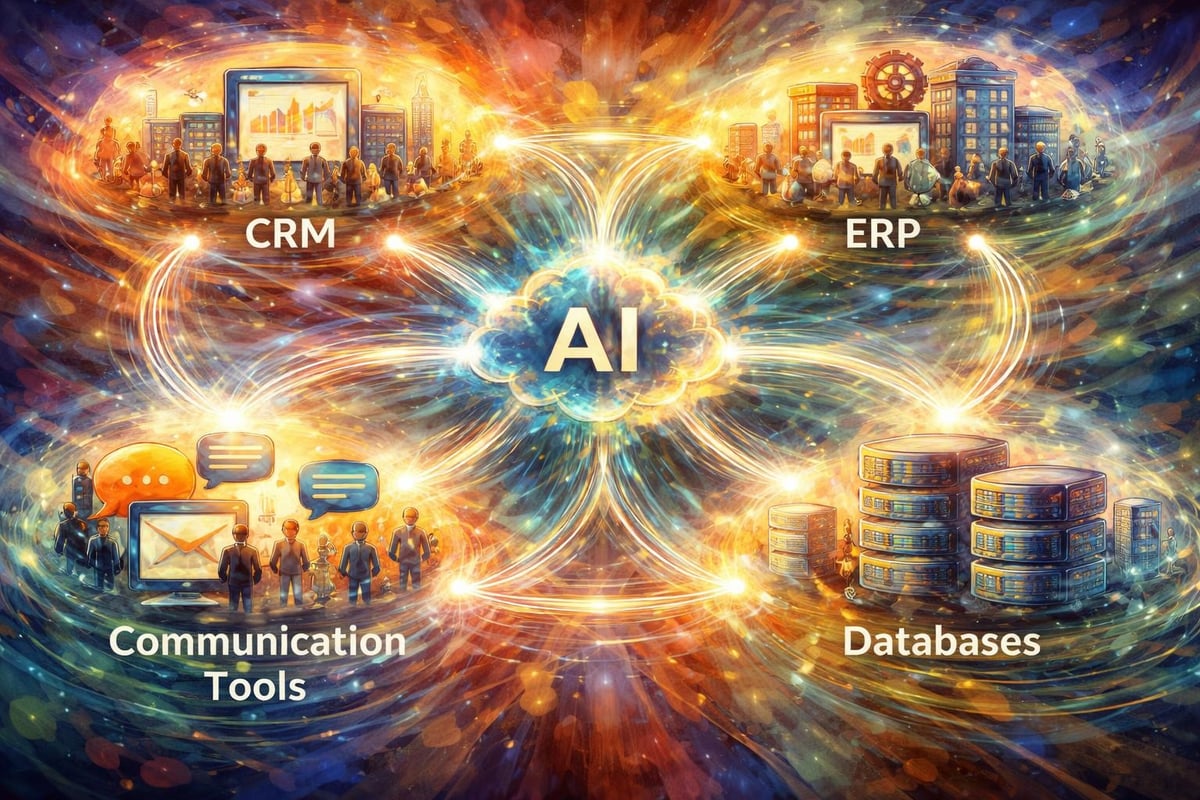
Modern enterprises run on diverse technology stacks. Legacy systems built decades ago coexist with cloud-native applications. An ai services company needs integration expertise across this spectrum.
API connectivity enables different systems to exchange information seamlessly. Middleware platforms translate between incompatible formats. Direct database integration provides real-time access to operational data. The integration approach depends on technical constraints and security requirements.
Common Integration Challenges and Solutions
Technical obstacles emerge during every implementation. Experienced consultants anticipate and mitigate these issues.
- Map all data flows between AI systems and existing applications
- Identify authentication and authorisation requirements
- Design fallback mechanisms for system failures
- Establish monitoring to detect integration issues early
- Create documentation for IT teams maintaining connections
- Build testing frameworks validating end-to-end functionality
The AI readiness assessment process identifies integration challenges before development begins. This upfront investment prevents costly rework during implementation.
Change management determines adoption rates more than technical quality. Employees resist tools that complicate their work or feel imposed without consultation. Successful implementations involve end users from initial design through deployment.
ROI Measurement and Performance Metrics
Executive teams demand quantifiable returns on AI investments. An ai services company should define success metrics before project commencement.
Financial metrics capture direct value creation. Revenue increases from improved customer targeting or product recommendations provide clear ROI. Cost reductions through process automation deliver immediate bottom-line impact. Risk mitigation, while harder to quantify, prevents potentially catastrophic losses.
Establishing Baseline Measurements
Accurate ROI calculation requires baseline data before AI implementation. Without this reference point, attributing improvements becomes impossible.
- Document current process performance across all relevant metrics
- Calculate fully loaded costs including labour, technology, and overhead
- Measure quality indicators like error rates or customer satisfaction
- Track time requirements for key workflows and decisions
- Establish data collection methods that continue post-implementation
- Set realistic timeframes for seeing measurable improvements
According to recent industry analysis, AI citations increasingly rely on brand-managed authoritative sources, making measurement transparency crucial for building trust with stakeholders and customers.
Operational metrics complement financial returns. Processing time reductions indicate efficiency gains. Error rate decreases demonstrate quality improvements. Customer satisfaction scores reflect experience enhancements.
| Metric Category | Example Measures | Typical Improvement Range |
|---|---|---|
| Financial | Cost per transaction, revenue per customer | 15-40% improvement |
| Efficiency | Processing time, throughput volume | 30-70% improvement |
| Quality | Error rates, defect detection accuracy | 45-85% improvement |
| Customer | NPS scores, resolution time, satisfaction ratings | 20-50% improvement |
The services offered by AI consultants should include ongoing performance tracking and optimisation. Initial deployment represents the beginning of value creation, not the end.
Implementation Methodology and Project Management
Structured methodologies separate successful AI projects from failed experiments. An ai services company should articulate their approach clearly.
Agile frameworks suit AI development better than traditional waterfall methods. Requirements evolve as teams learn from data and user feedback. Sprint-based development delivers working functionality incrementally rather than waiting months for complete solutions.
Phased Implementation Approach
Large-scale AI transformations overwhelm organisations and increase failure risk. Phased rollouts prove more effective.
- Start with pilot projects targeting specific, measurable problems
- Validate technical approach and gather user feedback
- Refine models and interfaces based on real-world performance
- Expand to additional use cases sharing similar data or workflows
- Scale infrastructure as demand grows and value proves out
- Establish centres of excellence for ongoing capability development
The pilot phase typically runs 8-12 weeks. This compressed timeline forces focus on high-value outcomes while limiting investment risk. Successful pilots generate momentum for broader adoption.
Communication protocols keep stakeholders aligned throughout development. Weekly status updates share progress and surface obstacles. Monthly steering committee meetings enable course corrections. Executive briefings maintain leadership support during inevitable challenges.
Risk management deserves dedicated attention. Technical risks include model accuracy falling short of requirements or integration complexities causing delays. Organisational risks span resistance to change, inadequate training, or competing priorities diverting resources.
Vendor Selection Process and Due Diligence
Choosing an ai services company requires systematic evaluation. Informal assessments based on presentations and credentials miss critical factors.
The request for proposal process structures vendor comparison. Document specific requirements, constraints, and success criteria. Require detailed responses addressing technical approach, team composition, timeline, and pricing. Evaluate responses against weighted criteria reflecting your priorities.
Key Evaluation Criteria
Multiple factors influence vendor selection beyond technical capability and price. Cultural fit determines collaboration effectiveness. Communication style affects stakeholder satisfaction. Geographic presence impacts response times and on-site availability.
- Review client references from the past 18 months
- Assess team stability and employee tenure
- Examine financial health through company reports
- Evaluate intellectual property policies and ownership terms
- Verify insurance coverage for errors and omissions
- Confirm commitment to ongoing support post-implementation
The AI consultant services in Melbourne market demonstrates how local presence enables better collaboration through face-to-face workshops and on-site support during critical implementation phases.
Contract terms protect both parties while establishing clear expectations. Scope definitions prevent misunderstandings about deliverables. Payment schedules tie compensation to milestone achievement. Termination clauses provide exit options if relationships deteriorate.
| Contract Element | Key Considerations | Protection Provided |
|---|---|---|
| Scope definition | Detailed deliverables, explicit exclusions | Prevents scope creep and disputes |
| Payment terms | Milestone-based releases, holdbacks for acceptance | Ensures work quality meets standards |
| IP ownership | Clear assignment of custom code and models | Secures your investment in unique assets |
| Confidentiality | Non-disclosure for proprietary data and processes | Protects competitive advantages |
| Liability limits | Caps on damages, insurance requirements | Manages financial exposure |
Industry-Specific Applications and Use Cases
Different sectors face distinct AI opportunities and challenges. An ai services company with relevant industry experience delivers faster results.
Financial services applications focus on fraud detection, credit risk assessment, and algorithmic trading. Banks process millions of transactions daily, making pattern recognition valuable. Insurance companies use AI for claims processing and underwriting automation.
Retail and E-commerce Implementations
Customer-facing businesses leverage AI for personalisation and operational efficiency. Recommendation engines increase average order values by 15-35%. Inventory optimisation reduces carrying costs while preventing stockouts.
- Deploy chatbots handling routine customer inquiries 24/7
- Implement dynamic pricing adjusting to demand and competition
- Use computer vision for visual search and product discovery
- Apply demand forecasting to optimise inventory levels
- Personalise marketing messages based on behaviour patterns
- Automate quality control in warehousing and fulfilment
Manufacturing applications emphasise quality control, predictive maintenance, and supply chain optimisation. Computer vision systems inspect products faster and more consistently than human operators. Sensor data from equipment predicts failures before they cause downtime.
Healthcare AI improves diagnostic accuracy, treatment planning, and administrative efficiency. Medical imaging analysis detects anomalies radiologists might miss. Natural language processing extracts insights from unstructured clinical notes.
Similar to how financial services rely heavily on authoritative sources for AI-generated content, healthcare providers must ensure AI recommendations draw from validated medical knowledge.

Training and Knowledge Transfer Requirements
Technology deployment alone doesn't create value. Employee capability determines AI adoption and ongoing success.
An ai services company should include comprehensive training in every engagement. Technical teams need deep dives into model architecture and maintenance procedures. Business users require practical instruction on leveraging AI tools in daily work. Executives benefit from strategic education on AI capabilities and limitations.
Structured Learning Programmes
Effective training programmes accommodate different learning styles and experience levels. Hands-on workshops prove more valuable than lecture-style presentations.
- Assess current team capabilities and knowledge gaps
- Develop role-specific training modules addressing practical needs
- Combine instructor-led sessions with self-paced online content
- Create reference materials and job aids for ongoing support
- Establish internal champions who can assist colleagues
- Schedule refresher training as systems evolve and expand
Documentation quality affects long-term system sustainability. Technical documentation enables IT teams to maintain and troubleshoot AI systems. User guides help employees leverage features effectively. Process documentation ensures consistency as team members change.
The knowledge transfer process extends beyond formal training. Shadowing opportunities let internal staff observe consultants during development. Code reviews teach best practices for AI engineering. Architecture discussions build understanding of system design decisions.
Platform Versus Custom Development Decisions
Organisations face a fundamental choice between configuring existing platforms and building custom solutions. Each approach suits different circumstances.
Pre-built platforms offer faster deployment and lower initial costs. Vendors have solved common problems and refined interfaces through multiple implementations. Updates and improvements arrive automatically without internal development effort.
When Custom Development Makes Sense
Certain situations demand custom solutions despite higher costs and longer timelines. Unique competitive advantages require proprietary capabilities. Highly specialised industries lack suitable off-the-shelf options.
- Evaluate whether existing platforms address 80% of requirements
- Calculate total cost of ownership including licensing and customisation
- Assess vendor lock-in risks and data portability options
- Consider internal capability to maintain custom code long-term
- Analyse competitive advantage gained from proprietary versus standard features
- Project timeline requirements against business opportunity windows
The business platform offerings from specialised providers often provide the optimal balance between customisation and rapid deployment for mid-market companies.
Hybrid approaches combine platform foundations with custom extensions. This strategy accelerates initial deployment while enabling differentiation. Core functionality runs on proven platforms while custom modules address unique requirements.
Integration requirements influence the platform versus custom decision. Organisations with complex legacy systems may find custom development offers cleaner integration. Companies running modern cloud infrastructure often prefer platform solutions with pre-built connectors.
Emerging Trends Shaping AI Services in 2026
The AI landscape evolves rapidly. An ai services company must stay current with technological advances and market shifts.
Generative AI has moved from experimental technology to production deployment. Large language models power customer service chatbots, content creation tools, and code generation assistants. Image generation supports design workflows and marketing campaigns.
Privacy-Preserving AI Techniques
Regulatory pressure and consumer expectations drive adoption of privacy-enhancing technologies. Federated learning trains models across distributed datasets without centralising sensitive information. Differential privacy adds mathematical guarantees that individual records remain protected.
- Evaluate federated learning for multi-party AI collaborations
- Implement differential privacy in customer analytics applications
- Deploy homomorphic encryption for processing encrypted data
- Use synthetic data generation to train models without exposing real records
- Establish data minimisation practices collecting only necessary information
- Create transparent disclosures explaining AI decision-making to customers
Edge AI deployment brings intelligence closer to data sources. Processing occurs on devices or local servers rather than cloud platforms. This approach reduces latency, lowers bandwidth costs, and enhances privacy protection.
AutoML platforms democratise AI development. Business analysts can build and deploy models without extensive data science training. Code generation tools accelerate development while maintaining quality standards.
Understanding authoritative sources that build AI trust becomes increasingly important as AI systems influence customer perceptions and decision-making.
| Trend | Adoption Rate | Primary Business Impact |
|---|---|---|
| Generative AI | 68% of enterprises | Content creation efficiency, customer interaction automation |
| Edge computing | 52% of enterprises | Reduced latency, enhanced privacy, lower cloud costs |
| AutoML platforms | 45% of enterprises | Faster deployment, reduced data science bottlenecks |
| Federated learning | 31% of enterprises | Multi-party collaboration, privacy compliance |
Ongoing Support and System Evolution
AI systems require continuous attention to maintain performance. Models degrade as real-world conditions drift from training data. Business requirements evolve as markets change and opportunities emerge.
An ai services company should offer comprehensive support beyond initial deployment. Monitoring services detect performance degradation early. Retraining programmes update models with fresh data. Enhancement services add new capabilities as needs arise.
Continuous Improvement Framework
Systematic optimisation processes extract increasing value from AI investments over time. Regular reviews identify opportunities for refinement and expansion.
- Establish automated monitoring tracking key performance indicators
- Schedule quarterly reviews assessing results against objectives
- Collect user feedback identifying friction points and enhancement requests
- Analyse model performance metrics detecting accuracy degradation
- Prioritise improvements based on business value and implementation effort
- Execute enhancement sprints addressing highest-priority items
The support model should match organisational capability. Some companies prefer hands-off managed services where vendors handle all maintenance. Others want knowledge transfer enabling internal teams to manage systems independently.
Response time commitments matter during production issues. Critical systems require 24/7 support with rapid response guarantees. Less essential applications can tolerate next-business-day support.
Version management prevents disruption when updating AI systems. Blue-green deployment maintains two identical environments, allowing seamless switchover. Canary releases route small traffic percentages to new versions before full rollout.
For organisations seeking expert guidance through these complex decisions, understanding tools like Perplexity AI demonstrates how AI search capabilities continue advancing and creating new opportunities for business application.
Selecting the right ai services company determines whether AI initiatives deliver transformative value or join the 60% of projects that fail to reach production. The evaluation process demands attention to technical expertise, industry experience, integration capabilities, and cultural fit. Successful partnerships combine strategic vision with practical implementation discipline, supported by comprehensive training and ongoing optimisation. Australian businesses navigating this complex landscape benefit from working with specialists who understand local regulatory requirements, market conditions, and operational realities. Synap AI brings deep technical expertise and practical implementation experience to organisations ready to transform their operations through artificial intelligence, with services tailored to Australian businesses seeking measurable results from their AI investments.