The customer service landscape has shifted dramatically since 2024. Australian businesses now face mounting pressure to deliver instant, personalised support whilst managing tighter budgets. AI and customer service integration has emerged as the solution that addresses both challenges simultaneously. This technology isn't just automating responses anymore. It's transforming entire support operations through intelligent routing, predictive analytics, and natural language understanding that rivals human capability.
The Current State of AI and Customer Service
Research from IBM indicates that AI agents can significantly boost customer satisfaction whilst improving return on investment. The numbers paint a compelling picture for Australian businesses.
Over 68% of customers now expect instant responses to service inquiries. Traditional support models cannot meet this demand without substantial cost increases. AI fills this gap effectively.
The technology has matured beyond simple chatbots. Modern AI systems understand context, sentiment, and nuance. They handle complex queries that previously required human intervention.
Statistics reveal the impact:
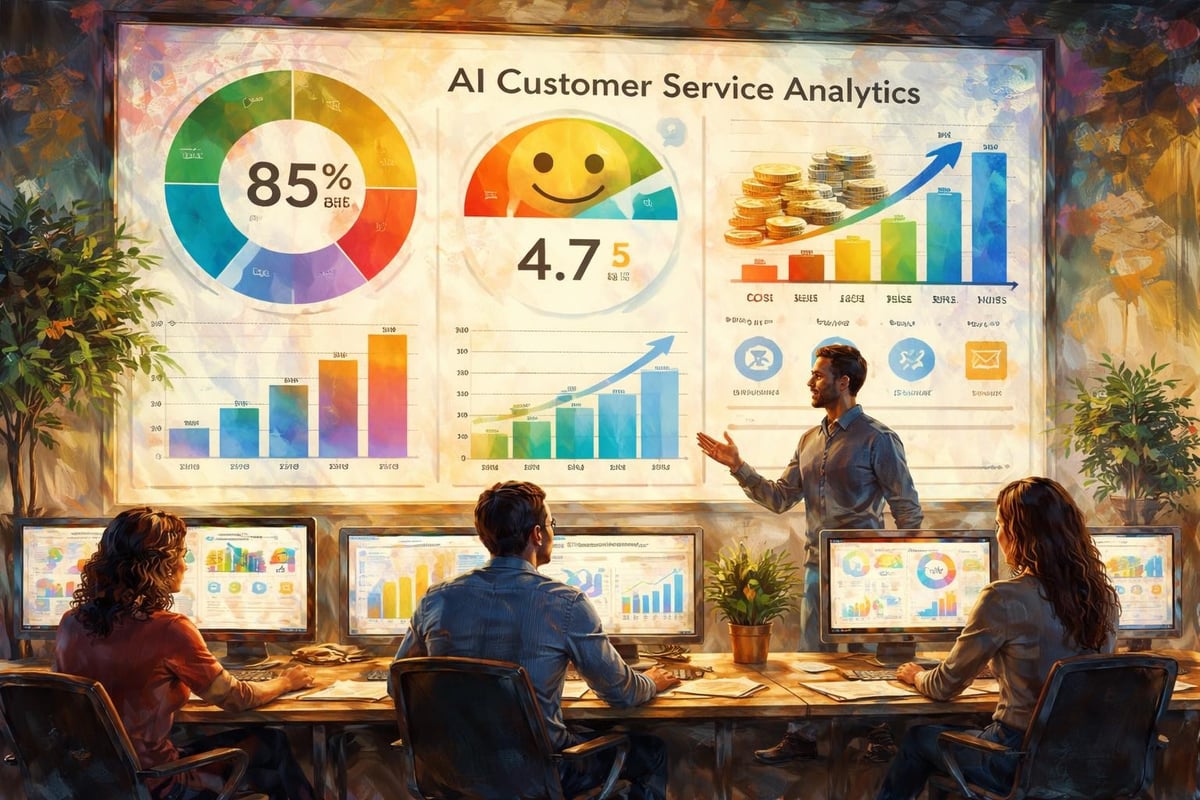
- AI reduces average handling time by 40%
- First contact resolution rates improve by 35%
- Support costs decrease by 30% within the first year
- Customer satisfaction scores increase by 25%
These metrics demonstrate why businesses are accelerating AI adoption. The return on investment justifies the initial implementation costs.

How AI Transforms Support Operations
Modern AI systems process natural language with remarkable accuracy. They understand Australian colloquialisms, industry jargon, and contextual meaning.
The transformation occurs across multiple touchpoints. Email, chat, phone, and social media all benefit from AI integration. Each channel receives consistent, accurate responses.
Salesforce has demonstrated this transformation by integrating AI throughout their service platform. Their approach shows how technology enhances rather than replaces human capability.
Intelligent Ticket Routing
AI analyses incoming queries instantly. It assesses urgency, complexity, and required expertise. Tickets route automatically to the most appropriate team member.
This process eliminates manual triage delays. Response times drop significantly. Customers receive faster resolutions.
The system learns from each interaction. Routing accuracy improves continuously. Patterns emerge that inform staffing decisions.
| Routing Method | Average Assignment Time | Accuracy Rate | Customer Satisfaction |
|---|---|---|---|
| Manual Triage | 15-20 minutes | 72% | 6.8/10 |
| Rule-Based AI | 2-3 minutes | 85% | 7.9/10 |
| Learning AI | Under 30 seconds | 94% | 8.7/10 |
Predictive Support Capabilities
AI identifies issues before customers report them. It monitors system performance, usage patterns, and common failure points.
Proactive outreach prevents frustration. Customers appreciate businesses that solve problems preemptively. This approach builds loyalty and trust.
For businesses working with AI consulting services in Melbourne, predictive support represents a significant competitive advantage. The technology turns support from reactive to proactive.
Implementing AI in Your Customer Service Strategy
Success requires methodical planning and execution. Rushed implementations often fail to deliver expected results.
Step-by-Step Implementation Guide
- Audit your current support processes and identify pain points
- Define clear objectives with measurable success criteria
- Select AI tools that align with your existing technology stack
- Start with a pilot programme in one support channel
- Train your team on AI collaboration techniques
- Monitor performance metrics daily during the first month
- Gather customer feedback through surveys and direct interviews
- Adjust parameters based on real-world performance data
- Expand gradually to additional channels and use cases
- Establish ongoing optimisation protocols and review cycles
Each step builds upon the previous one. Skipping stages compromises the entire implementation.
Budget allocation matters significantly. Most successful deployments invest 60% in technology, 30% in training, and 10% in ongoing optimisation.
Real-World Implementation Example
A Melbourne-based telecommunications company partnered with Synap AI to transform their support operations. They processed over 5,000 daily inquiries through traditional channels.
The implementation followed the structured approach:
- Initial analysis revealed 45% of queries were repetitive and routine
- AI deployment focused on these high-volume, low-complexity interactions
- Human agents redirected attention to complex technical issues
- Results showed 67% reduction in wait times within three months
- Customer satisfaction increased from 7.2 to 8.9 out of 10
- Support costs decreased by 34% whilst handling 22% more inquiries
This example demonstrates realistic expectations. Results accumulate over time rather than appearing instantly.

Technology Stack Considerations
The right technology combination determines success or failure. Compatibility issues create frustration and limit effectiveness.
Modern AI and customer service platforms integrate with existing CRM systems. They pull customer history, purchase data, and previous interactions. This context enables personalised responses.
Essential Platform Features
- Natural language processing with Australian English support
- Multi-channel integration across email, chat, phone, and social
- Real-time analytics dashboards with customisable metrics
- Seamless handoff protocols between AI and human agents
- Knowledge base integration and automatic content updates
- Sentiment analysis to detect frustrated or angry customers
- Conversation history tracking across all touchpoints
- API access for custom integrations and workflows
- Compliance tools for privacy and data protection
- Mobile optimisation for on-the-go support access
Businesses exploring enterprise AI solutions should prioritise scalability. Systems must handle growth without performance degradation.
Integration Challenges and Solutions
Legacy systems pose the biggest integration hurdle. Older CRM platforms lack modern API capabilities.
Three approaches solve this challenge:
- Middleware solutions that bridge old and new systems
- Phased replacement of outdated components over time
- Parallel running until full migration completes
Data migration requires careful planning. Customer information must transfer accurately and completely. Any data loss damages trust and operational capability.
Balancing Automation and Human Touch
The most effective approach combines AI efficiency with human empathy. Pure automation frustrates customers in complex situations.
Research from HubSpot reveals strategies for maintaining this balance. Their data shows optimal results when AI handles 70% of routine queries whilst humans focus on the remaining 30%.
When Humans Must Take Over
Certain situations demand human intervention. AI recognises these scenarios and transfers seamlessly.
Critical handoff triggers include:
- Customer frustration levels exceeding predetermined thresholds
- Complex technical issues requiring creative problem-solving
- Complaints involving refunds or service credits
- Sensitive situations with emotional or personal components
- Requests that fall outside standard operating procedures
- VIP customers requiring personalised attention
- Legal or compliance matters needing human judgement
The handoff process itself impacts customer perception. Smooth transitions maintain satisfaction. Clumsy transfers destroy confidence in the entire system.
| Handoff Quality | Customer Retention | Satisfaction Score | Escalation Rate |
|---|---|---|---|
| Seamless | 94% | 8.8/10 | 12% |
| Average | 78% | 7.1/10 | 31% |
| Poor | 51% | 5.3/10 | 58% |
Training teams to collaborate with AI requires cultural adjustment. Some staff resist the technology initially. Clear communication about AI as a tool rather than replacement alleviates these concerns.
Measuring AI Customer Service Performance
Metrics drive improvement. Without measurement, optimisation becomes guesswork.
Traditional support metrics still apply. Response time, resolution time, and customer satisfaction remain fundamental. AI introduces additional performance indicators worth tracking.
Key Performance Indicators
- AI resolution rate without human intervention
- Handoff accuracy and appropriateness
- Customer effort score for AI interactions
- AI training data quality and coverage gaps
- False positive rate in automated responses
- Cost per interaction across AI and human channels
- Knowledge base utilisation and effectiveness
- Sentiment score changes during conversations
- Channel preference shifts over time
- Agent productivity improvements with AI assistance
These metrics create a comprehensive performance picture. Regular review identifies optimisation opportunities.
Sprout Social emphasises the importance of tracking metrics that align with business objectives. Vanity metrics look impressive but don't drive meaningful improvement.
Real-Time Monitoring Systems
Dashboard visibility enables rapid response to issues. Support managers need instant access to performance data.
Modern platforms provide:
- Live conversation monitoring with quality scoring
- Alert systems for unusual patterns or problems
- Comparative analysis across time periods and channels
- Individual agent performance with AI collaboration metrics
- Customer feedback integration and trend analysis
For businesses using Synap AI consulting services, customised dashboards provide exactly the metrics that matter most to their specific operations.
Privacy and Compliance in AI Support
Australian businesses must navigate strict privacy regulations. AI systems process significant customer data. Compliance isn't optional.
The Privacy Act 1988 governs how businesses collect, use, and store personal information. AI implementations must respect these requirements.
Compliance Requirements
- Obtain explicit consent for AI interaction recording and analysis
- Provide clear opt-out mechanisms for customers preferring human support
- Implement data encryption for all customer communications
- Establish retention policies that comply with legal requirements
- Enable customer access to their data and conversation history
- Maintain audit trails for all AI decisions and actions
- Conduct regular privacy impact assessments
- Train AI systems to recognise and protect sensitive information
- Implement geographical data storage restrictions where required
- Create transparent AI decision-making processes customers can understand
These requirements protect both customers and businesses. Non-compliance carries substantial penalties and reputational damage.
Recent developments show major technology companies taking AI seriously. Salesforce's reported reduction of 4,000 support positions demonstrates the technology's capability whilst raising important questions about responsible implementation.
Future Trends in AI and Customer Service
The technology continues evolving rapidly. What seems advanced today will appear basic within two years.
Emerging capabilities include:
- Emotional intelligence matching human empathy levels
- Voice synthesis indistinguishable from human speech
- Predictive issue resolution before problems manifest
- Cross-platform customer journey orchestration
- Real-time translation enabling global support teams
- Augmented reality integration for visual troubleshooting
- Biometric authentication streamlining identity verification
- Quantum computing enabling instant complex problem-solving
Australian businesses should monitor these developments. Early adoption provides competitive advantages.
Research indicates that IBM's vision for AI in customer service focuses on creating seamless experiences across all touchpoints. Their roadmap suggests continued investment in natural language capabilities and predictive analytics.
Preparing for Next-Generation AI
Strategic planning positions businesses for smooth technology transitions. Investment in current AI capabilities builds foundations for future enhancements.
Recommended preparation steps:
- Choose platforms with clear upgrade paths and vendor commitment
- Build flexible architectures that accommodate new capabilities
- Maintain documentation of all customisations and integrations
- Invest in staff training covering AI collaboration principles
- Participate in industry forums tracking emerging trends
- Allocate budget for ongoing technology refreshes
- Establish relationships with consultants who understand your business
For organisations exploring business AI platforms, selecting partners committed to continuous innovation ensures long-term value.
Cost-Benefit Analysis
Financial justification determines whether executives approve AI investments. Clear ROI calculations remove uncertainty.
Implementation Costs
- Software licensing fees ranging from $500 to $5,000 monthly depending on scale
- Integration services averaging $15,000 to $50,000 for complex environments
- Training programmes costing $2,000 to $10,000 per staff member
- Ongoing optimisation requiring 10-15 hours monthly
- Hardware upgrades if existing infrastructure proves inadequate
Expected Returns
- Labour cost reduction of 25-40% within 12 months
- Increased customer lifetime value through improved satisfaction
- Higher first-contact resolution reducing repeat interactions
- Extended support hours without proportional cost increases
- Reduced staff turnover from eliminating repetitive tasks
| Cost Category | Year 1 | Year 2 | Year 3 |
|---|---|---|---|
| Implementation | $45,000 | $5,000 | $5,000 |
| Licensing | $24,000 | $24,000 | $24,000 |
| Training | $15,000 | $3,000 | $3,000 |
| Total Investment | $84,000 | $32,000 | $32,000 |
| Cost Savings | $52,000 | $98,000 | $145,000 |
| Net Position | -$32,000 | +$66,000 | +$113,000 |
These figures represent typical mid-sized Australian businesses. Actual results vary based on current support costs and implementation quality.
Training Your Team for AI Collaboration
Technology succeeds or fails based on human adoption. Resistant teams undermine even the best AI systems.
Effective Training Programme Structure
- Begin with AI fundamentals explaining how systems work
- Demonstrate specific tools team members will use daily
- Practice scenarios in safe environments before live deployment
- Address concerns about job security and role changes
- Highlight how AI eliminates frustrating repetitive tasks
- Show career development opportunities AI creates
- Provide ongoing coaching during the first 90 days
- Celebrate early wins and share success stories
- Gather feedback for system improvements
- Establish peer mentoring for knowledge sharing
Training investment pays dividends through smoother adoption and faster productivity gains.
Staff members who understand AI capabilities become advocates. They identify new automation opportunities and drive continuous improvement.
Businesses can explore readiness assessment services to determine current team capabilities and training requirements.
Customisation for Australian Market Needs
Generic AI solutions often miss local nuances. Australian English differs from American or British variants. Cultural expectations shape service interactions.
Successful implementations account for these factors:
- Train AI on Australian vocabulary, spelling, and expressions
- Program understanding of local holidays and business hours
- Incorporate knowledge of Australian regulations and consumer rights
- Adjust tone to match Australian communication preferences
- Consider regional differences between states and territories
- Account for multicultural customer bases in major cities
- Integrate with local payment systems and banking protocols
- Understand Australian consumer protection laws and requirements
These adaptations create natural, comfortable customer experiences. Generic implementations feel foreign and frustrating.
Working with Australian-based providers like Synap AI ensures local expertise informs every implementation decision. The team understands Victorian business environments and regulatory requirements.
Automation Opportunities Beyond Basic Support
AI and customer service integration extends beyond answering questions. Strategic automation transforms entire business processes.
Expanded Use Cases
- Automated appointment scheduling and reminder systems
- Proactive order status updates reducing inquiry volume
- Intelligent product recommendations based on customer history
- Feedback collection and sentiment analysis
- Invoice and payment processing queries
- Returns and refunds workflow automation
- Account management and profile updates
- Service outage notifications and updates
- Onboarding new customers with guided experiences
- Upselling and cross-selling at appropriate moments
Each automation reduces manual work whilst improving customer experience. The cumulative effect transforms operations.
Synap AI has developed specific automations addressing common Australian business challenges. These purpose-built solutions accelerate implementation whilst reducing customisation costs.
Selecting the Right AI Partner
Partner selection determines implementation success. Poor choices lead to wasted investment and failed projects.
Evaluation Criteria
- Australian presence and local support availability
- Demonstrated experience in your industry sector
- Clear methodology and implementation framework
- Transparent pricing without hidden costs
- Strong security and compliance credentials
- Positive client testimonials and case studies
- Ongoing support and optimisation services
- Technology partnerships with leading platforms
- Cultural alignment with your organisation
- Scalability to support growth trajectories
Schedule consultations with multiple providers. Compare approaches, pricing, and cultural fit.
For businesses serious about transformation, booking a consultation with an AI technologist provides clarity on possibilities and requirements.
Integration with Existing Business Systems
AI works best when connected to your broader technology ecosystem. Isolated systems create data silos and inefficiency.
Critical integration points include:
- CRM platforms containing customer relationship data
- ERP systems managing inventory and order information
- Knowledge bases storing support documentation
- Analytics tools tracking business performance
- Marketing automation platforms coordinating campaigns
- Accounting software managing financial transactions
- Project management tools tracking deliverables
- Communication platforms enabling team collaboration
- Scheduling systems managing appointments and resources
- E-commerce platforms processing transactions
Each integration multiplies AI value by expanding available data and automation possibilities.
API-first platforms simplify these connections. Legacy systems may require middleware or custom development. Budget accordingly during planning phases.
AI and customer service integration represents the most significant operational improvement opportunity for Australian businesses in 2026. The technology delivers measurable cost reductions whilst simultaneously improving customer satisfaction. Success requires methodical implementation, proper training, and ongoing optimisation. Synap AI specialises in helping Victorian businesses navigate this transformation with locally-tailored solutions and expert guidance.