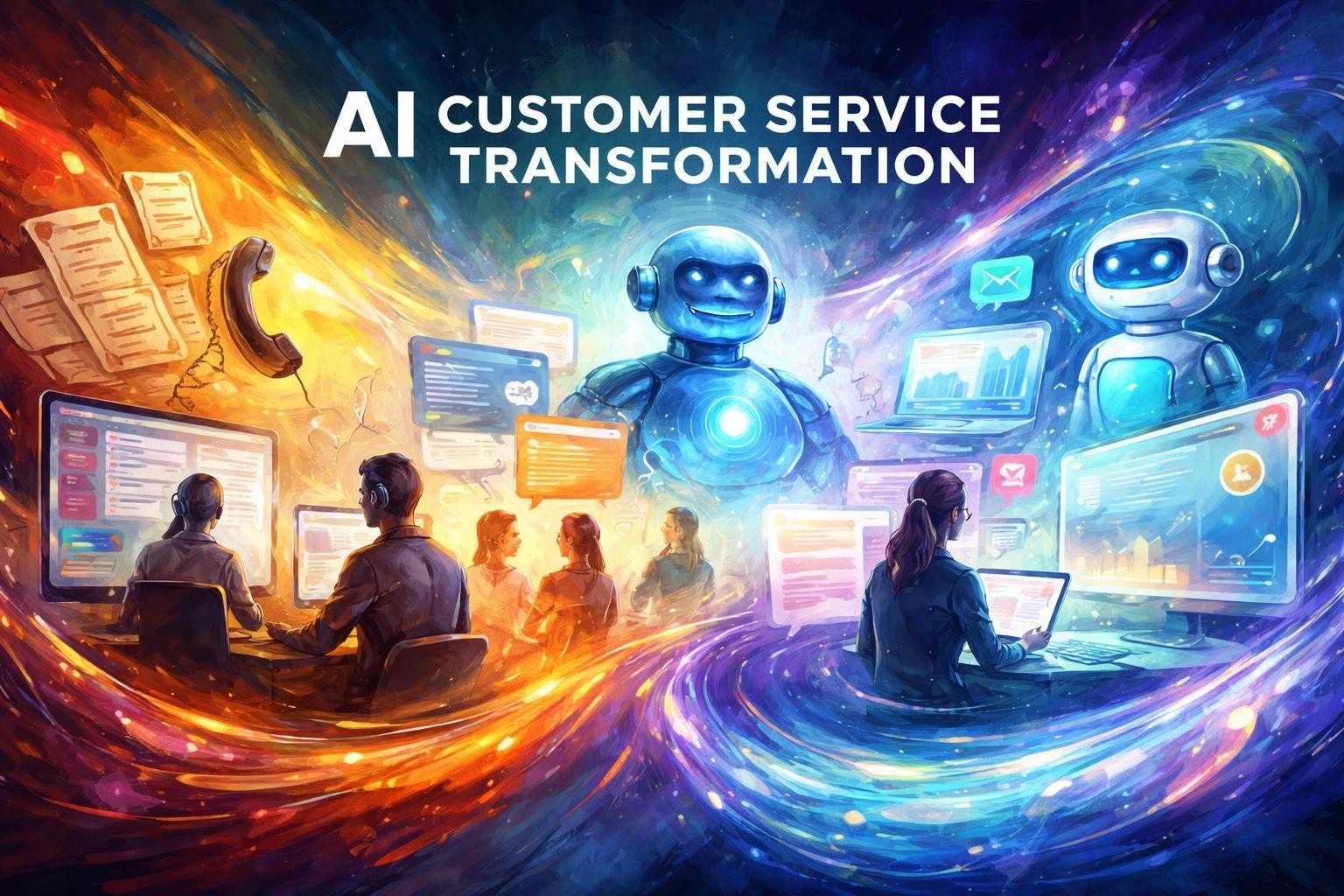
The landscape of customer support has undergone a dramatic transformation in recent years. Businesses across Australia are discovering that ai customer service delivers faster response times, reduced operational costs, and improved customer satisfaction. According to recent industry research, 73% of consumers expect companies to understand their unique needs and expectations. This shift has made artificial intelligence not just a competitive advantage but a necessity for modern support operations.
Understanding AI Customer Service Technology
Ai customer service refers to the application of artificial intelligence technologies to automate, enhance, and personalise customer support interactions. This includes chatbots, virtual assistants, predictive analytics, and intelligent routing systems.
The technology operates on several fundamental components. Machine learning algorithms analyse historical customer interactions to identify patterns and improve responses. Natural language processing enables systems to understand customer queries in conversational language. Predictive analytics anticipate customer needs before they arise.
Core Components of Modern AI Support Systems
Understanding the building blocks helps businesses make informed implementation decisions.
- Natural Language Processing engines that interpret customer intent
- Machine Learning models that improve with each interaction
- Knowledge base integration for accurate information retrieval
- Sentiment analysis tools that detect customer emotions
- Automated routing systems that direct complex queries to human agents
- Response generation algorithms that create contextual replies
- Integration APIs that connect to existing business systems

These components work together seamlessly. IBM's AI solutions for customer service demonstrate how integrated systems enhance both agent productivity and customer experience.
Key Performance Metrics
Measuring success requires tracking specific indicators. Research shows businesses implementing ai customer service see an average 30% reduction in support costs within the first year.
| Metric | Traditional Support | AI-Enhanced Support | Improvement |
|---|---|---|---|
| Average Response Time | 12 hours | 2 minutes | 99.7% faster |
| Resolution Rate | 68% | 87% | 28% increase |
| Customer Satisfaction | 72% | 89% | 24% increase |
| Cost Per Interaction | $8.50 | $2.80 | 67% reduction |
The numbers tell a compelling story. Businesses leveraging AI consultant services in Melbourne often report even higher improvements due to customised implementations.
Implementing AI Customer Service in Your Business
Starting your ai customer service journey requires careful planning. The process involves several distinct phases.
Phase One: Assessment and Planning
Begin by evaluating your current support infrastructure. This critical step determines implementation success.
- Audit existing customer service channels and volume
- Identify repetitive queries that consume agent time
- Map customer journey touchpoints requiring support
- Document current response times and satisfaction scores
- Calculate baseline operational costs per interaction
- Determine integration requirements with existing systems
- Establish clear objectives and success metrics
A readiness assessment provides valuable insights into your organisation's preparedness. Most Australian businesses discover 40-60% of support queries can be automated immediately.
Phase Two: Technology Selection
Choosing the right platform determines long-term success. Not all solutions suit every business model.
- Evaluate vendor capabilities against your requirements
- Review integration options with current CRM systems
- Test natural language processing accuracy with real queries
- Verify data security and privacy compliance standards
- Assess scalability for future growth
- Compare total cost of ownership across solutions
- Request demonstrations with your actual customer data
The Salesforce guide on AI customer service offers comprehensive evaluation criteria. Australian businesses must also consider local data sovereignty requirements.
Phase Three: Data Preparation
Quality data fuels effective AI systems. This phase often takes longer than anticipated.
- Compile historical customer interaction transcripts
- Categorise queries by topic, complexity, and resolution type
- Clean data to remove duplicates and inconsistencies
- Anonymise sensitive customer information
- Create training datasets for machine learning models
- Develop knowledge base articles for common queries
- Establish data governance protocols for ongoing maintenance
Real-world example: A Melbourne-based retail company prepared 50,000 historical support tickets. This data enabled their ai customer service system to achieve 85% accuracy from day one.
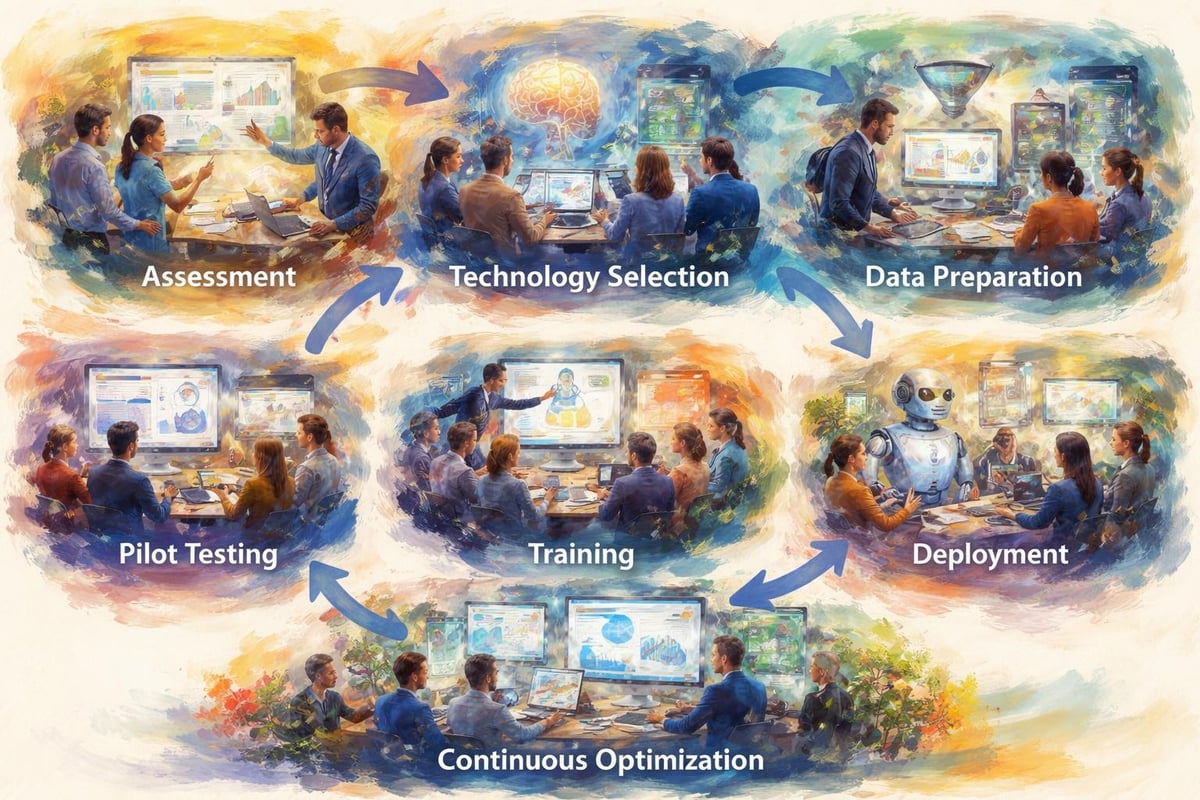
Phase Four: Pilot Testing
Never launch to your entire customer base immediately. Controlled testing reveals issues before they impact reputation.
- Select a low-risk customer segment for initial deployment
- Monitor all interactions for accuracy and appropriateness
- Collect feedback from both customers and support agents
- Measure performance against established baseline metrics
- Identify edge cases requiring special handling
- Refine responses based on real interaction data
- Gradually expand to additional customer segments
Statistics show pilot programs lasting 6-8 weeks produce the most valuable insights. This timeframe allows sufficient interaction volume while maintaining manageable scope.
Advanced Automation Strategies
Moving beyond basic chatbots unlocks significant value. Sophisticated implementations integrate across multiple business systems.
Predictive Customer Support
Modern ai customer service anticipates needs before customers ask. IBM's work on predictive AI demonstrates impressive results.
- Analyse product usage patterns to identify potential issues
- Monitor customer behaviour for early warning signals
- Trigger proactive outreach when problems are detected
- Recommend products or services based on interaction history
- Schedule preventive maintenance before equipment fails
- Send personalised tips to improve product utilization
- Alert customers to account issues before they escalate
A Sydney-based telecommunications provider reduced customer churn by 23% using predictive support. Their system identified usage pattern changes indicating dissatisfaction.
Intelligent Routing and Escalation
Not every query suits automated handling. Smart routing ensures complex issues reach qualified humans.
| Query Type | Routing Decision | Average Handle Time |
|---|---|---|
| Password Reset | Automated | 45 seconds |
| Billing Inquiry | Automated | 2 minutes |
| Technical Issue | Agent Review | 8 minutes |
| Complaint | Senior Agent | 15 minutes |
The system learns which queries need human intervention. Machine learning models improve routing accuracy over time.
Sentiment-Aware Responses
Understanding customer emotions transforms interactions. Microsoft's AI customer service resources highlight sentiment analysis benefits.
- Detect frustration or anger in customer messages
- Adjust response tone to match customer emotional state
- Prioritise upset customers for immediate attention
- Escalate sensitive situations to experienced agents
- Track sentiment trends across customer base
- Generate alerts when satisfaction drops below thresholds
- Personalise communication style to individual preferences
Real-world implementation: An Australian insurance company saw complaint resolution improve 34% after implementing sentiment-aware ai customer service.
Integration With Existing Business Systems
Isolated solutions deliver limited value. True transformation requires seamless integration across your technology stack.
CRM System Connectivity
Customer relationship management platforms hold crucial context.
- Sync customer history to inform AI responses
- Update CRM records with each interaction automatically
- Trigger follow-up tasks based on support conversations
- Maintain unified customer view across all touchpoints
- Enable agents to see AI interaction history instantly
- Feed CRM data into predictive models
- Generate reports combining sales and support metrics
The consulting services at Synap AI specialise in complex CRM integrations. Proper connectivity eliminates data silos that frustrate customers.
E-commerce Platform Integration
Support and sales should work together seamlessly.
- Access order history during support conversations
- Process returns and exchanges through chat interface
- Provide real-time shipping updates automatically
- Recommend products based on support interactions
- Apply discounts or credits without agent involvement
- Update inventory based on support-initiated transactions
- Track revenue impact of support quality
Statistics indicate customers who receive excellent support spend 140% more than those with poor experiences.

Knowledge Management Systems
Consistent, accurate information improves every interaction.
- Connect AI to central knowledge repositories
- Update responses when documentation changes
- Identify knowledge gaps through unanswered queries
- Generate new articles based on emerging issues
- Version control ensures accuracy across channels
- Multi-language support from single source content
- Measure which articles drive best resolution rates
A financial services firm reduced incorrect responses by 89% after implementing knowledge base integration.
Training and Optimisation
Launch represents the beginning, not the end. Continuous improvement maintains competitive advantage.
Ongoing Model Training
Machine learning models require regular updates.
- Review unresolved queries weekly to identify gaps
- Analyse customer feedback for dissatisfaction patterns
- Retrain models with new interaction data monthly
- Test updated models against validation datasets
- Deploy improvements during low-traffic periods
- Monitor performance changes after each update
- Maintain rollback capability for problematic releases
Research shows ai customer service systems improve accuracy by 15-20% during the first six months with proper training.
Agent Collaboration
Human agents provide invaluable training data.
- Capture how experienced agents resolve complex queries
- Incorporate agent knowledge into AI response libraries
- Enable agents to correct AI mistakes in real-time
- Reward agents who improve AI performance
- Create feedback loops between AI and human teams
- Document escalation patterns to refine routing
- Conduct regular reviews of AI performance with frontline staff
The HubSpot analysis of AI customer service agents emphasises this human-AI partnership approach.
Performance Analytics
Data-driven optimisation produces measurable results.
| Optimisation Area | Measurement Method | Review Frequency |
|---|---|---|
| Response Accuracy | Customer satisfaction surveys | Weekly |
| Resolution Speed | Time-to-resolution tracking | Daily |
| Escalation Rates | AI vs. human handling ratio | Weekly |
| Cost Efficiency | Cost per resolved ticket | Monthly |
| Customer Retention | Repeat contact rate | Monthly |
Regular analysis identifies opportunities others miss. Australian businesses working with AI consultants in Sydney often establish dedicated optimisation teams.
Real-World Success Story
Understanding theory differs from seeing practical application. This case study demonstrates tangible results.
A Melbourne-based professional services firm faced mounting support costs. Their team handled 2,500 monthly inquiries with 15 full-time agents. Average response time reached 18 hours during peak periods.
Implementation Timeline
The transformation occurred over four months.
- Month one: Conducted comprehensive process audit and data collection
- Month two: Selected platform and began knowledge base development
- Month three: Implemented pilot program with 500 customers
- Month four: Expanded to full customer base and optimised
They partnered with Synap AI's consulting team for implementation support. The collaboration ensured smooth deployment.
Results Achieved
The numbers exceeded expectations across all metrics.
- Response time dropped from 18 hours to 3 minutes (99% improvement)
- Support costs decreased by $180,000 annually (62% reduction)
- Customer satisfaction increased from 71% to 92% (30% improvement)
- Agent team reduced to 8 staff handling complex queries only
- First-contact resolution improved from 65% to 88%
- After-hours support became available without additional costs
- Scalability improved to handle 5,000 monthly inquiries without hiring
The firm now uses ai customer service as a competitive differentiator. Their implementation demonstrates what proper planning and execution achieve.
Privacy and Compliance Considerations
Australian businesses face strict data protection requirements. Responsible AI implementation prioritises customer privacy.
Data Protection Requirements
Compliance builds customer trust and avoids penalties.
- Ensure AI systems comply with Privacy Act 1988 requirements
- Implement data minimisation collecting only necessary information
- Provide transparent disclosure about AI usage to customers
- Enable customers to opt out of AI interactions
- Establish data retention policies limiting storage duration
- Conduct regular privacy impact assessments
- Train AI models without compromising individual privacy
The Salesforce discussion on conversational AI addresses these compliance considerations comprehensively.
Security Measures
Protecting customer data prevents devastating breaches.
- Encrypt all customer interactions in transit and at rest
- Implement role-based access controls for AI system administration
- Monitor for unauthorised access attempts continuously
- Conduct penetration testing quarterly at minimum
- Maintain detailed audit logs of all system access
- Establish incident response procedures for breaches
- Review third-party vendor security practices regularly
Statistics indicate 60% of customers abandon brands after data breaches. Security investment protects reputation and revenue.
Getting Started With Your AI Journey
Transformation seems overwhelming initially. Breaking the process into manageable steps creates momentum.
First Steps for Australian Businesses
Begin with these practical actions.
- Document your current support process and pain points thoroughly
- Calculate baseline metrics for comparison after implementation
- Identify three repetitive query types consuming most agent time
- Research solutions specifically designed for your industry
- Schedule consultations with experienced implementation partners
- Develop business case showing projected ROI and timeline
- Secure executive sponsorship for necessary resources
Many Australian organisations start by booking an online consultation with AI specialists to explore possibilities. Expert guidance prevents costly mistakes.
Budget Considerations
Understanding costs enables realistic planning.
| Cost Category | Typical Range (AUD) | Timing |
|---|---|---|
| Platform Licensing | $15,000-$50,000 | Annual |
| Implementation Services | $25,000-$100,000 | One-time |
| Data Preparation | $10,000-$30,000 | One-time |
| Training and Change Management | $8,000-$20,000 | One-time |
| Ongoing Optimisation | $5,000-$15,000 | Monthly |
Returns justify investment quickly. Most businesses achieve positive ROI within 8-12 months.
Implementing ai customer service represents a strategic investment in your business's future competitiveness and customer satisfaction. The technology has matured beyond experimental phases into proven solutions delivering measurable results across industries. Australian businesses that embrace these capabilities position themselves for sustained growth while those delaying face increasing competitive disadvantage. Synap AI specialises in helping Australian businesses navigate this transformation with private AI consulting and platform development services tailored to your unique requirements from our Mornington, Victoria location.