In 2026, customer expectations have reached new heights. People now demand fast, personalised, and always available support from every brand they trust. Meeting these demands is no longer optional—ai tools for customer service are now the backbone of exceptional customer experiences.
This article dives into the 12 essential AI tools transforming customer service. You will discover industry-leading platforms, their standout features, pricing, and real-world use cases. We will share practical examples and expert insights to help you confidently choose the right solution for your business.
Get ready to learn how the smartest companies are using AI to boost efficiency, cut costs, and delight customers. Start your journey to smarter support now.
Why AI Tools Are Critical for Customer Service in 2026
In 2026, customer expectations have set a new benchmark. People want instant, accurate, and personalised support, no matter when or where they reach out. Businesses are under pressure to meet these demands, and ai tools for customer service have become essential for staying competitive.
Customers expect answers in seconds, not hours. According to industry data, 80% of businesses using AI chatbots have seen higher customer satisfaction. Many organisations now rely on ai tools for customer service to deliver these fast, consistent responses across every channel.
AI-driven automation is transforming how support teams operate. Routine queries are handled automatically, freeing up human agents for complex or sensitive issues. For example, Synap AI enables law firms to automate document triage and client intake, reducing manual admin and boosting efficiency.
Around the clock support is now the norm. AI never sleeps, so businesses can provide 24/7 assistance to customers across different time zones. During peak periods, such as Black Friday, retailers use ai tools for customer service to manage surges in demand without hiring extra staff.
Cost savings are significant. AI-powered automation can cut support costs by up to 30%. This means teams can handle more queries without increasing headcount. According to AI in Customer Support Industry Statistics, the adoption of these solutions is expected to accelerate, with even more businesses seeking measurable efficiency gains.
Omnichannel engagement is now possible. AI tools for customer service integrate with chat, email, social media, and voice platforms, ensuring customers receive seamless support wherever they are. A step-by-step integration process can look like this:
- Assess your current CRM or ticketing system for compatibility.
- Choose an AI platform that supports your preferred channels.
- Map routine tasks for automation, such as FAQs or appointment scheduling.
- Configure workflows and train the AI with your company data.
- Monitor performance, collect feedback, and refine automations over time.
Real-world example: An Australian retailer implemented Synap AI to manage online chat and email queries during holiday sales. They handled triple the usual volume, maintained high satisfaction scores, and avoided seasonal hiring costs.
AI tools for customer service are not just a trend—they are critical infrastructure for modern support teams in 2026. To explore your options or prepare for AI adoption, consider an AI Readiness Assessment guide or book a consult with our AI technologist.
12 Essential AI Tools for Customer Service in 2026
Choosing the right ai tools for customer service is crucial in 2026. Each solution offers distinct features, pricing, and benefits tailored to modern business needs. Discover how these platforms streamline support, save costs, and elevate customer satisfaction across industries.
Synap AI
Australian organisations seeking ai tools for customer service trust Synap AI for its focus on data sovereignty and measurable efficiency. Pricing starts at $29 per month for a Standard Agent, $99 per month for Analytic Agent, and $2,500 per month for Enterprise.
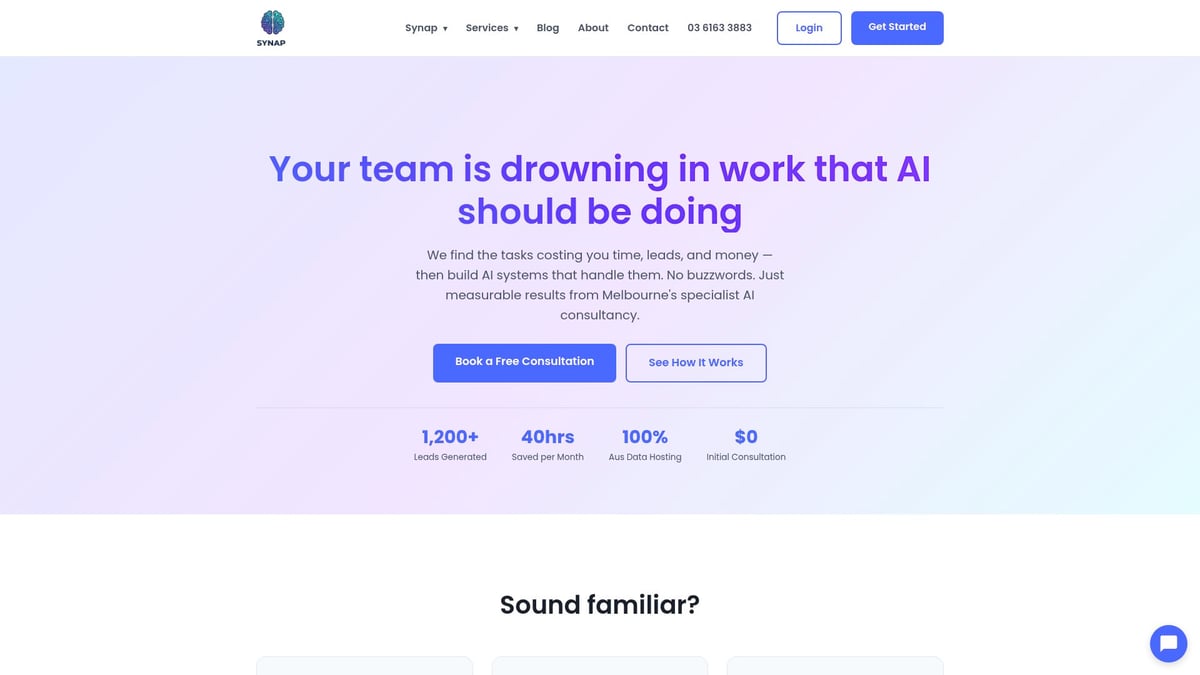
Key features include private GPT wrappers, custom AI agents, and workflow automation. All data is hosted locally, ensuring compliance with Australian regulations.
- Law firms automate document triage and client intake, saving up to 40 hours a month.
- Step-by-step: Book a free AI Readiness Assessment, integrate Synap with your CRM, deploy custom agents, and monitor results.
- Pros: No data leakage, flexible packages, free consult.
- Cons: Best suited for Australian businesses.
Explore more or schedule with an AI technologist to see how Synap AI can transform your workflows.
Freshdesk
Freshdesk stands out among ai tools for customer service, offering affordable plans from $19 per user per month, plus a free option. Its AI-driven ticket triage and self-service bots enable omnichannel support.
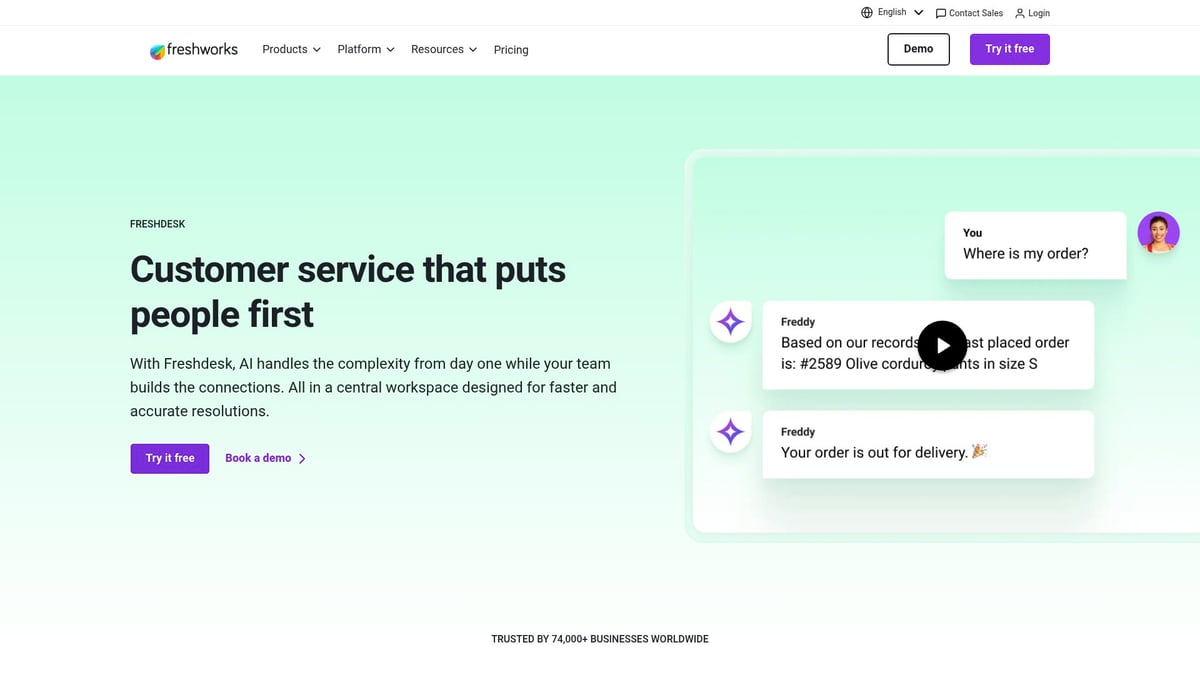
E-commerce brands use Freshdesk to auto-assign tickets and suggest solutions, reducing backlog and boosting agent productivity.
- Set up AI workflows: Create automation rules, connect chat channels, and train bots with FAQs.
- Pros: Easy integration, robust analytics.
- Cons: Advanced features may require premium tiers.
Freshdesk is ideal for medium to large businesses needing scalable support and streamlined customer interactions.
Guru
For distributed teams, Guru is a leading choice in ai tools for customer service. Plans start at $25 per seat per month. Guru’s AI-driven knowledge base delivers real-time suggestions and a handy browser extension.
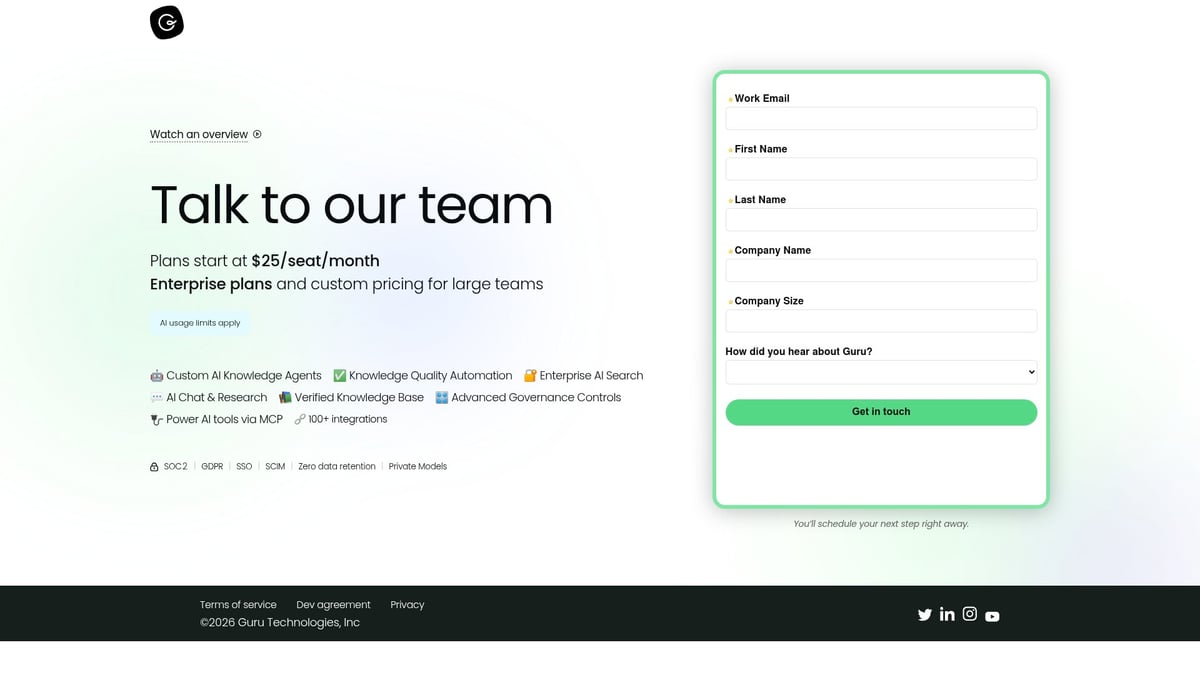
A SaaS provider reduced average handle time by 18 percent using Guru, as agents accessed instant company knowledge.
- Guide: Structure knowledge articles with clear tags, train AI to fetch key answers, and integrate with Slack.
- Pros: Fast search, seamless integrations.
- Cons: Customisation can be complex at first.
Guru accelerates onboarding and ensures support teams always have the right answers.
Comm100
Comm100 is trusted by enterprises needing ai tools for customer service with global reach. Pricing starts at $31 per user per month, with a 30-day free trial.
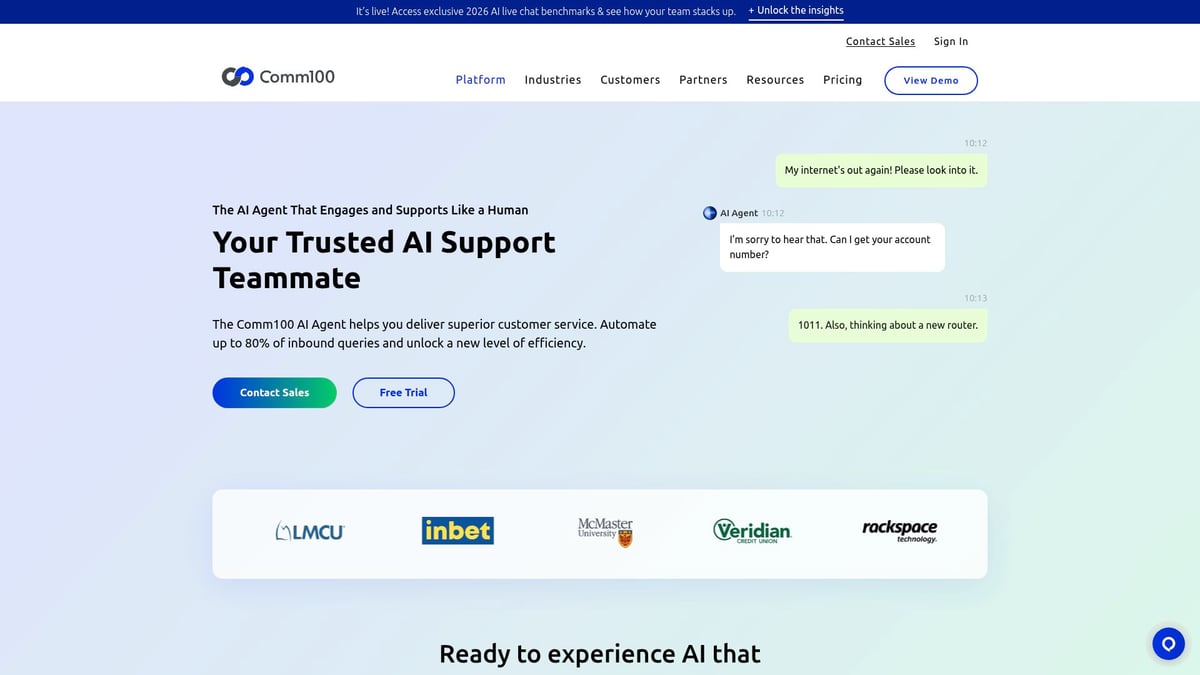
Features include AI chatbots, live chat, and unified communication channels. Multilingual support and seamless escalation to human agents set Comm100 apart.
- Step-by-step: Enable multilingual workflows, connect live chat, and customise bot responses.
- Pros: Advanced reporting, omnichannel support.
- Cons: Full customisation setup required.
International retailers automate 60 percent of chat interactions during sales surges, keeping customers satisfied worldwide.
Tidio
Tidio is popular for SMEs seeking user-friendly ai tools for customer service. Plans begin at $25 per user per month, with a free plan and 7-day trial.
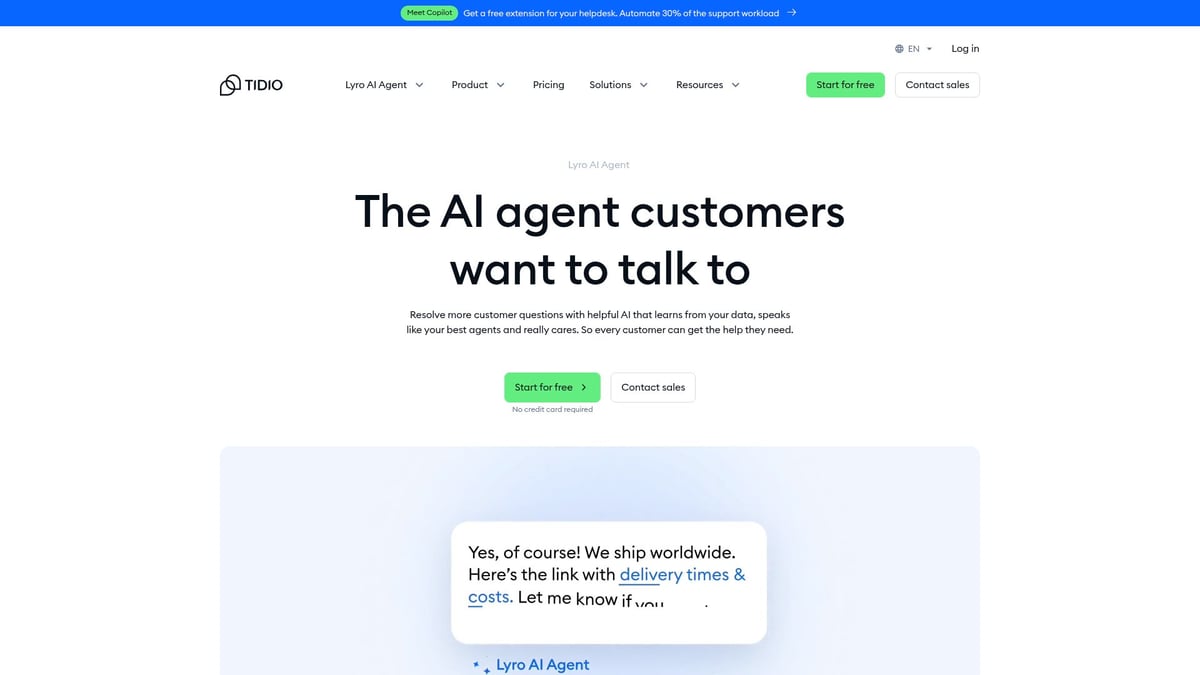
Tidio’s AI agent handles customer inquiries, live chat, and automation templates. Boutique retailers increased conversions by 22 percent using Tidio AI.
- Guide: Set up automated FAQs, integrate with Shopify, and configure lead capture forms.
- Pros: Quick deployment, simple interface.
- Cons: Advanced analytics limited on lower tiers.
Tidio empowers small businesses to deliver instant, effective support.
Zoho Desk
Affordable ai tools for customer service like Zoho Desk start at $7 per user per month, with a 15-day free trial. Zoho’s Zia AI assistant offers sentiment analysis and ticket routing.
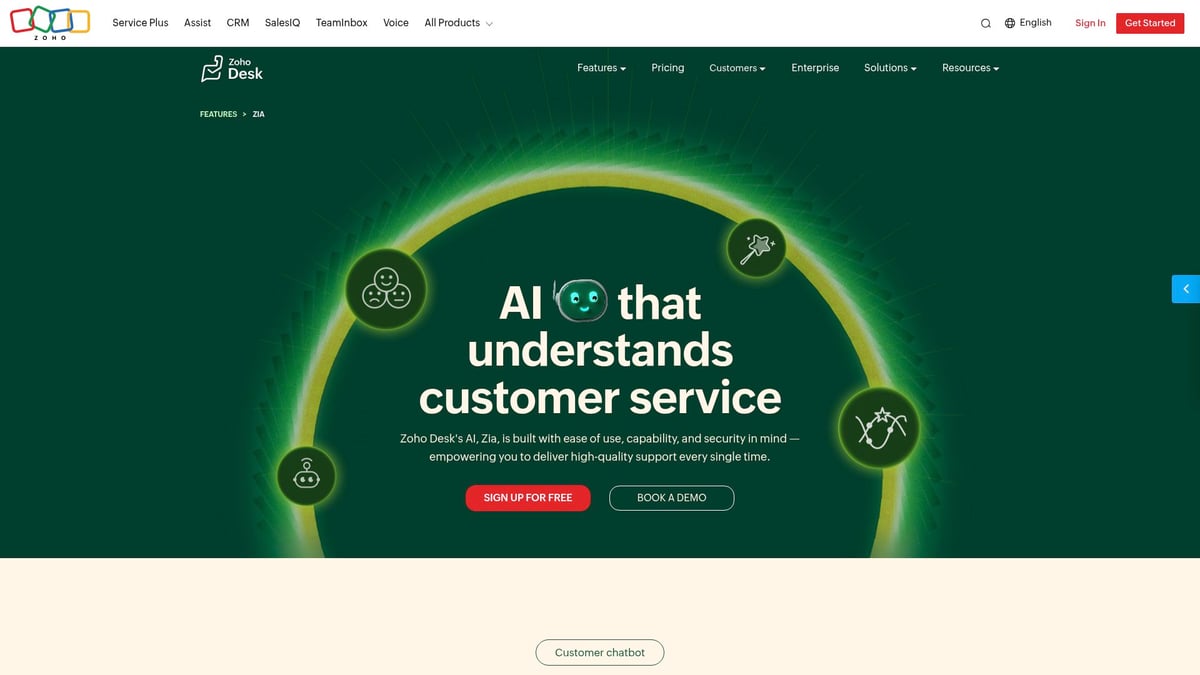
A tech startup used Zia to prioritise urgent tickets, reducing resolution times significantly.
- Step-by-step: Train Zia with custom data, set up proactive alerts, and monitor results in the dashboard.
- Pros: Deep Zoho suite integration, multi-language support.
- Cons: Some AI features need higher-tier plans.
Zoho Desk is a solid choice for teams seeking budget-friendly automation.
Intercom
Intercom’s ai tools for customer service deliver conversational support and workflow automation. Pricing is custom and scales with usage.
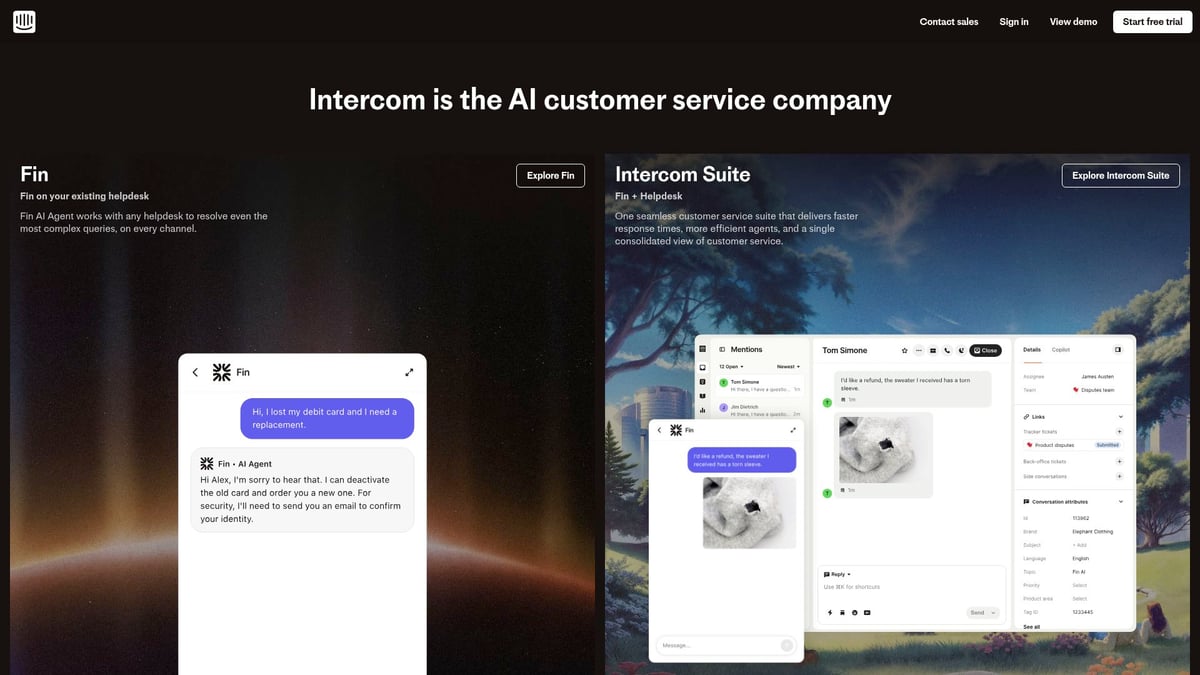
SaaS and fintech startups use Intercom to automate onboarding and KYC queries, providing fast, personalised experiences.
- Guide: Build custom bot flows, connect API integrations, and set up conversational triggers.
- Pros: Advanced targeting, robust API.
- Cons: Can be costly at high volumes.
Intercom reduces repetitive queries, freeing agents for complex cases.
Netomi
Netomi specialises in ai tools for customer service for enterprises with strict compliance needs. Pricing is custom, with demos available.
Netomi’s brand-safe AI chatbots automate multi-channel workflows with high accuracy. Airlines automate 70 percent of requests with Netomi.
- Step-by-step: Map customer journeys, deploy chatbots on multiple channels, and set workflow rules.
- Pros: Strong NLP, integrates with Zendesk and Salesforce.
- Cons: Enterprise focus may not suit small teams.
Netomi is ideal for regulated industries needing precise, reliable automation.
eDesk
eDesk brings ai tools for customer service to multi-channel e-commerce businesses. Starting at $39 per agent per month, eDesk offers a 14-day free trial.
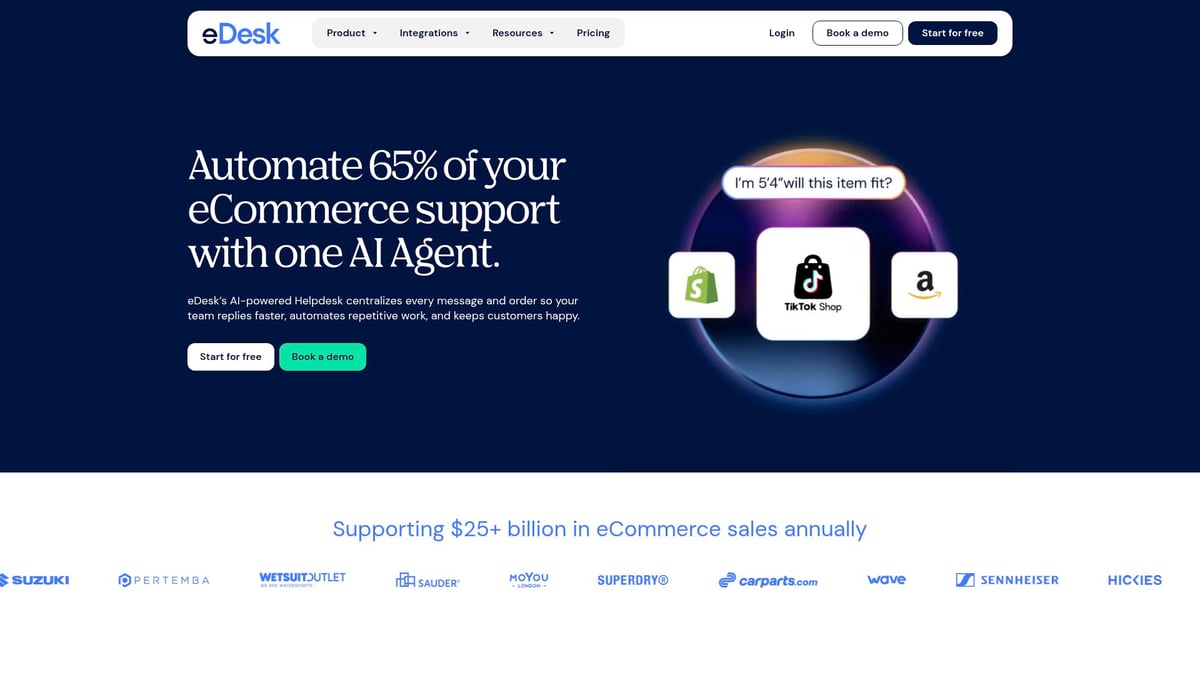
Features include marketplace integration, AI ticket assignment, and analytics. Online retailers manage all marketplace queries from one dashboard.
- Guide: Connect Amazon, eBay, and Shopify accounts, set up AI ticket routing, and customise automation.
- Pros: Unified inbox, flexible automation.
- Cons: Initial training required for best results.
eDesk centralises support, driving efficiency for busy e-commerce teams.
Assembled AI
Large support centres benefit from Assembled AI, a data-driven choice among ai tools for customer service. Pricing starts at $0.65 per conversation.
Intelligent case routing and workforce management help call centres reduce average queue time by 30 percent.
- Step-by-step: Integrate with your existing system, configure smart routing rules, and review agent allocation insights.
- Pros: Scalable, deep analytics.
- Cons: Requires integration effort.
Assembled AI ensures the right agent handles each case, optimising team performance.
Quidget
Quidget is ideal for SMEs wanting affordable ai tools for customer service. Pricing starts at $16 per month, with a free plan available.
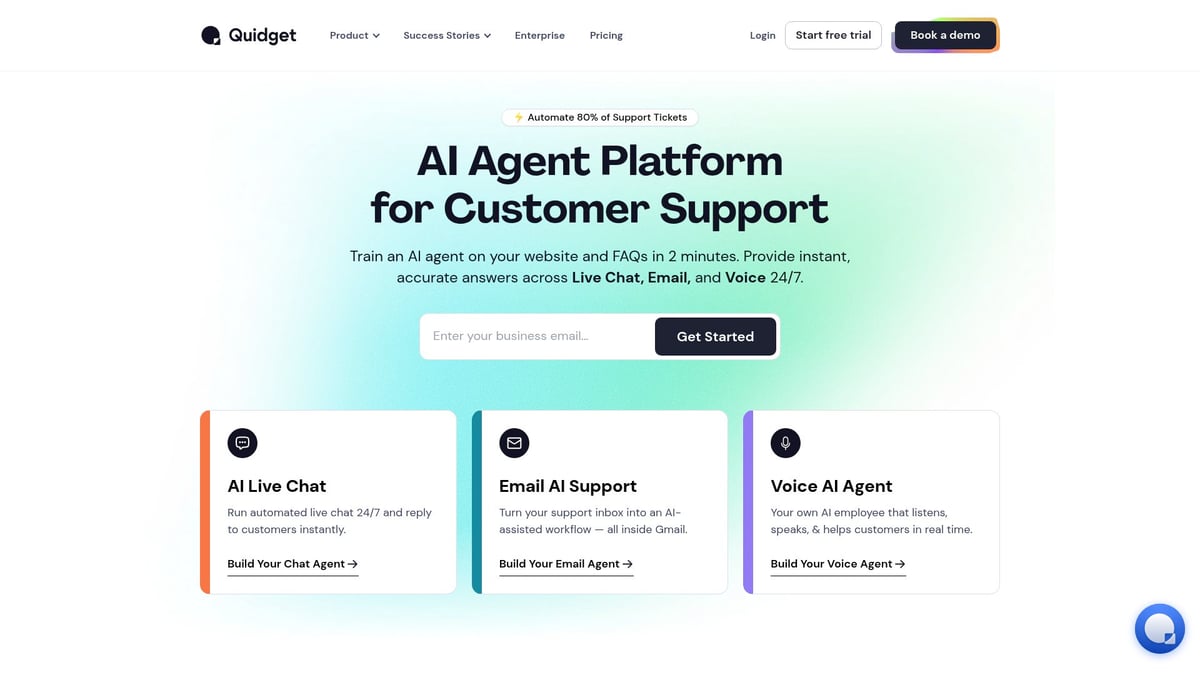
Quidget automates routine inquiries and live chat. Local businesses use Quidget to manage appointment scheduling with reduced manual effort.
- Guide: Deploy Quidget on your website, set up common inquiry templates, and track first-contact resolution rates.
- Pros: Simple setup, good for small teams.
- Cons: Limited to basic automation.
Quidget increases efficiency for appointment-based businesses.
SparrowDesk
Growing businesses can streamline support using SparrowDesk, a versatile option in ai tools for customer service. Pricing starts at $16 per user per month, with a free demo.
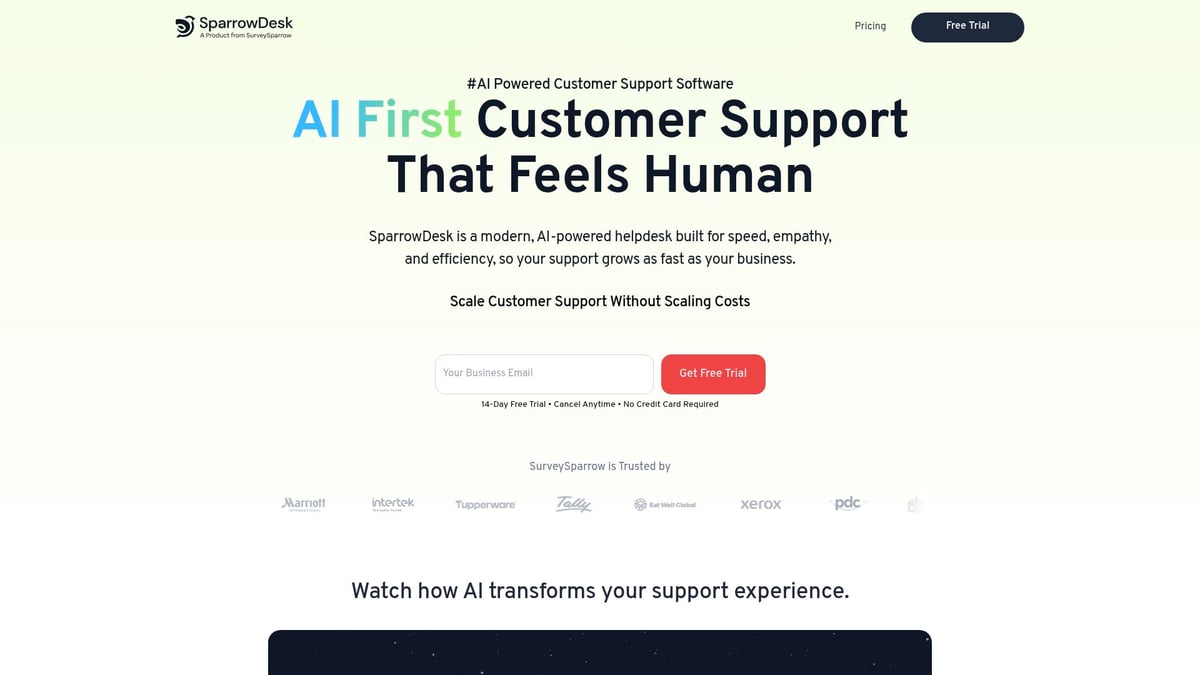
SparrowDesk offers auto-resolution, omnichannel support, and analytics. Marketing agencies automate client onboarding support with SparrowDesk.
- Step-by-step: Set up email, chat, and social channels, configure auto-resolution rules, and monitor analytics.
- Pros: Fast deployment, scalable for multi-channel teams.
- Cons: Some integrations require manual setup.
SparrowDesk accelerates support across every channel as your business grows.
To compare these ai tools for customer service side by side, use the AI tools product explorer for a tailored match to your business needs.
How to Choose the Right AI Tool for Your Customer Service Team
Selecting the best ai tools for customer service in 2026 is a strategic decision shaping your brand's support reputation. The right choice ensures you meet customer expectations for speed, accuracy, and personalisation. Let us break down the process into practical steps, so you can confidently invest in technology that delivers measurable value.
1. Assessing Your Support Needs
Start by mapping your current support environment. How many inquiries do you handle daily? Which channels—chat, email, phone, social—require coverage? What percentage of queries could be automated? Understanding your volume and complexity helps define which ai tools for customer service will deliver the most impact.
Consider peak periods, such as sales events or product launches. For example, if you experience seasonal spikes, you need scalable solutions. Review what your team struggles with most—is it repetitive questions, slow ticket routing, or multi-language support? Document these pain points, as they will guide your feature wishlist.
2. Features, Integration, and Expert Guidance
List the must-have features for your operation. Do you require chatbots, sentiment analysis, workflow automation, or a robust knowledge base? Integration is critical—ensure your shortlisted ai tools for customer service work seamlessly with your existing CRM, help desk, and analytics platforms.
A practical approach is to create a table comparing features, compatibility, and automation capabilities:
| Tool | Chatbot | CRM Integration | Knowledge Base | Automation |
|---|---|---|---|---|
| Synap AI | Yes | Yes | Yes | Advanced |
| Tidio | Yes | Shopify, WP | Limited | Moderate |
| Freshdesk | Yes | Yes | Yes | Advanced |
For tailored advice, consider leveraging AI consulting for customer support to clarify technical requirements and implementation roadmaps.
3. Compliance, Security, and Cost
Australian businesses must prioritise data sovereignty and privacy. Look for ai tools for customer service that offer local data hosting and comply with regulations. Synap AI, with 100 percent Australian data hosting, is an ideal benchmark for compliance and security.
Pricing models vary—some tools charge per agent, others per conversation or ticket. Calculate your total cost of ownership, factoring in setup, training, and scaling. Ensure the tool’s security certifications and privacy policies match your industry standards, especially in sectors like healthcare or finance.
4. Testing, Shortlisting, and Real-World Example
Before committing, test your chosen ai tools for customer service with free trials or demos. Involve your frontline agents in the process to gather feedback on usability and workflow fit. Create a requirements checklist and score each tool against it.
For instance, an Australian retailer compared Synap AI and Tidio, prioritising compliance and ease of integration. After hands-on trials, they selected Synap AI for its local data protection and automation depth.
Step-by-step guide:
- List support volumes and channels.
- Identify must-have features.
- Map integration needs.
- Check compliance and security.
- Compare pricing.
- Trial shortlisted tools.
- Collect team feedback.
- Make a final decision.
If you need practical implementation tips, visit How to use AI in support.
Ready to future-proof your support? Book an online consult with our AI technologist to get expert advice tailored to your business.
Future Trends in AI Customer Service for 2026 and Beyond
In 2026, the landscape is rapidly evolving as ai tools for customer service become more advanced and accessible. The industry is projected to reach $47.82 billion by 2030, reflecting the growing demand for smarter solutions. Businesses are rethinking their support strategies to meet rising expectations, prioritising efficiency, personalisation, and security. Read more in the AI in Customer Service Market Growth Report.
Conversational AI and Voice Bots
- Conversational AI is at the forefront of ai tools for customer service, delivering natural, human-like interactions across multiple channels.
- By 2025, 85% of customer service leaders will explore or pilot conversational generative AI, according to the Gartner Survey on Conversational GenAI Adoption.
- Voice bots are now capable of understanding complex queries, reducing wait times, and providing instant answers any time of day.
Teams using these ai tools for customer service benefit from seamless escalation, improved customer satisfaction, and greater accessibility for all users.
Hyper-Personalisation and Predictive Insights
- Hyper-personalisation is another major trend shaping ai tools for customer service, driven by AI-powered analytics and customer insights.
- AI can now predict issues before customers contact support, enabling proactive outreach and tailored recommendations.
- Predictive analytics help businesses understand customer behaviour, automate routine follow-ups, and improve retention.
With solutions like Synap, organisations can leverage local data to ensure compliance and deliver highly relevant experiences to every customer.
Privacy, Collaboration, and Proactive Support
- Data privacy and ethical AI are taking centre stage, especially in Australia where local hosting is essential. Synap’s 100% Australian data hosting is a leading example.
- AI-human collaboration is streamlining workflows, allowing bots to resolve routine tasks while agents focus on complex cases.
- Real-time translation and multilingual support empower global teams to assist customers in their preferred language.
Proactive support, such as sending reminders or anticipating FAQs, is reducing customer effort and boosting overall satisfaction.
Real-World Example
A healthcare provider uses ai tools for customer service to send appointment reminders and answer FAQs before patients even reach out. This ensures timely care and minimises no-shows.
Step-by-Step Guide: Preparing Your Team
- Evaluate existing workflows and identify automation opportunities.
- Train agents to work alongside AI, focusing on empathy and escalation.
- Choose solutions with strong privacy features and local hosting, such as Synap.
- Test multilingual and voice bot capabilities in real scenarios.
- Monitor results and adjust strategies for continuous improvement.
Ready to future-proof your support? Book an online consult with our AI technologist here.
As we've explored, choosing the right AI tools in 2026 isn’t just about keeping up—it’s about setting your business apart with faster, more personalised, and secure customer service. If you’re unsure which solution truly fits your unique needs or how to make the most of these innovations in the Australian context, I’m here to help. Let’s look at your current processes, talk through your goals, and map out a practical path forward together. Ready to take the next step toward smarter customer support? Book a Consultant Now