Artificial intelligence erp is transforming how businesses operate in 2026, driving efficiency and innovation at a pace never seen before. In today’s fast-moving market, embracing these AI-driven systems is no longer optional for Australian companies wanting a real competitive edge.
This guide is here to help you navigate the evolving artificial intelligence erp landscape. You will learn the core concepts, discover emerging technologies, follow step-by-step implementation strategies, see industry use cases, and explore future trends.
Now is the time to unlock new growth and resilience—discover how artificial intelligence erp can future-proof your business and help you lead in the digital era.
Understanding Artificial Intelligence in ERP: Core Concepts for 2026
Enterprise Resource Planning (ERP) has long been the backbone of business operations. Traditionally, ERP systems helped organisations manage finance, inventory, supply chains, and human resources. In 2026, the landscape has shifted dramatically, with artificial intelligence erp solutions redefining how Australian businesses operate.

Today, artificial intelligence erp platforms seamlessly integrate advanced technologies. Machine learning uncovers patterns in large datasets, while natural language processing allows users to interact with systems through conversational interfaces. Predictive analytics transforms raw data into actionable insights, helping organisations anticipate trends and make informed decisions.
The global artificial intelligence erp market is booming. According to IBM, the sector has reached $44 billion, reflecting surging demand for intelligent automation. For more recent figures and projections, see the AI in ERP Market Growth. This growth highlights a critical shift from simple data management to intelligent automation and real-time decision support. Businesses are no longer content with static reports—they need dynamic, AI-powered guidance.
Key AI functions are now central to artificial intelligence erp systems. These include automated data entry, advanced demand forecasting, and adaptive workflows that respond to changing business needs. Generative AI is also making waves. Tools like Microsoft Dynamics 365 and SAP’s Joule use large language models to automate complex tasks, generate recommendations, and even write reports or respond to queries.
A real-world example is SAP SuccessFactors, which leverages artificial intelligence erp to deliver personalised learning experiences. Employees receive tailored training recommendations, boosting engagement and retention. Australian businesses adopting these innovations gain a competitive edge, improving resilience and agility in a fast-changing market.
In 2026, artificial intelligence erp is no longer optional. It is essential for staying ahead, managing risks, and unlocking new growth opportunities. With AI-driven ERP, organisations can automate routine tasks, support smarter decisions, and adapt quickly to market changes. For those ready to lead, the future starts now.
Key Innovations Shaping AI-Driven ERP in 2026
Artificial intelligence erp is transforming how Australian businesses operate, driving new levels of efficiency and insight. In 2026, innovations are not just incremental—they are fundamentally reshaping ERP platforms. From smarter automation to advanced analytics, businesses must stay ahead to remain competitive. This section explores the technologies, features, and data strategies behind the next generation of AI-driven ERP.
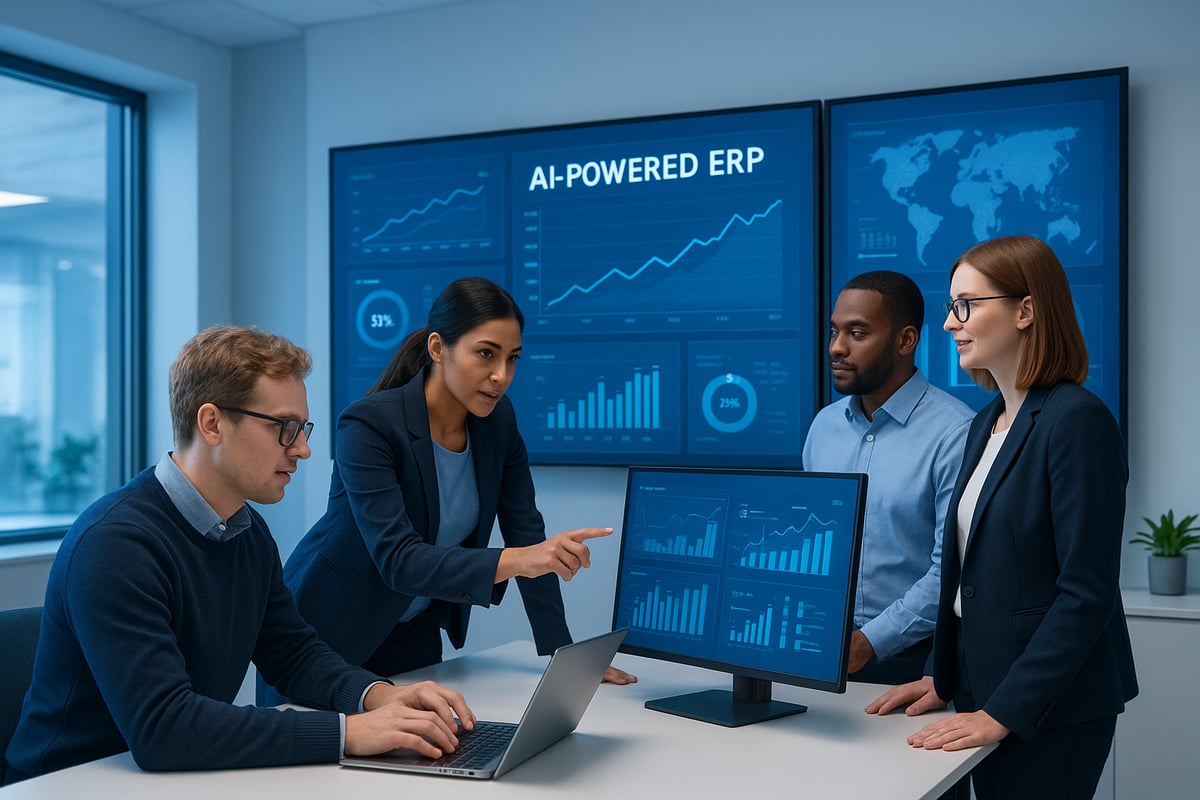
The Evolution of AI Technologies in ERP
The journey of artificial intelligence erp began with simple automation. By 2026, the field has evolved into a landscape shaped by machine learning, natural language processing, and generative AI.
- In the early 2010s, ERP systems relied heavily on manual input and rules-based automation.
- Machine learning emerged, enabling ERP to learn from business data, reduce errors, and optimise processes. For example, predictive maintenance algorithms now identify equipment issues before they cause downtime.
- Natural language processing (NLP) has made conversational ERP interfaces possible. Staff can interact with ERP using plain English, improving accessibility and speed.
- Generative AI is the latest leap. According to IBM, generative AI has increased profitability for ERP adopters by up to 20 percent. Tools like Microsoft Dynamics 365 Copilot and SAP’s Joule generate insights and automate repetitive tasks.
Modern artificial intelligence erp platforms now include chatbots, virtual assistants, and image recognition. For instance, Synap’s AI agents process supplier invoices by extracting data from images, reducing manual effort and errors. This evolution provides a solid foundation for intelligent, self-improving business systems.
Core AI Features Transforming ERP Platforms
Artificial intelligence erp platforms in 2026 offer a suite of advanced features that go beyond traditional automation.
- Predictive analytics enable businesses to forecast demand and plan maintenance, based on historical and real-time data.
- Robotic process automation (RPA) automates high-volume, repetitive workflows. This includes everything from order entry to payroll processing.
- AI-driven scenario planning helps companies allocate resources dynamically, responding to market changes in real time.
- Invoice processing is now automated with AI, streamlining spend management and freeing up staff for higher-value tasks.
- Real-time, actionable reporting is powered by AI, providing decision-makers with instant, data-driven insights.
For example, Oracle’s AI tools have helped Australian businesses optimise cash flow and improve forecasting accuracy by up to 30 percent. Synap’s AI automation agents allow businesses to set up custom workflows, adapting to unique needs. For more on this, you can learn about AI automation and ERP integration tailored for Australian organisations.
With these core features, artificial intelligence erp is no longer just a back-office tool. It is an active partner in strategic planning and growth.
Data Quality, Integration, and Security in AI ERP
The success of artificial intelligence erp relies on high-quality data. As the saying goes, “garbage in, garbage out.” Leading research from IBM and Sage shows that poor data quality can cost businesses millions each year.
- AI now plays a critical role in data cleansing and integration. It flags errors, standardises information, and ensures that only accurate data enters the ERP.
- Integrating ERP with other business systems, such as CRM or supply chain platforms, is essential. AI-powered extraction tools can read unstructured data, like PDFs or emails, and convert it into usable formats.
- Security and compliance are top priorities, especially for Australian organisations. AI monitors for data breaches and helps enforce privacy regulations, supporting data sovereignty.
A real-world example is an Australian retailer using Synap’s AI to extract and structure supplier invoice data, reducing manual processing time by 50 percent. Additionally, AI prepares data for business intelligence, allowing for smarter analysis and better decisions.
As regulations evolve, artificial intelligence erp platforms must stay ahead. Ensuring data privacy and compliance is not optional—it is a competitive necessity.
Step-by-Step Guide: Implementing AI ERP in Your Organisation
Adopting artificial intelligence erp in your organisation is a strategic move that requires clear planning, coordination, and ongoing management. This step-by-step guide breaks down the essential actions Australian businesses should take to unlock the full potential of AI-driven ERP, ensuring a seamless and future-ready transformation.
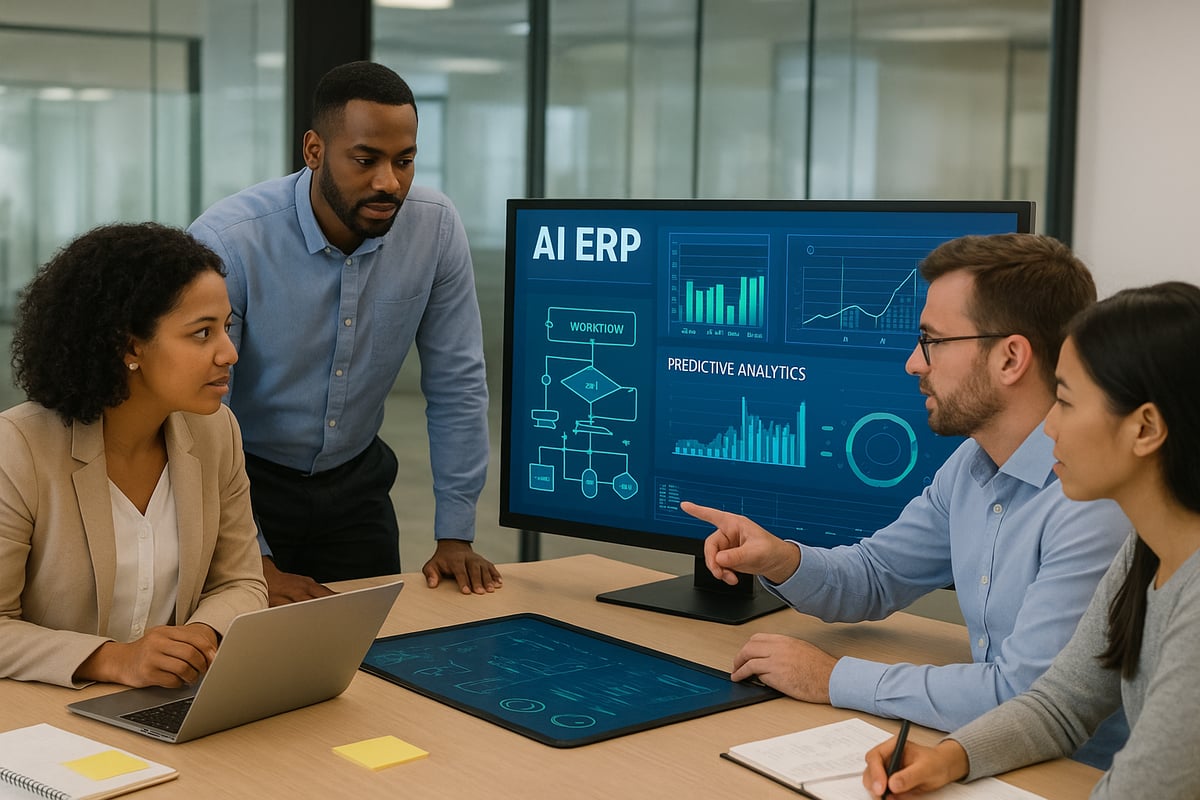
Step 1: Assess Organisational Readiness and Define Objectives
Begin by evaluating your current ERP capabilities. Identify gaps, inefficiencies, and pain points, especially those that hinder growth.
Next, define which business processes could benefit most from artificial intelligence erp automation. For example, a manufacturing firm might flag manual invoice processing as a critical bottleneck.
Engage stakeholders from finance, operations, IT, and HR to ensure broad alignment. Set measurable goals, such as reducing invoice cycle times by 30% or increasing forecast accuracy.
This foundational step ensures your artificial intelligence erp project is grounded in real business needs and measurable outcomes.
Step 2: Select the Right AI ERP Solution
Carefully compare leading artificial intelligence erp platforms such as SAP, Oracle, Microsoft, and Sage. Assess whether cloud or on-premises deployment best fits your operational needs and compliance requirements.
Scalability and integration are vital, especially for growing organisations. Australian businesses must consider data sovereignty, ensuring all data remains compliant with local privacy laws.
Vendor support is essential. Evaluate the quality of updates, local support, and third-party integration options. For those seeking tailored solutions, Synap offers secure, custom artificial intelligence erp products designed for Australia’s regulatory landscape.
For a detailed roadmap, consult the How to implement AI ERP guide, which outlines practical steps for successful deployment.
AI ERP Solutions for Australian Businesses: Spotlight on Synap
Synap stands out as a leading Australian provider of artificial intelligence erp automation and integration. They prioritise data security, privacy, and strict adherence to local legislation.
Synap’s AI agents handle invoice processing, data entry, and workflow monitoring, adapting to each business’s unique needs. Their pay-per-agent pricing model supports both SMBs and large enterprises, offering flexibility and cost control.
For businesses looking to future-proof operations, Synap’s intelligent automation delivers measurable gains in efficiency and compliance.
Consider booking an online consult with a Synap AI technologist to discuss your artificial intelligence erp challenges and explore tailored solutions.
Step 3: Data Preparation and Integration
Audit all existing data sources for accuracy and completeness. Artificial intelligence erp systems rely on high-quality data to deliver meaningful insights.
Use AI-powered tools to cleanse, standardise, and migrate data sets efficiently. Integration with other core systems, such as CRM and supply chain, is crucial for a unified view of operations.
Australian privacy and data sovereignty regulations must guide every decision. For instance, a retailer using artificial intelligence erp might deploy AI to extract, structure, and validate data from supplier invoices, ensuring both compliance and business value.
Step 4: Customise AI Workflows and Automations
Design AI agents to handle specific business processes. Focus on high-impact areas, such as automated reporting, HR queries, or spend forecasting, where artificial intelligence erp can add immediate value.
Leverage robotic process automation for repetitive tasks, freeing staff for higher-value work. Implement NLP-powered chatbots to provide real-time user support and automate customer interactions.
A logistics company, for example, might use artificial intelligence erp to automate purchase order processing, reducing manual errors and speeding up delivery times.
Step 5: User Training, Testing, and Change Management
Comprehensive training is critical for successful artificial intelligence erp adoption. Educate staff on new features, interfaces, and workflows.
Pilot programs help test automations and gather user feedback. Address resistance to change by communicating clear benefits, such as reduced workload and improved accuracy.
Monitor system performance and user adoption closely. For example, an HR department might use AI-powered virtual assistants to streamline onboarding queries, improving new hire experiences.
Step 6: Monitor, Optimise, and Scale
Continuously track key performance indicators like efficiency gains, error rates, and cost savings. Artificial intelligence erp models should be refined regularly based on usage data and business needs.
Scale successful automations across additional departments for greater impact. Stay informed of vendor innovations and regulatory changes to keep your ERP environment future-ready.
If you want expert advice tailored to your sector, book a consult with a Synap AI technologist to discuss how artificial intelligence erp can transform your business.
Real-World Use Cases: AI ERP Driving Innovation Across Industries
Artificial intelligence erp is transforming how Australian organisations operate, compete, and innovate. By embedding AI into ERP platforms, businesses are unlocking new efficiencies and smarter decision-making. Let’s explore step by step how artificial intelligence erp is driving real change across key industries.

In manufacturing, artificial intelligence erp systems enable predictive maintenance using IoT sensors and machine learning. For example, IBM reports that wind farms using AI-driven ERP have increased output by up to 15 percent. AI analyses equipment data in real time and schedules repairs before breakdowns occur. This reduces costly downtime and ensures continuous production.
Retailers and supply chain leaders rely on artificial intelligence erp for demand forecasting and inventory management. AI algorithms predict buying trends and optimise stock levels, minimising overstock and shortages. In 2025, companies using AI-driven forecasting saw inventory costs drop by 20 percent. These insights help retailers respond quickly to market changes and customer preferences.
Finance and procurement departments benefit from automated invoice and document processing. Artificial intelligence erp solutions like SAP and Oracle use AI to extract, validate, and approve invoices within seconds. Australian businesses have reduced manual processing time by 60 percent using these tools. To see how AI automation can streamline your business, visit Synap for business automation.
AI-powered customer support and CRM are revolutionising client interactions. Generative AI in artificial intelligence erp can draft personalised emails and create account briefings based on customer data. SAP’s latest release uses AI to answer queries instantly, boosting customer satisfaction and freeing up staff for complex tasks.
In HR, artificial intelligence erp platforms such as SAP SuccessFactors are making talent management more effective. AI matches candidates to roles, predicts employee turnover, and delivers personalised learning recommendations. Australian HR teams using AI have reported a 25 percent improvement in recruitment efficiency.
Guided purchasing and procurement are becoming smarter with AI recommendation engines. Artificial intelligence erp analyses past purchasing behaviour and market trends, suggesting the best suppliers and negotiating terms. SAP Ariba’s AI-powered procurement has cut sourcing time by up to 30 percent for many enterprises.
Process mining and optimisation is another area where artificial intelligence erp excels. AI tools scan workflows, flag bottlenecks, and recommend improvements. Continuous process optimisation helps businesses stay agile and competitive in rapidly changing markets.
Consider the case of an Australian manufacturer who implemented artificial intelligence erp to monitor machine performance and automate cash flow forecasting. Within a year, the company reduced downtime by 18 percent and improved cash flow visibility. This real-world success shows the measurable benefits of AI-driven ERP innovation.
Australian businesses adopting artificial intelligence erp are seeing measurable improvements in efficiency, accuracy, and customer service. For guidance on responsible adoption, the Australian Government AI Adoption Guidance offers helpful practices. Ready to see how AI ERP can transform your organisation? Book an online consult with our AI technologist today.
Future Trends and Opportunities in AI ERP for 2026 and Beyond
Artificial intelligence erp is rapidly shaping the future of business in Australia. As we look ahead to 2026 and beyond, the landscape is set for even more dramatic shifts. Companies that embrace these changes now will secure a strong competitive edge.
The Rise of Generative AI and Conversational ERP
- Generative AI is transforming artificial intelligence erp by enabling systems to generate business reports, automate decision support, and interact in natural language.
- By 2029, Gartner predicts that over 80% of ERP updates will include generative AI features, making conversational interfaces standard for Australian businesses. For a deeper dive into these projections, see Gartner's Generative AI Impact on ERP.
- Real-world example: Synap’s AI chatbots now guide users through complex ERP tasks, improving productivity and reducing training time.
These advancements are making artificial intelligence erp more accessible and intuitive for all users.
Compliance, Sustainability, and Industry-Specific AI ERP
- Artificial intelligence erp platforms are increasingly focused on automating regulatory compliance and sustainability reporting.
- Environmental, social, and governance (ESG) modules are becoming standard, with AI tracking emissions, waste, and supply chain risks.
- Industry-specific solutions are emerging for healthcare, legal, and education sectors, offering tailored modules that adapt to unique requirements.
- For example, Synap’s custom AI agents help manufacturers automate compliance documentation, ensuring readiness for audits and government standards.
Australian businesses can expect artificial intelligence erp to drive both compliance and innovation in industry verticals.
Data Privacy, Security, and Local Processing in Australia
- With strict privacy laws and heightened cyber threats, data sovereignty is a top priority for artificial intelligence erp in Australia.
- AI now helps enforce compliance by flagging sensitive data and automating encryption processes.
- Local data hosting is essential, with platforms like Synap offering onshore data centres to meet Australian regulations.
- Step-by-step, companies should audit data flows, implement AI-powered monitoring, and ensure regular privacy training for staff.
This focus on security ensures artificial intelligence erp supports both innovation and legal compliance.
Integrating Emerging Technologies with AI ERP
- Artificial intelligence erp is converging with IoT, blockchain, and edge computing.
- IoT sensors feed real-time data into ERP, enabling predictive maintenance and supply chain visibility.
- Blockchain adds new layers of transparency and trust to ERP transactions, while edge computing allows faster, localised data analysis.
- Real-world example: An Australian logistics firm uses Synap’s AI to process IoT data for route optimisation and asset tracking.
These integrations help artificial intelligence erp deliver smarter, faster, and more reliable insights.
The Future for Australian Businesses
- The next wave will see self-learning ERP systems that adapt to user behaviour and market changes automatically.
- AI-driven scenario planning will allow businesses to test responses to disruptions, improving resilience.
- Local providers like Synap will play a critical role, offering compliance-ready solutions and support. Learn more about available options at Explore Synap AI solutions.
- Step-by-step, Australian firms should assess needs, pilot new modules, and scale successful AI solutions.
To stay ahead, book a consult with our AI technologist for tailored artificial intelligence erp advice.
As we’ve explored, embracing AI in your ERP system isn’t just about keeping up with trends—it’s about positioning your business at the forefront of innovation, efficiency, and security. With evolving technologies and Synap’s commitment to Australian data privacy, you have the opportunity to streamline workflows and stay compliant in a changing landscape. If you’re ready to take the next step and start unlocking real value for your business, now’s the time to get involved.
Join Now
and discover how AI ERP can transform your operations for 2026 and beyond.
Article written using RankPill.