Australian businesses face mounting pressure to deliver exceptional customer experiences while managing costs. Traditional support models struggle to meet modern expectations for instant, accurate responses across multiple channels. AI based customer support offers a transformative solution that combines efficiency with personalisation, enabling companies to scale their service capabilities without proportionally increasing headcount. This technology has evolved from simple chatbots to sophisticated systems that understand context, learn from interactions, and deliver human-like responses that genuinely solve customer problems.
Understanding AI Based Customer Support Technology
AI based customer support leverages natural language processing, machine learning, and knowledge management to automate customer interactions. These systems analyse incoming queries, understand intent, and generate appropriate responses based on vast datasets of previous interactions and documentation.
The technology operates through multiple layers of processing. Initial classification determines the nature of the inquiry. Contextual analysis examines conversation history and customer data. Response generation draws from knowledge bases, product documentation, and past successful resolutions.

Modern implementations integrate with existing business systems. Customer relationship management platforms, ticketing systems, and product databases feed information into the AI engine. This integration ensures responses reflect current product status, order information, and customer history.
Research into human-like AI customer service agents demonstrates the importance of creating systems that feel natural while maintaining accuracy. The OlaMind framework shows how AI can deliver responses that match human communication patterns without sacrificing precision.
Key Components of Effective Systems
- Natural language understanding engines that interpret customer intent
- Knowledge base management systems that organise support documentation
- Response generation modules that craft contextually appropriate answers
- Learning mechanisms that improve performance over time
- Escalation protocols that transfer complex issues to human agents
The Australian market presents unique considerations. Local language nuances, regulatory requirements, and cultural expectations shape how AI based customer support must function. Systems deployed by Synap AI account for these regional factors from the ground up.
Implementing AI Based Customer Support in Your Organisation
Successful deployment requires careful planning and execution. Rushing implementation without proper preparation leads to poor customer experiences and wasted resources.
Step-by-Step Implementation Guide
Assess your current support infrastructure: Document existing processes, tools, and pain points. Identify the volume and types of inquiries your team handles daily.
Define clear objectives: Establish measurable goals such as response time reduction, resolution rate improvement, or cost per interaction targets.
Audit your knowledge base: Review existing documentation for completeness and accuracy. Comprehensive product content is essential for AI-powered self-service to function effectively.
Select appropriate technology: Evaluate platforms based on integration capabilities, language support, and customisation options. Consider whether you need pre-built solutions or custom development.
Prepare training data: Compile historical support tickets, frequently asked questions, and product documentation. Clean and structure this data for optimal AI training.
Configure integration points: Connect the AI system to your CRM, helpdesk software, and product databases. Test data flow between systems thoroughly.
Train the AI model: Load your prepared data and conduct initial training cycles. Validate responses against known good outcomes.
Conduct controlled testing: Deploy to a limited user group or specific inquiry types. Monitor performance metrics closely and gather feedback.
Refine and expand: Address identified issues and gradually increase deployment scope. Continuously update training data based on new interactions.
Establish ongoing monitoring: Implement dashboards tracking resolution rates, escalation frequency, and customer satisfaction scores.
| Implementation Phase | Typical Duration | Key Activities |
|---|---|---|
| Assessment & Planning | 2-4 weeks | Audit, goal setting, vendor evaluation |
| Data Preparation | 3-6 weeks | Knowledge base cleanup, data structuring |
| Initial Deployment | 4-8 weeks | Integration, training, limited rollout |
| Full Deployment | 2-4 weeks | Expansion, optimization, monitoring setup |
The timeline varies based on organisational complexity and existing infrastructure quality. Businesses with well-documented processes and clean data repositories complete implementation faster than those requiring extensive preparation work.
Real-World Application: Australian Retail Example
A Melbourne-based electronics retailer faced overwhelming support demand during the 2025 holiday season. Their 12-person support team struggled with 800+ daily inquiries across email, phone, and social media channels.
They partnered with an AI consulting firm to implement ai based customer support focused on their top inquiry categories. The system handled order status checks, return policy questions, and basic troubleshooting for their 200+ product lines.
Results After Three Months
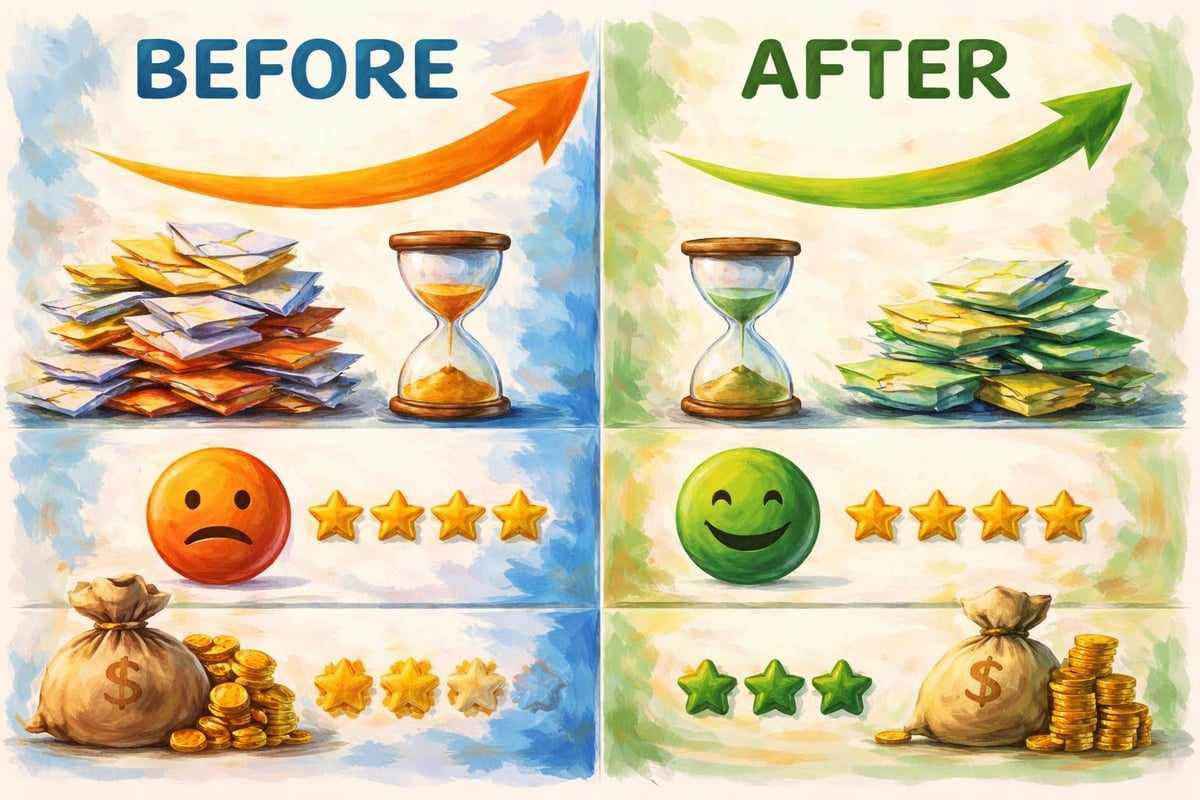
67% of inquiries resolved without human intervention: The AI successfully handled order tracking, warranty information, and simple technical questions.
Average response time decreased from 4.2 hours to 8 minutes: Customers received instant acknowledgment and resolution for common issues.
Customer satisfaction scores improved by 23%: Despite automated handling, satisfaction increased due to faster resolution times.
Support team capacity redirected: Human agents focused on complex technical issues and high-value customer relationships.
Cost per interaction reduced by 54%: Efficiency gains allowed the company to handle 140% more inquiries without additional headcount.
The retailer documented their approach and shared key learnings. They emphasised starting with narrowly defined use cases rather than attempting to automate everything immediately. Their phased expansion allowed them to build confidence and refine the system progressively.
Enhancing AI Performance Through Continuous Improvement
AI based customer support systems require ongoing refinement to maintain effectiveness. Static implementations quickly become outdated as products evolve and customer expectations shift.
Continuous Improvement Framework
Implement feedback loops: Capture customer ratings after each AI interaction. Analyse patterns in negative feedback to identify improvement areas.
Review escalated cases: Examine inquiries that required human intervention. Determine whether better training data or expanded knowledge bases could enable AI resolution.
Update knowledge bases regularly: Schedule quarterly reviews of support documentation. Add new product information and remove outdated content promptly.
Monitor conversation transcripts: Sample AI-customer interactions weekly. Identify misunderstandings, awkward phrasing, or missed opportunities for better responses.
Track emerging inquiry patterns: Use analytics to spot new question categories. Proactively create content addressing these topics before they become major issues.
Integrate human expertise: The Agent-in-the-Loop framework demonstrates how human feedback continuously improves AI performance through systematic integration of expert knowledge.
Conduct A/B testing: Trial different response strategies for similar inquiries. Measure which approaches yield higher satisfaction and resolution rates.
Benchmark against industry standards: Compare your metrics to sector averages. Identify areas where your system underperforms and investigate root causes.
Statistics show that organisations implementing structured improvement programs see 30-40% performance gains within six months. Those treating AI as "set and forget" technology experience declining effectiveness over time.
Integration With Business Systems and Workflows
Effective ai based customer support connects seamlessly with existing business infrastructure. Isolated systems that cannot access real-time data provide limited value.
Critical Integration Points
Customer relationship management platforms: Pull customer history, preferences, and previous interactions to personalise responses.
Order management systems: Access current order status, shipping information, and delivery estimates for real-time updates.
Inventory databases: Provide accurate product availability information and suggest alternatives when items are out of stock.
Knowledge management systems: Draw from technical documentation, user guides, and troubleshooting procedures.
Ticketing and helpdesk software: Create tickets for escalated issues and update customers on human agent progress.
Analytics platforms: Feed interaction data into business intelligence tools for comprehensive performance analysis.
| Integration Type | Business Benefit | Implementation Complexity |
|---|---|---|
| CRM Connection | Personalised service | Moderate |
| Order System | Real-time status updates | Low |
| Inventory Feed | Accurate availability | Low |
| Knowledge Base | Comprehensive answers | High |
| Ticketing System | Seamless escalation | Moderate |
Synap AI specialises in building these integration layers for Australian businesses. Their platform development approach ensures AI systems work within existing technology ecosystems rather than requiring costly replacements.
The technical architecture matters significantly. APIs should handle authentication securely, manage rate limits appropriately, and fail gracefully when source systems are unavailable. Well-designed integrations include caching strategies to maintain performance even when backend systems experience slowdowns.

Addressing Common Implementation Challenges
Organisations encounter predictable obstacles when deploying ai based customer support. Understanding these challenges enables proactive mitigation strategies.
Challenge 1: Insufficient Knowledge Base Quality
Many businesses discover their documentation is incomplete, outdated, or poorly structured. AI systems trained on inadequate knowledge bases generate unhelpful or incorrect responses.
Solution approach: Conduct a comprehensive content audit before AI implementation. Assign subject matter experts to update documentation for priority product areas. Creating authoritative content optimised for AI systems ensures the AI has reliable source material.
Challenge 2: Customer Resistance to Automated Support
Some customers prefer human interaction and feel frustrated by AI systems, particularly for complex or emotional issues.
Solution approach: Implement transparent labelling so customers know they are interacting with AI. Provide easy escalation paths to human agents. Use AI to handle initial inquiry classification and information gathering, then seamlessly transfer to humans for resolution.
Challenge 3: Integration Technical Debt
Legacy systems lack modern APIs or use outdated data formats that complicate integration with AI platforms.
Solution approach: Develop middleware layers that translate between legacy systems and modern AI platforms. Consider phased modernisation where AI implementation drives broader technology upgrades.
Challenge 4: Maintaining Consistency Across Channels
Customers expect consistent experiences whether contacting via email, chat, social media, or phone.
Solution approach: Deploy omnichannel AI platforms that maintain conversation context across touchpoints. Ensure knowledge bases and business rules remain identical regardless of communication channel.
Challenge 5: Measuring Return on Investment
Quantifying AI value proves difficult when benefits span multiple departments and include intangible factors like customer satisfaction.
Solution approach: Establish baseline metrics before implementation. Track direct cost savings from reduced agent hours alongside indirect benefits like increased conversion rates from faster support responses.
Australian businesses using AI readiness assessments identify these challenges early. This proactive approach allows them to address obstacles before they derail implementation projects.
Regulatory and Ethical Considerations for Australian Businesses
AI based customer support in Australia must comply with privacy legislation and ethical standards. The Australian Privacy Principles govern how businesses collect, use, and store customer data.
Compliance Requirements
Obtain appropriate consent: Inform customers when AI systems process their inquiries and what data is collected.
Ensure data security: Implement encryption for data in transit and at rest. Restrict AI system access to necessary information only.
Provide human escalation options: Customers must have access to human agents when AI cannot resolve their issues.
Maintain transparent AI citations: When AI systems reference sources, proper attribution enhances trustworthiness and allows customers to verify information.
Document AI decision-making: Keep records of how AI systems generate responses for audit and improvement purposes.
Respect consumer rights: Enable customers to access, correct, or delete their data as required under privacy legislation.
The Australian Competition and Consumer Commission monitors AI use in customer-facing applications. Systems that provide misleading information or fail to adequately disclose automated operation may face regulatory scrutiny.
Ethical Best Practices
- Avoid training AI systems on biased datasets that could lead to discriminatory outcomes
- Test responses across diverse customer scenarios to ensure fair treatment
- Implement safeguards preventing AI from making unauthorised commitments or financial decisions
- Provide clear explanations when AI cannot assist rather than generating unhelpful responses
- Respect customer preferences for human interaction without penalising those choices
Businesses working with AI consultants in Melbourne and Sydney benefit from expertise in navigating these regulatory requirements while implementing effective solutions.
Advanced Capabilities: Predictive Support and Proactive Engagement
Leading-edge ai based customer support extends beyond reactive inquiry handling. Predictive systems identify potential issues before customers contact support.
Predictive Support Applications
Anticipate product issues: Analyse usage patterns to detect problems before they escalate. Send proactive notifications with solutions.
Identify at-risk customers: Monitor engagement metrics to flag customers likely to churn. Trigger retention-focused support interventions.
Optimise self-service content: Recommender systems analyse support conversations to suggest relevant knowledge base articles that address underlying needs.
Prevent support spikes: Detect product defects or service disruptions early. Deploy targeted communications addressing the issue before inquiry volume surges.
Personalise onboarding: Predict which new customers need additional guidance based on similar user profiles. Provide tailored tutorials and support resources.
The technology relies on pattern recognition across large customer datasets. Machine learning models identify correlations between behaviours and outcomes, enabling proactive interventions.
Implementation Considerations
Advanced capabilities require sophisticated data infrastructure and analytics capabilities. Organisations should master reactive AI support before attempting predictive implementations.
- Ensure data quality and completeness across customer touchpoints
- Develop clear governance frameworks for proactive outreach
- Test prediction accuracy thoroughly before deploying customer-facing interventions
- Monitor customer response to proactive support to avoid perception of intrusiveness
- Integrate predictive insights into agent workflows for human verification
Australian businesses leveraging Synap AI's automation capabilities build these advanced systems progressively. Starting with solid reactive support foundations, they layer predictive features as data maturity and organisational readiness increase.
Training Your Team to Work Alongside AI Systems
Successful ai based customer support requires human agents who understand how to collaborate effectively with AI tools. This partnership amplifies both human creativity and AI efficiency.
Agent Training Program
Explain AI capabilities and limitations: Help agents understand what AI handles well and where human expertise remains essential.
Demonstrate AI workflows: Show how agents access AI-generated insights, conversation summaries, and recommended responses.
Practice escalation scenarios: Train agents to identify when AI handoff is appropriate and how to seamlessly continue conversations.
Teach AI improvement techniques: Enable agents to flag incorrect AI responses and contribute to knowledge base updates.
Develop specialised expertise: As AI handles routine inquiries, train agents in complex problem-solving and relationship management.
Measure hybrid performance: Track metrics that reflect successful human-AI collaboration rather than individual agent statistics.
Foster positive attitudes: Address concerns about job security by emphasising how AI eliminates repetitive work and enables more satisfying customer interactions.
| Training Component | Duration | Delivery Method |
|---|---|---|
| AI Fundamentals | 2 hours | Online module |
| System Navigation | 4 hours | Hands-on workshop |
| Escalation Protocols | 2 hours | Role-playing exercises |
| Knowledge Management | 3 hours | Documentation workshop |
| Advanced Troubleshooting | 8 hours | Case study analysis |
Change management proves critical for adoption success. Agents who view AI as a threat resist using the technology effectively. Those who understand AI as a productivity tool embrace its capabilities and contribute to continuous improvement.
Regular feedback sessions allow agents to share experiences and suggest enhancements. This input drives AI refinement while giving team members ownership of the technology's success.
Measuring Success: Key Performance Indicators
Effective ai based customer support requires rigorous performance measurement. Tracking the right metrics enables data-driven optimisation and demonstrates business value.
Essential Metrics
First contact resolution rate: Percentage of inquiries resolved without escalation or follow-up. Target improvements of 20-30% post-implementation.
Average handling time: Duration from initial contact to resolution. AI typically reduces this by 50-70% for routine inquiries.
Customer satisfaction score: Post-interaction ratings measuring service quality. Monitor for any decline indicating poor AI responses.
Containment rate: Proportion of interactions completed entirely by AI without human intervention. Industry leaders achieve 60-80% for appropriate use cases.
Escalation accuracy: Percentage of AI escalations that genuinely required human expertise. Low accuracy indicates AI underconfidence or poor training.
Knowledge base effectiveness: How often AI successfully leverages documentation to answer questions. Identifies gaps requiring content creation.
Response accuracy: Correctness of AI-generated answers verified through quality assurance sampling. Should exceed 95% for production systems.
Cost per interaction: Total support costs divided by inquiry volume. Quantifies efficiency gains from AI implementation.
Advanced analytics examine conversation patterns, sentiment trends, and topic distribution. These insights guide strategic decisions about product development, documentation priorities, and support resource allocation.
Businesses implementing comprehensive AI services establish measurement frameworks aligned with broader organisational objectives. This ensures AI support contributes measurably to customer retention, revenue growth, and operational efficiency.
Future Developments in AI Customer Support Technology
The ai based customer support landscape continues evolving rapidly. Understanding emerging trends helps organisations plan strategic investments and maintain competitive advantages.
Emerging Technologies
Multimodal AI systems: Future platforms will process text, voice, images, and video simultaneously. Customers can share product photos for visual troubleshooting.
Emotional intelligence capabilities: Advanced natural language processing will detect customer frustration, confusion, or satisfaction, adapting responses accordingly.
Hyper-personalisation: AI will leverage comprehensive customer data to tailor not just responses but entire support experiences to individual preferences.
Autonomous problem resolution: Systems will execute actions like processing refunds, updating orders, or configuring settings without requiring customer confirmation for routine requests.
Cross-platform conversation continuity: Customers will start conversations on one channel and seamlessly continue on another without repeating information.
Augmented reality support: Visual overlays guide customers through complex setup or troubleshooting procedures using smartphone cameras.
Understanding how search engines function in the AI era provides insights into how AI systems prioritise and present information, which influences customer support applications.
Australian businesses should monitor these developments while avoiding premature adoption of unproven technologies. Strategic planning balances innovation with practical implementation timelines.
Preparing for the Future
- Build flexible technology architectures that accommodate new AI capabilities
- Invest in data infrastructure supporting advanced analytics and machine learning
- Develop organisational AI literacy across all departments
- Establish partnerships with technology providers committed to ongoing innovation
- Allocate resources for continuous AI training and system enhancement
The most successful organisations view ai based customer support as an evolving capability rather than a one-time project. They establish governance structures, funding mechanisms, and team expertise supporting long-term development.
Selecting the Right AI Customer Support Partner
Choosing appropriate technology partners significantly influences implementation success. The Australian market offers numerous options with varying capabilities and specialisations.
Evaluation Criteria
Industry expertise: Partners with experience in your sector understand relevant use cases and challenges.
Local presence: Australian-based providers offer timezone-aligned support and regional regulatory knowledge.
Integration capabilities: Evaluate compatibility with your existing technology stack and customisation options.
Implementation methodology: Assess whether partners provide structured approaches or ad-hoc deployments.
Ongoing support offerings: Understand post-implementation support, training, and optimisation services.
Data sovereignty: Ensure customer data remains within Australian jurisdiction if required by your compliance obligations.
Scalability: Verify the platform can accommodate growth in inquiry volume and expanded use cases.
Pricing transparency: Compare total cost of ownership including licensing, implementation, training, and ongoing fees.
| Evaluation Factor | Questions to Ask | Red Flags |
|---|---|---|
| Experience | How many similar implementations have you completed? | Vague references, no case studies |
| Technology | What AI models and platforms do you use? | Proprietary black boxes, no technical details |
| Support | What response times do you guarantee? | Limited support hours, premium pricing for assistance |
| Security | How do you protect customer data? | No certifications, unclear policies |
Businesses seeking AI consulting services should request detailed proposals outlining implementation timelines, deliverables, and success criteria. Reference checks with current clients provide valuable insights into partner reliability and expertise.
The relationship extends beyond initial deployment. Select partners committed to your long-term success rather than those focused solely on software licensing revenue.
AI based customer support represents a fundamental shift in how Australian businesses engage with customers. The technology delivers measurable benefits in efficiency, cost reduction, and customer satisfaction when implemented thoughtfully with proper planning and ongoing refinement. If you are ready to explore how AI can transform your customer support operations, book an online consultation with our AI technologists to discuss your specific requirements and develop a customised implementation roadmap with Synap AI.