
The rapid evolution of artificial intelligence has brought agent models to the forefront of technological innovation. These autonomous systems represent a fundamental shift in how we design and deploy AI solutions across industries. Agent models operate independently to achieve specific goals while adapting to changing environments. Australian businesses now leverage these sophisticated frameworks to automate complex processes and drive operational efficiency. Understanding how agent models function provides essential knowledge for organisations seeking competitive advantage in 2026.
Understanding Agent Models and Their Core Architecture
Agent models represent computational frameworks that enable AI systems to perceive environments, make decisions, and execute actions autonomously. These models form the backbone of modern AI applications. At their foundation, agent-based modeling relies on autonomous agents that interact within defined systems to simulate complex behaviours.
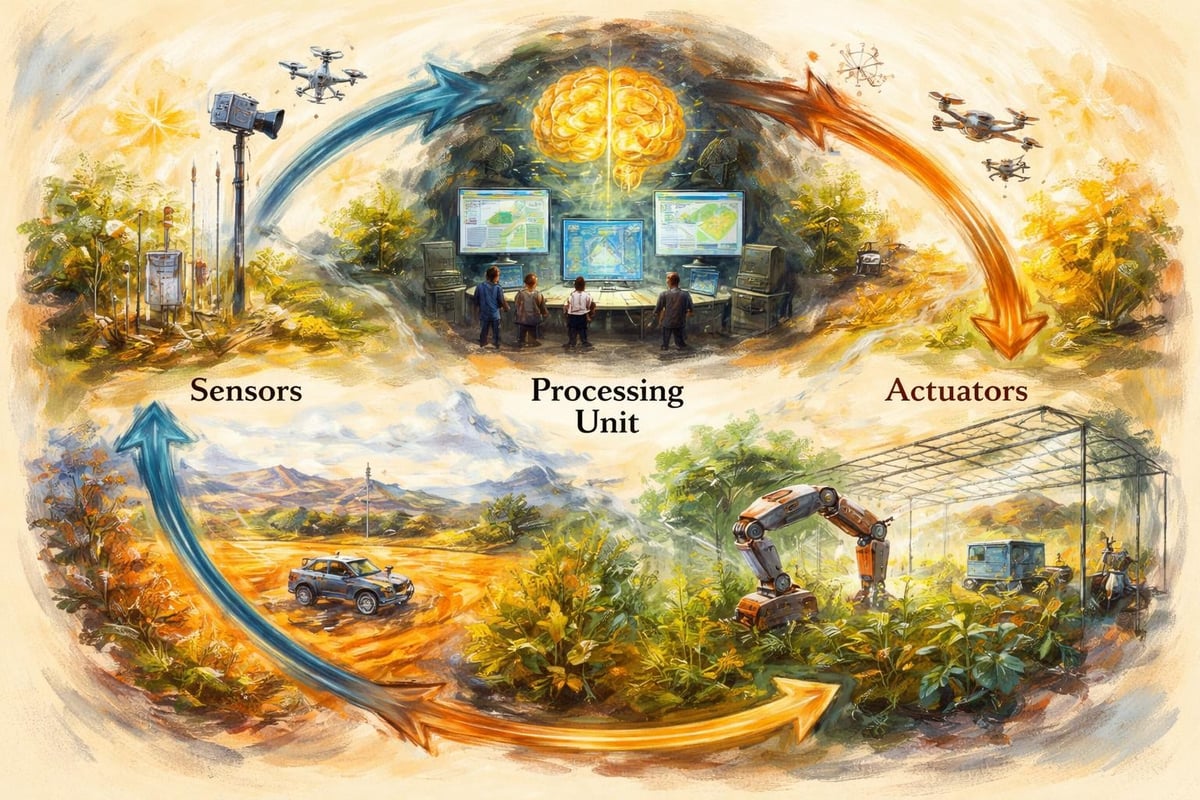
The architecture of agent models typically consists of three primary components. First, sensors gather information from the environment. Second, processing units analyse data and determine appropriate responses. Third, actuators execute decisions in the real world. This structure enables agents to function independently while pursuing predetermined objectives.
Types of Agent Models in Modern AI Systems
Different agent models serve distinct purposes across various applications. Understanding these categories helps organisations select appropriate frameworks for specific use cases.
- Simple reflex agents respond to current perceptions without maintaining historical context
- Model-based reflex agents maintain internal states to track environmental changes
- Goal-based agents evaluate actions against desired outcomes
- Utility-based agents optimise decisions using preference functions
- Learning agents adapt behaviour through experience and feedback
According to research from 2025, approximately 67% of enterprises now deploy at least one form of agent-based system. This statistic demonstrates the widespread adoption of agent models across industries. IBM's analysis of AI agents reveals that model-based approaches show 43% higher performance in dynamic environments compared to simple reflex systems.
| Agent Type | Key Characteristic | Best Use Case | Complexity Level |
|---|---|---|---|
| Simple Reflex | Immediate response | Basic automation | Low |
| Model-based | State tracking | Dynamic environments | Medium |
| Goal-based | Objective pursuit | Strategic tasks | High |
| Utility-based | Optimisation | Resource allocation | Very High |
| Learning | Adaptive behaviour | Evolving systems | Maximum |
The Belief-Desire-Intention Framework
The Belief-Desire-Intention software model represents one of the most influential frameworks for programming intelligent agents. This approach models agent behaviour through three interconnected components. Beliefs represent the agent's understanding of the environment. Desires define the agent's objectives and goals. Intentions specify committed plans for achieving those objectives.
BDI agent models excel in scenarios requiring deliberative reasoning. These systems process information systematically to make informed decisions. The framework enables agents to maintain consistency between their understanding of the world and their planned actions.
Implementing BDI Agent Models Step-by-Step
Organisations looking to implement BDI frameworks should follow a structured approach.
- Define the belief structure that represents environmental knowledge
- Establish desire sets that articulate agent goals and objectives
- Create intention stacks that outline committed action plans
- Implement reasoning cycles that update beliefs based on perceptions
- Design plan libraries containing pre-defined action sequences
- Build plan selection mechanisms that choose appropriate responses
- Integrate execution monitoring to track plan progress
- Establish replanning triggers for handling unexpected situations
Research from early 2026 indicates that properly implemented BDI systems achieve 78% accuracy in complex decision-making scenarios. This performance level significantly exceeds traditional rule-based approaches. Synap AI's consulting services help Australian businesses navigate the complexities of BDI implementation through tailored guidance and platform development.
Agent-Based Models in Complex System Simulation
Agent-based models provide powerful tools for simulating complex systems where multiple autonomous entities interact. These computational models enable researchers and practitioners to understand emergent behaviours that arise from individual agent actions. The methodology proves particularly valuable for scenarios where traditional equation-based models fall short.
Each agent in these systems operates according to defined rules and behavioural patterns. The collective interactions produce system-level outcomes that may not be predictable from individual behaviours alone. This bottom-up approach contrasts with top-down modeling techniques.
Real-World Example: Supply Chain Optimisation
A Melbourne-based manufacturing company partnered with an AI consultant in Melbourne to implement agent models for supply chain optimisation. The project deployed 150 autonomous agents representing different supply chain components.
- Supplier agents monitored inventory levels and production capacity
- Logistics agents optimised routing and delivery schedules
- Warehouse agents managed storage allocation and retrieval
- Demand forecasting agents predicted customer requirements
- Coordination agents resolved conflicts between competing objectives
The implementation reduced supply chain costs by 34% within six months. Order fulfillment accuracy improved from 82% to 96%. Lead times decreased by an average of 2.3 days across all product categories. These results demonstrate the practical value of agent models in complex operational environments.

| Metric | Before Implementation | After Implementation | Improvement |
|---|---|---|---|
| Cost Reduction | Baseline | -34% | 34% decrease |
| Fulfillment Accuracy | 82% | 96% | 14% increase |
| Average Lead Time | 7.8 days | 5.5 days | 2.3 days faster |
| System Responsiveness | 12 hours | 45 minutes | 94% faster |
Advanced Agent Models Using Large Language Models
The integration of large language models with agent architectures has created unprecedented capabilities. AutoGPT represents a pioneering example of autonomous AI agents that leverage language models to achieve user-specified goals. These systems combine natural language understanding with goal-directed behaviour.
Recent research on interactive agent foundation models proposes multi-task training paradigms for AI agents across various domains. This approach enables agents to generalise across different problem types. The methodology shows promise for creating versatile agent models that adapt to novel situations.
Building LLM-Powered Agent Models
Implementing agent models with large language models requires careful architectural planning.
- Select an appropriate foundation model based on task requirements
- Design prompt engineering templates that guide agent reasoning
- Implement memory systems that maintain context across interactions
- Create tool-use frameworks that enable agents to access external resources
- Establish validation mechanisms that verify agent outputs
- Build feedback loops that enable continuous improvement
- Deploy monitoring systems that track agent performance
- Implement safety guardrails that prevent unintended behaviours
According to industry data from late 2025, LLM-powered agents demonstrate 89% task completion rates for well-defined objectives. This performance represents a 56% improvement over previous generation systems. Synap AI's platform development services specialise in creating custom LLM-powered agent solutions for Australian enterprises.
Evaluation Methods for Agent Models
Assessing agent model performance requires comprehensive evaluation frameworks. Current research on LLM agent architectures emphasises the importance of standardised evaluation methods. These approaches measure both task performance and behavioural qualities.
Quantitative metrics focus on measurable outcomes. Task completion rates indicate how often agents achieve stated objectives. Response accuracy measures the correctness of agent actions. Efficiency metrics evaluate resource utilisation and processing time. Scalability assessments examine performance under increasing load.
Step-by-Step Agent Model Evaluation Process
- Define clear evaluation objectives aligned with business requirements
- Establish baseline performance metrics from existing systems
- Create test scenarios that represent real-world conditions
- Deploy agents in controlled environments with monitoring
- Collect performance data across multiple operational cycles
- Analyse results against predetermined success criteria
- Identify performance bottlenecks and improvement opportunities
- Iterate on agent design based on evaluation findings
- Conduct comparative analyses against alternative approaches
- Document results and recommendations for stakeholders
Statistics from Q1 2026 show that organisations using structured evaluation frameworks achieve 41% better agent model performance. These businesses also report 63% fewer deployment issues. Oracle's overview of AI agents provides additional context on evaluation best practices.
| Evaluation Dimension | Primary Metrics | Target Threshold | Measurement Frequency |
|---|---|---|---|
| Task Performance | Completion rate, Accuracy | >90% | Daily |
| Efficiency | Processing time, Resource use | <2s, <50% CPU | Hourly |
| Reliability | Uptime, Error rate | >99.5%, <0.5% | Continuous |
| Adaptability | Learning rate, Generalisation | >15% improvement/week | Weekly |
Challenges and Limitations of Current Agent Models
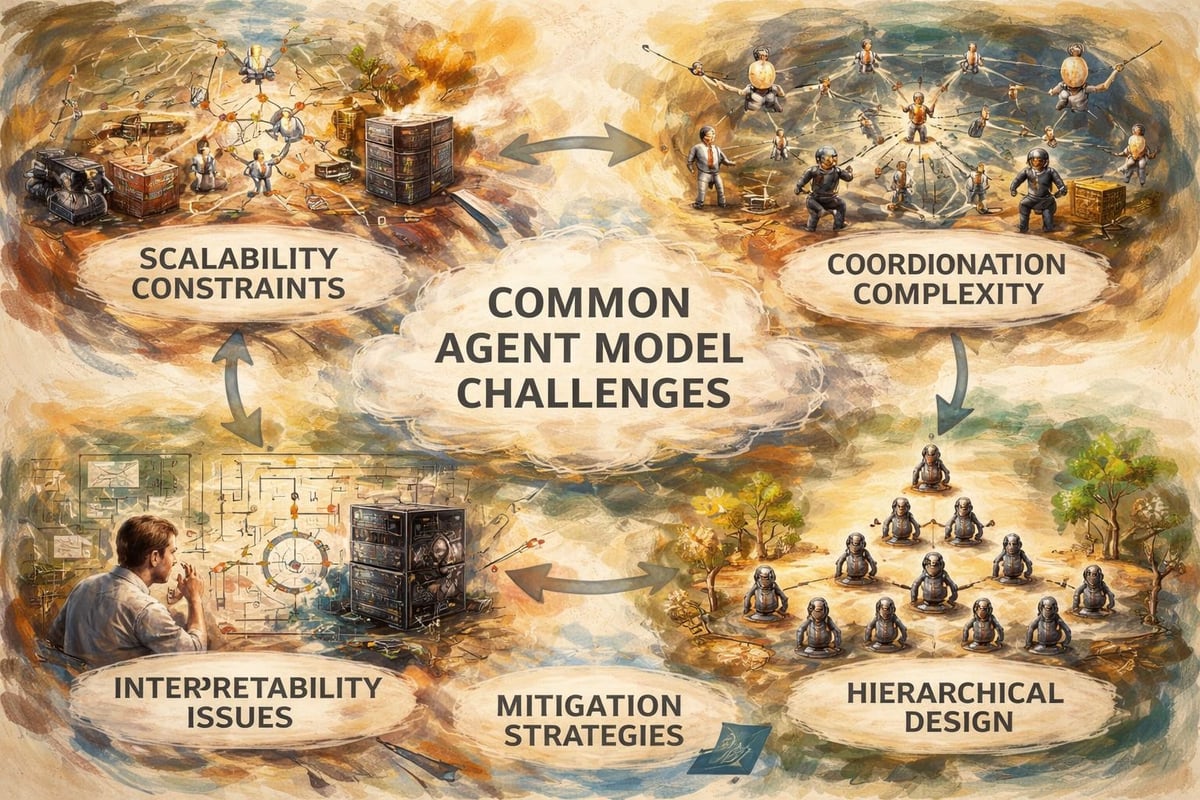
Despite significant advances, agent models face several fundamental challenges. Critical examination of the agent paradigm questions certain limitations in current frameworks. These constraints impact deployment success and long-term viability.
Scalability remains a persistent issue for complex agent systems. As the number of agents increases, coordination complexity grows exponentially. Systems with 1,000 agents may experience 2,300% more coordination overhead compared to 100-agent deployments. This scaling challenge limits practical applications in large-scale environments.
Interpretability presents another significant hurdle. Understanding why agents make specific decisions becomes increasingly difficult as model complexity increases. Black-box behaviour undermines trust and complicates debugging efforts. Organisations require transparent decision-making processes for regulatory compliance and operational confidence.
Addressing Agent Model Limitations
Practical strategies exist for mitigating common agent model challenges.
- Implement hierarchical structures that reduce coordination complexity
- Use modular architectures that isolate agent functionalities
- Deploy explanation frameworks that document decision rationale
- Establish human-in-the-loop mechanisms for critical decisions
- Create testing environments that simulate edge cases
- Build fallback procedures that handle unexpected situations
- Monitor agent behaviour continuously for anomalies
- Update agent models regularly based on performance data
A readiness assessment helps organisations identify potential implementation challenges before deploying agent models. This proactive approach reduces risk and improves deployment success rates.
Industry Applications and Use Cases
Agent models deliver value across diverse industry sectors. Healthcare organisations deploy diagnostic agents that analyse patient data and recommend treatment protocols. Financial institutions use trading agents that execute transactions based on market conditions. Manufacturing facilities implement production agents that optimise workflow and resource allocation.
Australian retailers particularly benefit from customer service agents powered by sophisticated frameworks. These systems handle inquiries, process requests, and resolve issues autonomously. A Sydney-based retailer working with an AI consultant in Sydney implemented conversational agents that reduced support costs by 48% while improving customer satisfaction scores by 27%.
Case Study: Automated Content Moderation
A social media platform serving Australian users deployed agent models for content moderation. The system processed 2.4 million posts daily using multiple specialised agents.
- Detection agents identified potentially problematic content
- Classification agents categorised content by violation type
- Context analysis agents evaluated nuanced situations
- Decision agents determined appropriate moderation actions
- Escalation agents flagged complex cases for human review
- Learning agents updated detection models based on outcomes
The implementation achieved 94% accuracy in content classification. False positive rates dropped from 12% to 3.2%. Response times improved from 6 hours to 4 minutes for standard violations. Human moderators focused exclusively on complex edge cases requiring nuanced judgment.
| Performance Indicator | Before Agents | After Agents | Change |
|---|---|---|---|
| Daily Processing Volume | 800K posts | 2.4M posts | +200% |
| Classification Accuracy | 81% | 94% | +13% |
| False Positive Rate | 12% | 3.2% | -73% |
| Average Response Time | 6 hours | 4 minutes | -98% |
Future Directions for Agent Models
The trajectory of agent model development points toward increasingly sophisticated and capable systems. Emerging research focuses on multi-agent collaboration frameworks that enable seamless coordination between diverse agent types. These approaches promise to unlock new capabilities for solving complex problems.
Integration with edge computing architectures enables agent models to operate with reduced latency and improved privacy. Local processing capabilities allow agents to function without constant cloud connectivity. This development proves particularly valuable for time-sensitive applications and environments with limited connectivity.
Industry forecasts predict that the global market for agent-based AI systems will reach $47 billion by 2028. This represents compound annual growth of 38% from 2026 levels. Australian organisations investing in agent model capabilities position themselves advantageously for this expanding market.
Preparing for Next-Generation Agent Systems
Organisations should take proactive steps to capitalise on emerging agent model capabilities.
- Assess current infrastructure readiness for agent deployment
- Identify high-value use cases that benefit from autonomous agents
- Develop internal expertise through training and knowledge transfer
- Establish partnerships with experienced AI consultants
- Create pilot programmes that test agent models in controlled environments
- Build data foundations that support agent learning and adaptation
- Design governance frameworks that ensure responsible agent deployment
- Plan scalability pathways for expanding agent implementations
For businesses seeking expert guidance on agent model implementation, booking an online consultation with AI technologists provides personalised insights and strategic recommendations. Professional consultation helps organisations navigate technical complexities and avoid common pitfalls.
Agent models represent transformative technology that enables autonomous AI systems to operate effectively across diverse applications. From simple reflex agents to sophisticated LLM-powered frameworks, these systems deliver measurable business value through improved efficiency, reduced costs, and enhanced decision-making capabilities. As Australian businesses embrace digital transformation in 2026, understanding and implementing agent models becomes increasingly critical for maintaining competitive advantage. Synap AI specialises in helping organisations design, develop, and deploy custom agent-based solutions tailored to specific operational requirements, combining deep technical expertise with practical industry knowledge to deliver results that matter.