
Artificial intelligence has evolved from experimental technology to essential business infrastructure. The top AI solutions in 2026 deliver measurable outcomes across industries. Australian businesses now face critical decisions about which AI technologies merit investment and how to implement them effectively. According to recent industry surveys, AI was identified as the top technology priority for 2024 by technical leaders worldwide, a trend that continues to accelerate through 2026.
Understanding the Top AI Platforms Reshaping Business Operations
The landscape of top AI solutions has consolidated around proven platforms. These systems deliver specific business outcomes rather than theoretical capabilities. Organizations require practical tools that integrate with existing workflows.
Enterprise Language Models and Generative Systems
Generative artificial intelligence has matured beyond content creation into strategic business applications. The top AI language models now power customer service, document analysis, and knowledge management systems. These platforms process unstructured data at scales previously impossible.
Modern generative AI handles complex tasks with minimal human intervention. Financial services firms use these systems for regulatory compliance documentation. Manufacturing companies deploy them for technical specification generation. The healthcare sector applies them to patient communication workflows.
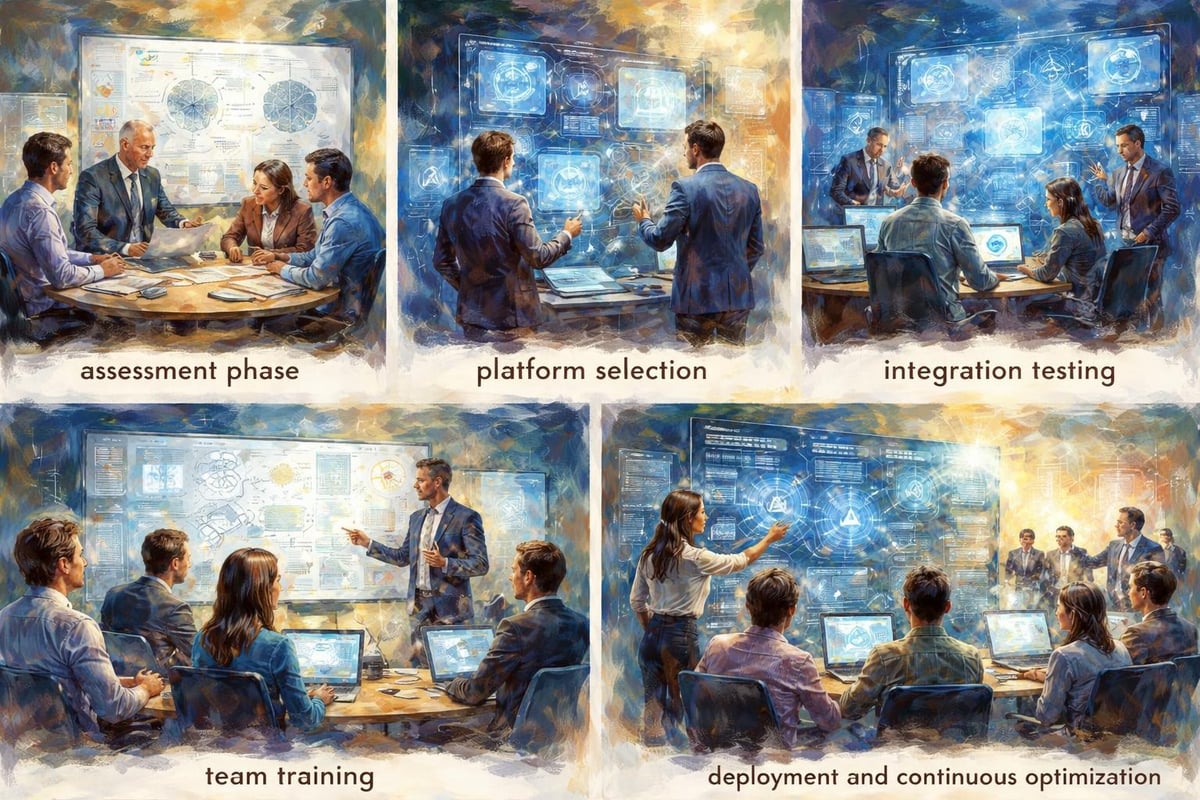
Implementation requires structured approaches:
- Define specific use cases with measurable outcomes
- Select platforms based on data privacy requirements
- Establish governance frameworks before deployment
- Train teams on prompt engineering fundamentals
- Monitor performance metrics continuously
- Iterate based on user feedback patterns
- Scale gradually across departments
Australian businesses benefit from consulting expertise during this process. Synap AI's consulting services help organizations navigate platform selection and deployment strategies tailored to local market conditions.
Machine Learning Operations and Automated Decision Systems
The top AI technologies in 2026 emphasize operational efficiency. MLOps platforms automate model training, deployment, and monitoring. These systems reduce the technical expertise required for AI adoption.
Automated decision engines now handle routine business processes. Credit assessment, inventory optimization, and workforce scheduling operate autonomously. These systems learn from outcomes and improve continuously.
| AI Application Area | Average Efficiency Gain | Implementation Timeline | ROI Achievement Period |
|---|---|---|---|
| Customer Service | 47% cost reduction | 8-12 weeks | 4-6 months |
| Document Processing | 63% faster processing | 6-10 weeks | 3-5 months |
| Predictive Maintenance | 41% downtime reduction | 12-16 weeks | 6-9 months |
| Supply Chain Optimization | 34% cost savings | 14-18 weeks | 8-12 months |
Real-world implementation demonstrates these metrics. A Melbourne-based logistics firm deployed automated routing systems in September 2025. The company achieved 38% fuel cost reduction within five months. Driver satisfaction improved through optimized schedules. Customer delivery windows became more accurate.
Computer Vision and Visual Intelligence Platforms
Visual AI systems represent another category within top AI technologies. These platforms analyze images, videos, and live camera feeds. Manufacturing quality control, retail analytics, and security applications dominate deployment patterns.
The top AI computer vision systems process visual data in real-time. Defect detection occurs at production speeds. Customer behavior analytics operate across multiple retail locations simultaneously. Security systems identify anomalies without human monitoring.
Implementation follows structured pathways:
- Audit existing camera infrastructure and data sources
- Identify specific visual analysis requirements
- Select platforms compatible with hardware specifications
- Conduct pilot testing in controlled environments
- Establish accuracy benchmarks and acceptance criteria
- Deploy across production environments systematically
- Integrate outputs with existing business intelligence systems
Evaluating Top AI Companies and Their Market Positions
The competitive landscape reveals which organizations drive innovation. Several companies lead AI development and commercialization globally. Understanding their strengths helps businesses select appropriate technologies.
Technology Giants and Platform Providers
Major technology companies dominate the top AI provider rankings. These organizations offer comprehensive platforms with extensive support ecosystems. Their solutions integrate with existing enterprise software stacks.
Research capabilities distinguish leading providers. Google DeepMind advances multimodal AI systems. Their Veo platform generates video content from text descriptions. Microsoft continues developing enterprise AI through Azure services. Amazon Web Services provides accessible machine learning tools.
The United States maintains leadership in AI innovation according to Stanford University rankings. This advantage stems from research investment and responsible development frameworks. Australian businesses access these capabilities through cloud platforms and consulting partnerships.
Specialized AI Solution Providers
Niche providers deliver focused solutions for specific industries. These companies understand vertical market requirements deeply. Their platforms address regulatory compliance, industry workflows, and specialized data types.
Healthcare AI providers focus on diagnostic assistance and patient management. Financial services platforms emphasize risk assessment and fraud detection. Manufacturing solutions prioritize predictive maintenance and quality optimization.
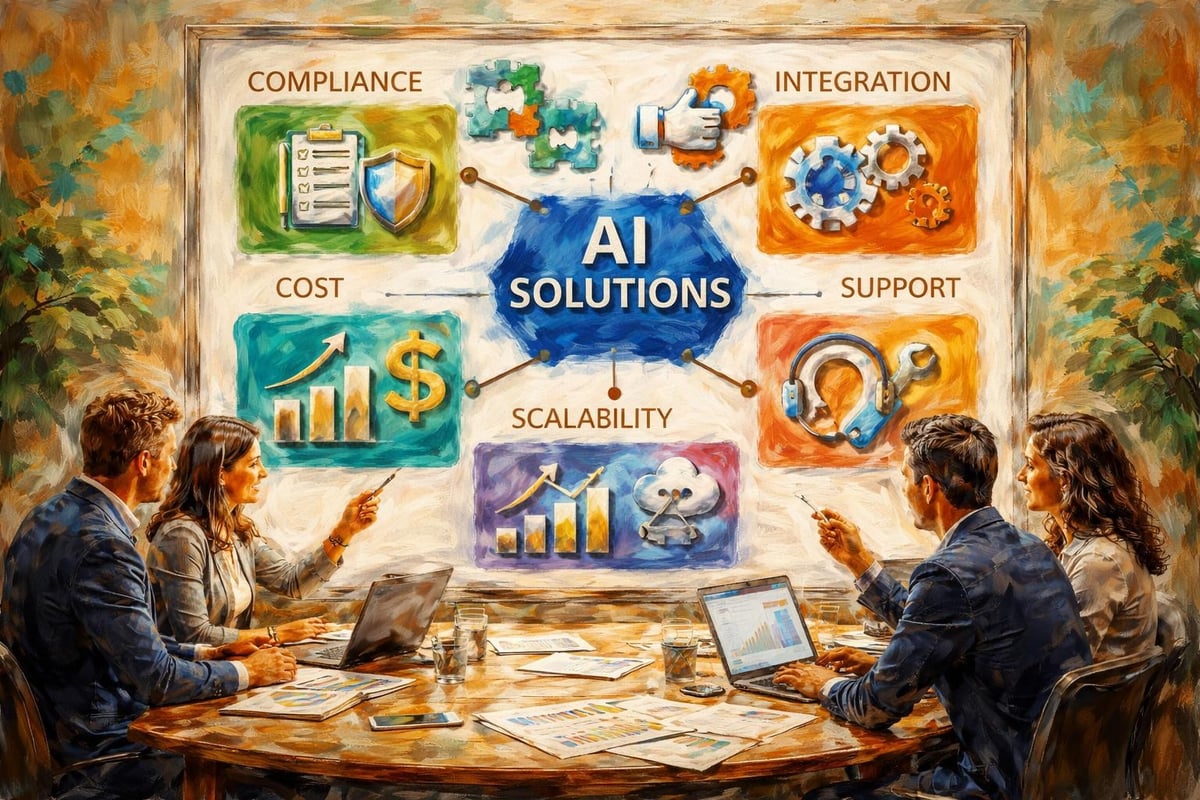
Selection criteria for specialized providers include:
- Industry-specific compliance certifications
- Integration capabilities with legacy systems
- Local data residency options for Australian requirements
- Support availability across time zones
- Training resources for non-technical users
- Customization flexibility for unique workflows
Australian AI Ecosystem and Local Expertise
Domestic AI capabilities have strengthened significantly. Australian firms now deliver world-class AI consulting and development services. Local expertise provides advantages in regulatory navigation and cultural alignment.
AI consultants in Melbourne and Sydney understand local business environments. They navigate privacy legislation, industry standards, and workforce considerations. This knowledge proves critical during implementation phases.
Private AI platforms address data sovereignty concerns. Organizations handling sensitive information require systems operating within Australian jurisdictions. Synap AI develops these solutions specifically for privacy-conscious enterprises.
Implementing Top AI Solutions Through Structured Methodologies
Successful AI adoption requires methodical approaches. Random technology deployment creates technical debt and user frustration. Strategic implementation delivers sustainable business value.
Readiness Assessment and Strategic Planning
Organizations must evaluate their AI readiness before investing. This assessment examines data infrastructure, technical capabilities, and organizational readiness. The process identifies gaps requiring attention.
Assessment components include:
- Data quality evaluation across systems
- Technical infrastructure capacity analysis
- Team skill assessment and gap identification
- Process documentation and workflow mapping
- Stakeholder alignment on objectives
- Budget allocation and ROI expectations
- Risk assessment and mitigation planning
Readiness assessments provide roadmaps for AI adoption. These evaluations prevent costly missteps. They ensure organizations build on solid foundations.
A Sydney manufacturing company completed readiness assessment in January 2026. The process revealed data quality issues requiring resolution. Rather than rushing into AI deployment, they spent eight weeks cleaning historical production data. Subsequent AI implementation achieved target accuracy immediately.
Platform Selection and Integration Design
Choosing appropriate platforms requires matching capabilities to requirements. The top AI solutions excel at specific tasks. No single platform addresses every business need.
| Selection Criterion | Weight Factor | Evaluation Method | Decision Impact |
|---|---|---|---|
| Technical Capability | 30% | Benchmark testing | Platform shortlisting |
| Integration Ease | 25% | Architecture review | Implementation timeline |
| Total Cost | 20% | 3-year TCO analysis | Budget approval |
| Support Quality | 15% | Reference checks | Vendor selection |
| Scalability | 10% | Load testing | Long-term viability |
Integration design determines implementation success. AI systems must exchange data with existing applications. They require authentication, monitoring, and error handling. Poor integration creates information silos.
Deployment and Change Management
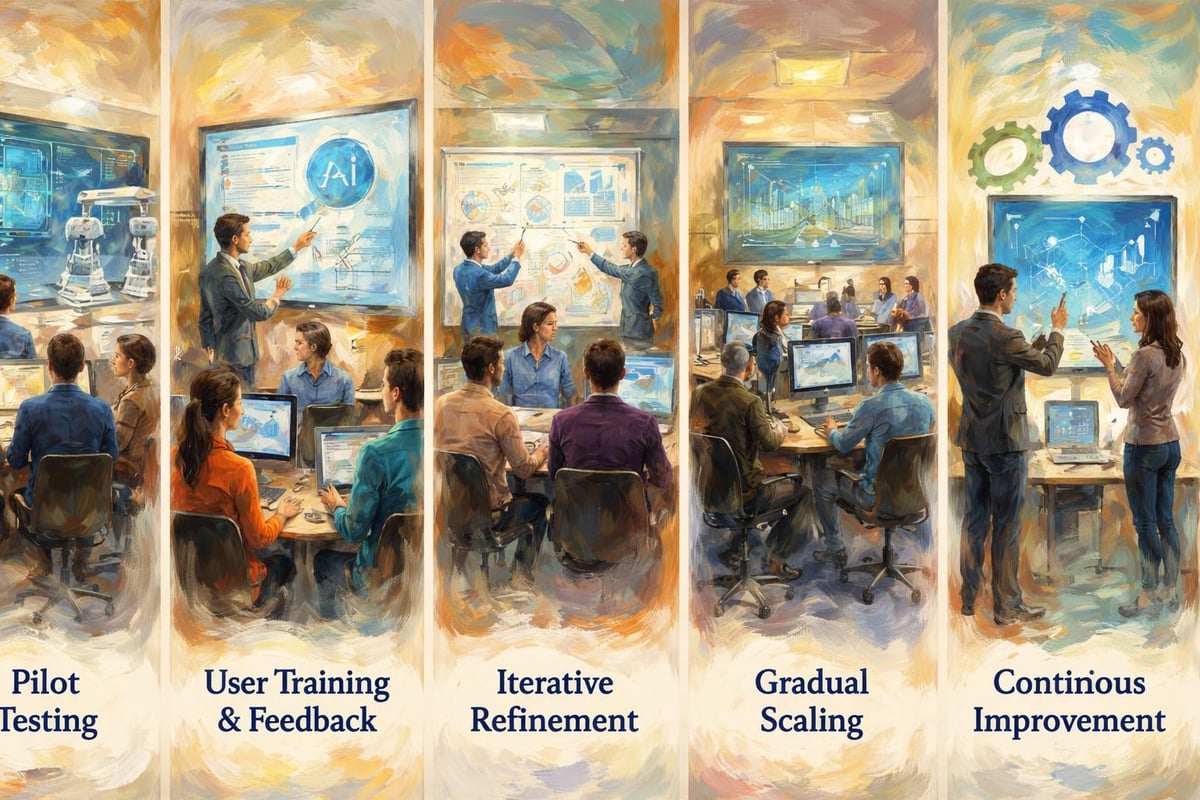
Deployment methodologies balance speed with stability. Phased rollouts reduce risk. They allow learning before full-scale implementation.
Step-by-step deployment process:
- Configure platform in isolated environment
- Load representative data samples
- Conduct functional testing against requirements
- Perform user acceptance testing with stakeholders
- Train initial user groups on system operations
- Deploy to pilot department or location
- Monitor performance and gather feedback
- Address issues and optimize configurations
- Expand to additional departments systematically
- Establish ongoing monitoring and improvement processes
Change management determines user adoption. Technical excellence means nothing if users resist new systems. Communication, training, and support create acceptance.
Leveraging Top AI for Specific Business Functions
Different departments benefit from specialized AI applications. The top AI technologies for marketing differ from manufacturing or finance requirements. Function-specific implementation delivers optimal results.
Customer Experience and Communication Automation
Customer-facing AI transforms service delivery. Chatbots, voice assistants, and AI phone receptionists handle routine inquiries. These systems operate continuously without staffing constraints.
Advanced systems understand context and sentiment. They escalate complex issues to human agents appropriately. Customer satisfaction improves through faster resolution times. Staff focus on high-value interactions requiring human judgment.
Implementation yields immediate benefits. A Perth professional services firm deployed AI phone reception in November 2025. Call handling capacity increased 340%. After-hours inquiries received immediate responses. Human staff handled 60% fewer routine calls.
Content Creation and Marketing Operations
AI content machines streamline marketing workflows. These systems generate blog posts, social media content, and product descriptions. They maintain brand voice while accelerating production.
The top AI content platforms integrate with marketing automation systems. They analyze performance data and optimize future content. SEO optimization occurs automatically based on keyword research and competitor analysis.
Marketing teams maintain creative control. AI handles first drafts and routine content. Humans refine messaging and strategic positioning. This division maximizes both efficiency and quality.
Operations and Process Automation
Operational AI addresses repetitive tasks consuming staff time. Document processing, data entry, and report generation operate autonomously. Error rates decrease while processing speeds increase.
Automation platforms connect multiple business systems. They orchestrate workflows across departments. Invoice processing triggers payment scheduling. Customer orders initiate inventory allocation. These connections eliminate manual handoffs.
Financial services represent prime automation opportunities. A Brisbane accounting firm automated client onboarding in March 2026. The process previously required 4.5 hours of staff time. Automation reduced this to 20 minutes of review time. Client experience improved through faster service delivery.
Navigating Privacy and Governance for Top AI Implementations
Australian businesses operate under strict privacy regulations. The top AI deployments incorporate privacy by design. Compliance cannot be an afterthought.
Data Protection and Sovereign AI Solutions
Data sovereignty concerns shape platform selection. Organizations handling Australian personal information require local data processing. International cloud platforms may not satisfy regulatory requirements.
Private AI platforms keep data within organizational boundaries. These systems operate on-premises or in Australian data centers. They provide AI capabilities without external data transmission.
Governance frameworks establish acceptable use policies:
- Define data classification and handling requirements
- Establish access controls and authentication protocols
- Implement audit logging for AI system interactions
- Create approval processes for new AI applications
- Develop incident response procedures
- Establish regular compliance review schedules
- Document AI decision-making processes for transparency
Ethical AI and Responsible Implementation
The top AI implementations consider ethical implications. Bias detection, fairness monitoring, and transparency mechanisms build trust. These elements become competitive advantages.
Organizations document AI decision logic. They explain outcomes to affected parties. This transparency satisfies regulatory expectations. It builds customer confidence in automated systems.
Apple Intelligence demonstrates consumer expectations for AI transparency. Their Siri overhaul emphasizes explainable AI responses. Users understand how systems reach conclusions. This approach sets standards across industries.
Measuring Success and Optimizing Top AI Investments
Deployment marks the beginning rather than end of AI journeys. Continuous monitoring and optimization extract maximum value. Measurement frameworks demonstrate ROI and guide improvements.
Performance Metrics and Business Outcomes
Effective measurement tracks business outcomes rather than technical metrics. Processing speed matters less than customer satisfaction scores. Model accuracy supports quality improvements and cost reductions.
Key performance indicators vary by application:
- Customer service: Resolution time, satisfaction scores, containment rates
- Content generation: Production volume, quality ratings, engagement metrics
- Predictive maintenance: Downtime reduction, cost savings, prediction accuracy
- Fraud detection: False positive rates, losses prevented, processing speed
- Demand forecasting: Inventory optimization, stockout reduction, carrying cost savings
Regular reporting maintains stakeholder alignment. Monthly reviews track progress against objectives. Quarterly assessments evaluate strategic impact. Annual analyses inform technology roadmap updates.
Continuous Improvement and Capability Expansion
The top AI systems improve through feedback loops. User interactions generate training data. Model retraining incorporates new patterns. Performance increases over time.
Organizations expand AI capabilities systematically. Initial deployments prove concepts and build expertise. Success creates momentum for broader adoption. Teams develop AI literacy through hands-on experience.
A Hobart retail chain demonstrates this progression. They began with inventory forecasting in July 2025. Success led to customer behavior analysis deployment in October. March 2026 brought personalized marketing automation. Each phase built on previous learnings.
Real-World Applications Across Australian Industries
Industry-specific examples demonstrate top AI value creation. These implementations address unique sector challenges. They provide blueprints for similar organizations.
Manufacturing and Production Optimization
Manufacturers deploy AI for quality control and predictive maintenance. Computer vision systems inspect products at production speeds. They identify defects invisible to human inspection.
Predictive maintenance prevents equipment failures. Sensors monitor machine conditions continuously. AI algorithms detect patterns indicating impending failures. Maintenance occurs during scheduled downtime rather than emergency breakdowns.
A Victorian automotive supplier implemented predictive maintenance in December 2025. Equipment downtime decreased 43% within three months. Maintenance costs fell 28% through optimized scheduling. Production efficiency improved measurably.
Professional Services and Knowledge Work
Professional services firms leverage AI for research and document analysis. Legal technology platforms review contracts identifying key clauses and risks. Accounting systems automate compliance checking and anomaly detection.
Knowledge management systems make expertise accessible. They answer employee questions using organizational documentation. New staff ramp up faster. Experienced professionals focus on complex challenges.
Healthcare and Patient Services
Healthcare providers deploy AI for administrative efficiency and clinical support. Appointment scheduling, insurance verification, and medical record summarization operate autonomously. Clinical staff focus on patient care.
Diagnostic assistance systems analyze medical imaging and pathology results. They highlight areas requiring physician attention. Decision support tools suggest treatment options based on patient history and research literature.
Project Bellwether represents AI application to public health challenges. This initiative applies AI to Earth observation data for natural disaster forecasting. Similar approaches benefit Australian healthcare preparedness.
Selecting the Right Partner for Top AI Implementation
Organizations rarely possess all necessary AI expertise internally. Partnerships with experienced consultants accelerate implementation. They reduce risk through proven methodologies.
Evaluation Criteria for AI Consultants
Effective consultants combine technical expertise with business understanding. They translate requirements into solutions. They guide organizations through complex decisions.
Selection considerations include:
- Demonstrated experience in relevant industries
- Technical certifications and platform partnerships
- Implementation methodology transparency
- Local presence and Australian market knowledge
- Client references from similar organizations
- Data security and privacy practices
- Ongoing support and optimization services
Australian consulting firms understand local regulatory environments. They navigate privacy legislation and industry standards. This knowledge proves invaluable during implementation.
Collaborative Implementation Models
Successful partnerships balance external expertise with internal capability development. Consultants provide specialized knowledge. Internal teams learn through collaboration. Organizations build sustainable AI capabilities.
Engagement models vary by organizational needs. Some projects require comprehensive platform development. Others need strategic guidance and team training. Flexible approaches accommodate different situations.
If you're exploring top AI opportunities for your business, consulting experts provide clarity on implementation pathways. An initial consultation identifies specific opportunities and potential challenges. You can book an online consultation with our AI technologist to discuss your unique requirements and develop a strategic roadmap.
The top AI technologies in 2026 deliver measurable business outcomes when implemented strategically. Success requires careful platform selection, structured deployment, and continuous optimization. Australian organizations benefit from local expertise understanding regional regulatory and market conditions. Synap AI provides private AI consulting and platform development services from our Mornington Victoria office, helping businesses transform operations through practical AI implementation tailored to Australian requirements.