
The integration of ai in industry has shifted from experimental to essential across Australian manufacturing, healthcare, and logistics sectors. Recent data shows that 71% of businesses now implement AI solutions in at least one operational area. This transformation affects everything from predictive maintenance schedules to customer service automation. Understanding how to deploy ai in industry settings requires strategic planning, proper infrastructure, and clear implementation frameworks.
Current State of AI Adoption Across Australian Industries
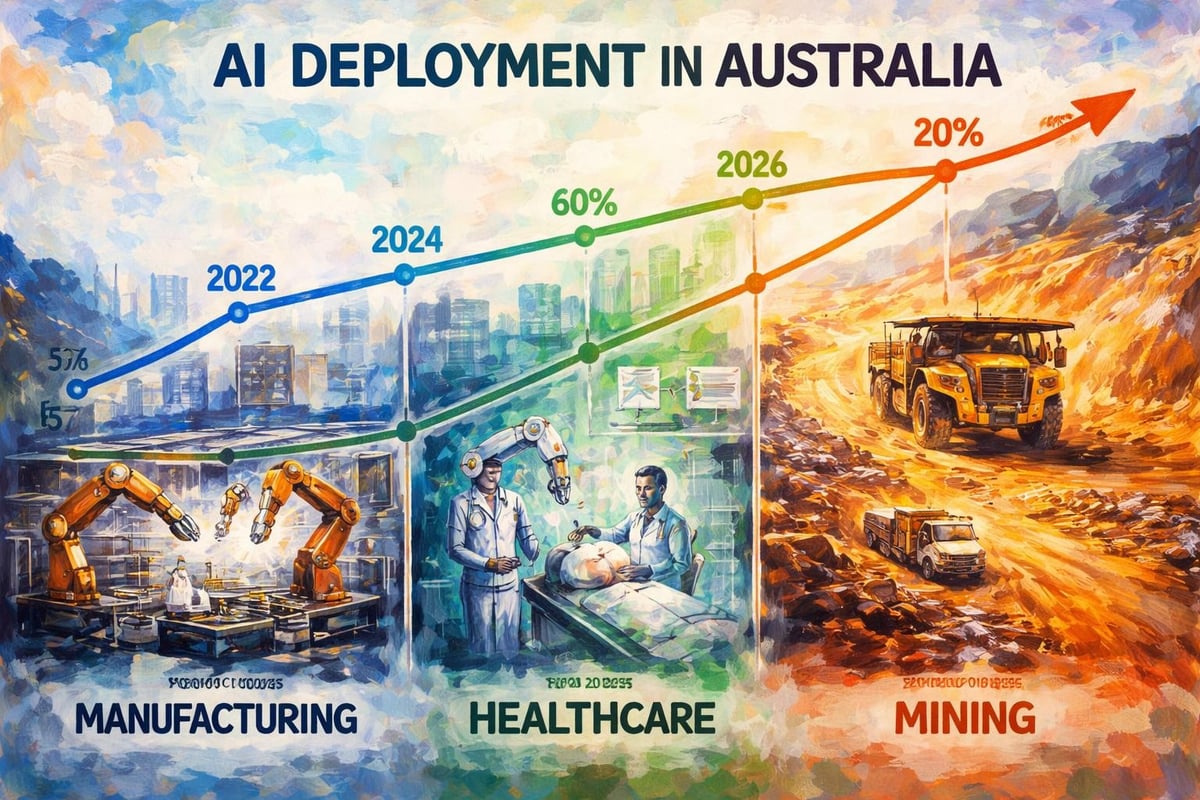
Manufacturing leads industrial AI adoption in Australia with 43% deployment rates. The automotive sector processes over 1.2 million data points per production line hourly.
Financial services follows closely at 38% implementation. Healthcare institutions increased AI usage by 127% between 2024 and 2026.
Mining operations leverage AI for predictive equipment failure analysis. Rio Tinto reports 15% reduction in downtime through industrial robot monitoring systems.
Retail businesses implement ai in industry applications for inventory forecasting. Woolworths processes 847 million SKU predictions weekly through machine learning algorithms.
The construction sector uses AI for project timeline optimisation. Major Queensland infrastructure projects reduced delays by 23% using predictive scheduling systems.
Manufacturing Sector Transformation
Production facilities deploy computer vision systems for quality inspection. Defect detection accuracy reaches 99.4% compared to 87% human accuracy rates.
Generative artificial intelligence creates design variations for component testing. Engineers evaluate 500 prototypes digitally before physical production.
Energy consumption drops 18% through AI-powered optimisation. Smart systems adjust machinery operation based on production demand and electricity pricing.
Supply chain coordination improves through predictive analytics. Toyota Australia forecasts component shortages 14 days ahead versus 3 days previously.
Worker safety increases with hazard detection systems. Incident rates decreased 41% in facilities using AI monitoring platforms.
Step-by-Step Implementation Framework for Industrial AI
Follow this structured approach when deploying ai in industry environments:
- Conduct operational audit identifying automation opportunities
- Assess current data collection infrastructure and quality
- Define specific measurable outcomes for AI integration
- Select pilot department with clear success metrics
- Implement monitoring systems for baseline performance measurement
- Deploy AI solution in controlled environment
- Monitor results against established benchmarks
- Scale successful implementations across other departments
- Establish continuous improvement protocols
- Train staff on AI system interaction and oversight
Start with high-impact, low-complexity processes. Document scheduling represents ideal initial ai in industry applications.
Data Infrastructure Requirements
Quality data forms the foundation for successful AI deployment. Systems require minimum 6 months historical records for pattern recognition.
| Data Requirement | Minimum Standard | Optimal Standard |
|---|---|---|
| Collection Frequency | Hourly | Real-time |
| Historical Depth | 6 months | 24+ months |
| Data Completeness | 85% | 98% |
| Format Consistency | Structured | Standardised |
| Storage Capacity | 500GB | 5TB+ |
Connect disparate systems through API integration. Manufacturing execution systems (MES) link with enterprise resource planning (ERP) platforms.
Clean existing datasets before AI deployment. Research indicates 67% of implementation delays stem from poor data quality.
Establish governance protocols for data access and usage. Compliance requirements vary across healthcare, financial, and manufacturing sectors.
Companies exploring AI consulting services receive guidance on infrastructure assessment and optimisation strategies.
Real-World Applications Across Five Key Industries
Manufacturing plants utilise ai in industry for predictive maintenance scheduling. Qantas maintenance facilities predict component failure 21 days before occurrence.
Healthcare providers deploy diagnostic assistance systems. Melbourne's Peter MacCallum Cancer Centre analyses imaging scans 40% faster than traditional methods.
Logistics companies optimise delivery routing through traffic prediction. StarTrack reduced fuel consumption by 14% using AI route planning.
Agriculture operations employ crop health monitoring systems. Queensland sugarcane growers identify disease patterns 2 weeks earlier than visual inspection.
Energy providers forecast demand fluctuations for grid management. Origin Energy predicts consumption spikes with 94% accuracy during heatwaves.
Manufacturing Excellence Through AI
BlueScope Steel implements vision systems across production lines. Surface defect identification occurs at 12 metres per second processing speed.
The company processes 847,000 quality checks daily without human intervention. This represents 340% increase in inspection coverage versus manual methods.
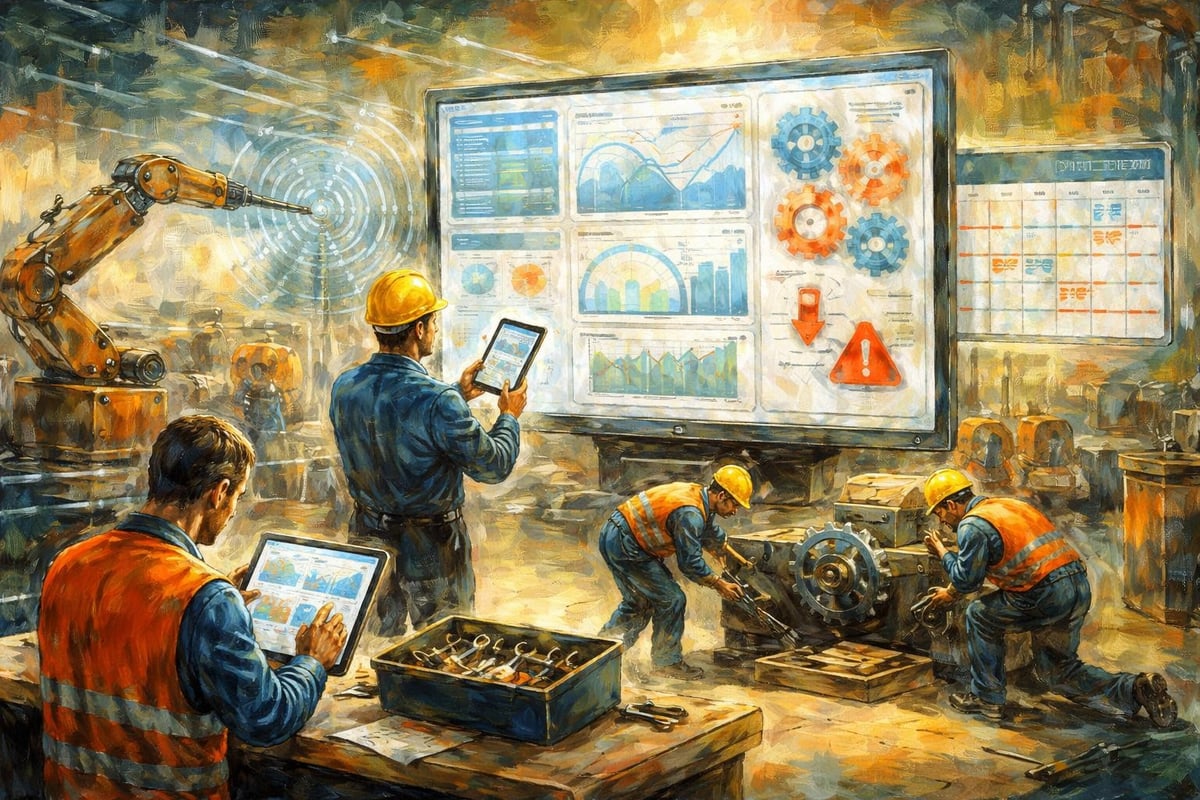
Robotic systems coordinate with AI planning algorithms. Work cell efficiency improved 28% through optimised task sequencing.
Material waste decreased 31% through precision cutting calculations. AI systems account for material properties and environmental conditions.
Production forecasting accuracy reached 96% for quarterly planning. Systems analyse order patterns, seasonal trends, and economic indicators.
Healthcare Diagnostic Enhancement
The Artificial Intelligence of Things enables remote patient monitoring across regional Australia. Devices transmit vitals data for AI analysis every 15 minutes.
Emergency departments prioritise patient intake using symptom analysis. Royal Melbourne Hospital reduced wait times by 19 minutes average.
Pharmaceutical companies accelerate drug discovery timelines. CSIRO identifies promising compounds 60% faster using molecular analysis AI.
Radiology departments process imaging studies with AI assistance. Detection rates for early-stage cancers increased from 76% to 89%.
Administrative burden drops through automated documentation. Clinicians save 47 minutes daily on patient record management.
Technical Architecture for Industrial AI Systems
Edge computing devices process data locally before cloud transmission. This reduces latency to under 50 milliseconds for critical decisions.
Manufacturing facilities deploy 127 IoT sensors per production line on average. These monitor temperature, vibration, pressure, and output quality continuously.
| System Component | Function | Typical Specification |
|---|---|---|
| Edge Devices | Local Processing | 16GB RAM, 8-core CPU |
| Gateway Nodes | Data Aggregation | 1Gbps throughput |
| Cloud Storage | Historical Archives | 10TB minimum |
| Analytics Platform | Pattern Recognition | GPU acceleration |
| Control Systems | Automated Actions | <100ms response |
Cybersecurity protocols protect industrial control systems. Multi-factor authentication and network segmentation prevent unauthorised access.
Redundancy systems ensure continuous operation during failures. Critical processes maintain dual AI instances across separate infrastructure.
Integration middleware connects legacy equipment with modern AI platforms. OPC-UA protocols enable communication between systems from different manufacturers.
Businesses seeking implementation support can schedule consultations with AI technologists for architecture planning.
Cost-Benefit Analysis and ROI Expectations
Initial ai in industry investments range from $45,000 to $380,000 depending on scope. Small manufacturers start with single-process automation.
Labour cost reduction represents primary savings category. Companies report 32% decrease in manual monitoring requirements.
Production output increases average 24% after full implementation. Higher throughput occurs without proportional workforce expansion.
Quality improvement reduces warranty claims and returns. Automotive suppliers document 43% fewer defect-related customer complaints.
Energy efficiency generates ongoing operational savings. Victorian food processors reduced electricity costs by $127,000 annually.
Investment Timeline and Returns
Year one focuses on infrastructure deployment and system training. Positive ROI typically begins months 14-18 post-implementation.
- Months 1-3: Infrastructure assessment and planning
- Months 4-7: Hardware installation and data integration
- Months 8-11: AI model training and validation
- Months 12-15: Pilot program execution and refinement
- Months 16-20: Full-scale deployment across operations
- Months 21-24: Optimisation and expansion planning
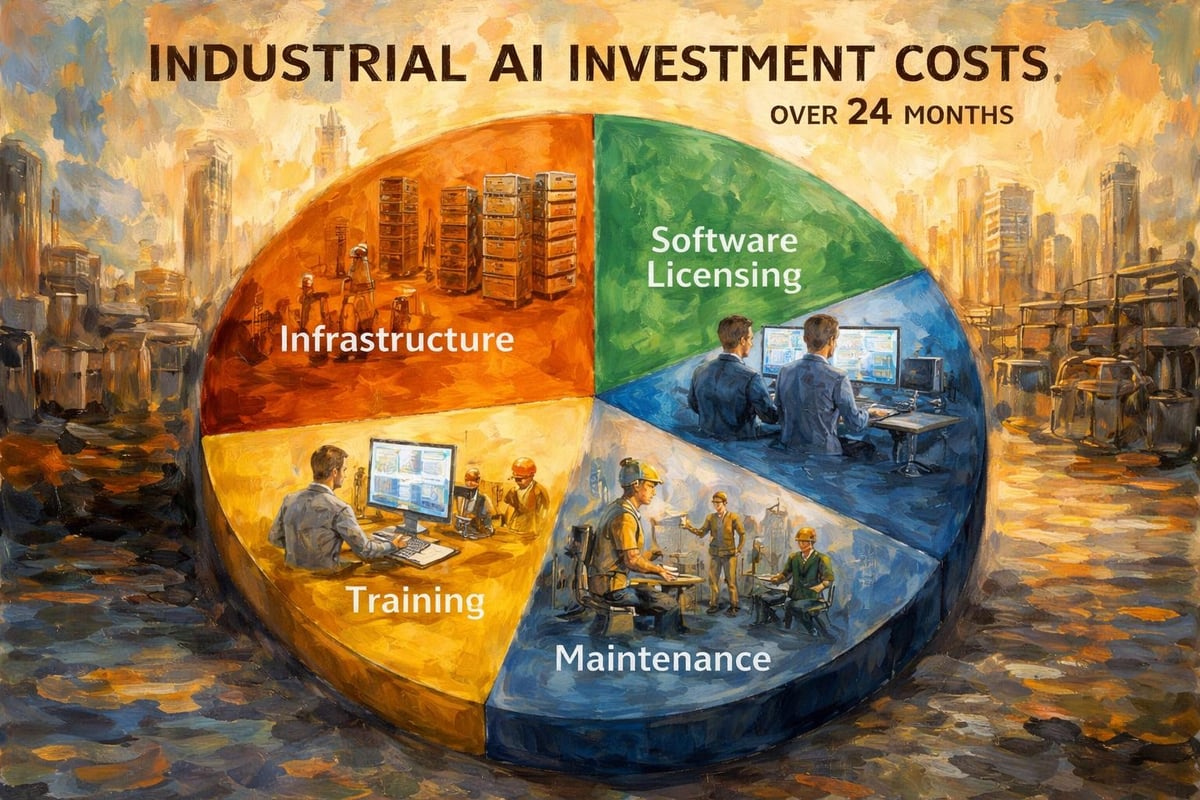
Maintenance costs average 18% of initial investment annually. This covers software updates, model retraining, and technical support.
Recent business adoption statistics indicate 64% of companies achieve target ROI within 22 months.
Regulatory Compliance and Ethical Considerations
Australian Privacy Principles govern ai in industry data collection practices. Manufacturing facilities must document consent for worker monitoring systems.
Industry-specific regulations affect deployment strategies. Medical device AI requires Therapeutic Goods Administration approval before clinical use.
Workplace surveillance laws limit monitoring scope and notification requirements. Transparent communication prevents employee resistance and legal challenges.
Algorithmic bias testing ensures fair operational decisions. Regular audits identify unintended discrimination in automated systems.
Documentation standards prove AI decision-making rationale. Financial services maintain complete audit trails for regulatory review.
Workforce Transition Management
Upskilling programs prepare employees for AI collaboration. Successful implementations allocate 12% of project budgets to training initiatives.
Job role evolution rather than elimination characterises most deployments. Workers transition from manual tasks to AI system supervision.
Communication strategies address automation concerns proactively. Monthly updates during implementation reduce workforce anxiety by 67%.
Performance metrics shift from output volume to quality oversight. Recognition systems reward effective AI collaboration and system improvement suggestions.
Organisations utilising AI readiness assessments identify skill gaps before technology deployment.
Emerging Technologies Reshaping Industrial Operations
Generative AI creates synthetic training data for rare scenarios. Manufacturing systems simulate equipment failures without physical damage.
Digital twins replicate entire production facilities virtually. Engineers test process changes before physical implementation, reducing disruption risks.
Autonomous mobile robots navigate warehouse environments independently. Productivity increased 156% in facilities deploying collaborative robot systems.
Natural language processing enables voice-activated equipment control. Maintenance technicians issue commands hands-free during repairs.
Industry 6.0 concepts envision fully autonomous production with minimal human intervention. Early adopters test heterogeneous robot coordination systems.
Platform Integration Strategies
Unified platforms consolidate multiple ai in industry applications. Single dashboards display production metrics, quality data, and maintenance schedules.
API-first architectures enable custom tool development. Companies build proprietary solutions connecting existing systems with AI capabilities.
Solutions like the AI Content Machine demonstrate how specialised platforms address specific industry needs efficiently.
Low-code development environments accelerate deployment timelines. Technical teams create custom workflows without extensive programming requirements.
Microservices architecture allows incremental capability additions. Businesses start with core functions and expand as needs evolve.
Measuring Success and Continuous Improvement
Key performance indicators quantify ai in industry impact across operations. Track minimum 8 metrics monthly for comprehensive assessment.
- Overall Equipment Effectiveness (OEE) percentage
- Mean Time Between Failures (MTBF) duration
- First-pass quality yield rates
- Energy consumption per unit produced
- Inventory carrying costs reduction
- Labour productivity improvement
- Customer complaint frequency
- Safety incident rates
Benchmark against industry standards and internal baselines. Manufacturing OEE targets range from 75% to 85% depending on sector.
| Performance Metric | Pre-AI Baseline | Post-AI Target | Typical Achievement |
|---|---|---|---|
| Production Uptime | 82% | 94% | 91% |
| Quality Pass Rate | 94% | 99% | 97% |
| Energy Efficiency | 67% | 85% | 79% |
| Maintenance Costs | 100% (baseline) | 70% | 78% |
Feedback loops incorporate operator insights into system refinement. Weekly review sessions identify improvement opportunities and address operational concerns.
A/B testing validates algorithm changes before full deployment. Run parallel systems comparing new versus existing approaches for minimum 30 days.
Documentation protocols capture institutional knowledge from AI interactions. Create searchable databases of successful problem resolutions and optimal parameter settings.
Advanced analytics identify secondary optimisation opportunities. Systems discover unexpected correlations between variables affecting performance outcomes.
Future Outlook for Industrial AI Development
Investment in ai in industry reached $847 million across Australia during 2025. Projections estimate $1.4 billion by 2028 as adoption accelerates.
Small-to-medium enterprises represent fastest growing deployment segment. Cloud-based solutions reduce entry barriers from $200,000 to $35,000 for basic implementations.
Quantum computing integration promises exponential processing improvements. Early applications focus on complex optimisation problems in logistics and scheduling.
Sustainability metrics drive next-generation AI development priorities. Carbon footprint reduction joins efficiency and quality as core optimisation targets.
Collaborative AI systems coordinate across company boundaries. Supply chain partners share predictive data for mutual inventory optimisation.
The services portfolio at Synap AI reflects evolving industry demands for comprehensive implementation support and ongoing optimisation.
The transformation of ai in industry represents opportunity rather than threat for Australian businesses prepared to adapt strategically. Success requires proper planning, quality data infrastructure, and commitment to continuous improvement. Synap AI provides local expertise in AI implementation, helping Mornington and Victorian businesses navigate this technological transition with confidence and achieve measurable operational improvements.